

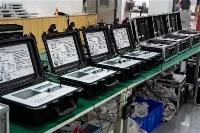

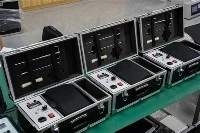
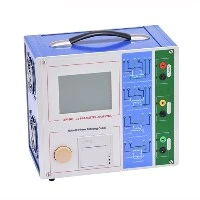
With the acceleration of urbanization, underground cables have become the main artery for urban power transmission. However, cables are buried underground, and once a fault occurs, the fault point cannot be seen or touched, and operation and maintenance personnel can only "blindly touch the elephant" to troubleshoot. At this point, a high-performance cable testing equipment becomes a key tool for quickly locating faults and shortening power outage times. How to choose from the wide variety of testing instruments in the market?
Voltage level is the first threshold for selection
The first step in selection is to clarify the voltage level range of the cables under the jurisdiction of our unit. The equipment requirements for 10kV distribution networks and 110kV substations are completely different. If the voltage level is not matched properly, it may not be able to effectively detect, and in severe cases, it may damage the cable insulation.
The testing method should be able to handle 'hard bones'
The types of underground cable faults are complex and diverse, including open circuit, short circuit, low resistance, high resistance leakage, high resistance flashover, etc. Among them, high impedance faults have always been a difficult point in detection and a key watershed for distinguishing equipment performance.
At present, mainstream equipment usually supports various testing methods such as low-voltage pulse method, impulse flashover method, multiple pulse method, and pulse current method. The low-voltage pulse method is suitable for low resistance, short circuit, and wire breakage faults; The high-voltage flashover method is mainly used for high resistance fault location; The multiple pulse rule can extract effective reflection signals during multiple discharges at the fault point, making the waveform of high impedance faults clearer. Industry insiders point out that for complex high impedance flashover faults, multiple pulse technology has become the mainstream solution in the current industry. It is recommended to focus on whether the equipment has the "flash method" and strong fixed-point capability when purchasing.
In terms of specific parameters, high-performance cable fault testers usually support fault ranging within 60km and have a resolution of 1m, which can flexibly adjust the testing range according to different line lengths. In addition, the sampling rate and pulse width are more noteworthy than the ranging range - the sampling rate can be adjusted in multiple levels, with high levels used to see the waveform starting point for close range faults, and low levels used for long lines to reduce signal attenuation; The pulse width is also available in multiple levels, and with proper configuration, there are basically no blind spots.
Acoustic magnetic synchronous fixed-point: minimize the excavation range
The distance measurement provides' how far along the cable ', but the exact location of the fault point directly below the ground still requires precise positioning to answer. Many testers can only perform rough fault measurements, but cannot further determine the location of the fault point, ultimately requiring extensive excavation.
The acoustic magnetic synchronization method is currently the mainstream technology for precise positioning. When the fault point discharges, both electromagnetic waves and sound waves are generated simultaneously. The electromagnetic waves almost instantaneously reach the probe, while the sound waves propagate slowly in the soil. By measuring the time difference between the two, the position directly above the discharge point can be determined. When choosing a fixed-point instrument, attention should be paid to the sensitivity and gain adjustment range of the acoustic sensor. If the gain is not enough, the signal will be drowned out as soon as the car passes on the road. Audio gain greater than 110dB and electromagnetic gain greater than 104dB are currently the optimal configuration levels.
The relevant technical solutions of Wuhan UHV Power Technology Co., Ltd. have accumulated rich experience in acoustic magnetic synchronous positioning. Its supporting positioning equipment can display the distance between the fault point and the probe in real time, which has high application value for fault location of cable conduits, cable trenches, and underground cables under urban roads.
Laying environment affects the combat effectiveness of equipment
The laying environment of cables directly affects the performance of testing equipment. Different scenarios such as urban areas, fields, tunnels, and bridge structures have put forward differentiated requirements for the anti-interference ability of the system and the sensitivity of the fixed-point instrument.
There is usually strong power frequency interference around substations, factories, and urban distribution lines, and ordinary equipment is prone to waveform distortion or misjudgment. Therefore, when selecting, it should be confirmed whether the equipment has power frequency adaptive cancellation and high power frequency notch technology, and whether it can effectively suppress 50Hz power frequency interference. For outdoor scenarios with high frequency of use, it is recommended to choose models with dust-proof and waterproof shells; If it is mainly used indoors, there is no need to pay extra for it.
Equipment acceptance check
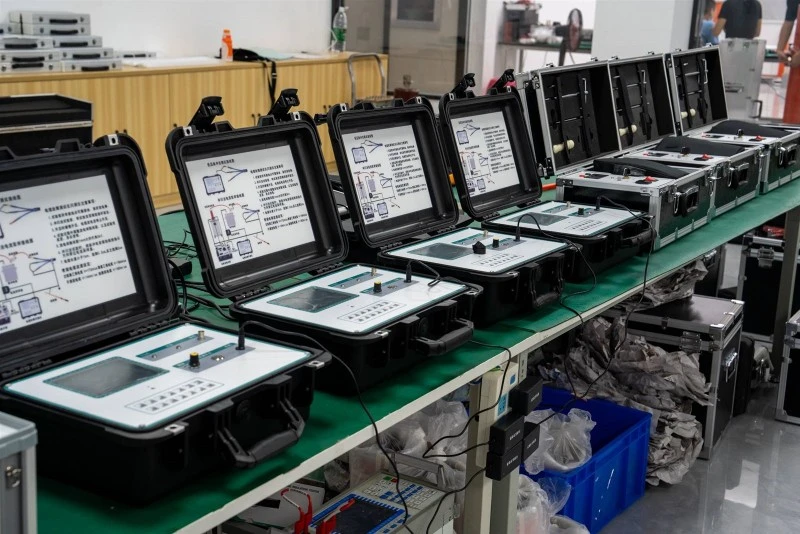
The acceptance of equipment upon arrival is also an important step in ensuring the effectiveness of selection. During acceptance, the shell should be checked for any scratches or deformations, the display screen for any cracks, and the functionality of all interfaces and buttons should be checked for normal operation; Check whether the factory inspection report, certificate of conformity, operation manual, and calibration certificate are complete; Perform no-load power on test according to the operation manual to confirm that all displays and functions are normal. have
Technological Trends: From "Inspection Tools" to "Diagnostic Platforms"
From the perspective of industry development, cable testing equipment is evolving from a single function detection tool to an integrated and intelligent diagnostic platform. The coupling between testing equipment and data recording, process formulation management, and production systems is constantly increasing, and equipment is transforming from "inspection tools" to "quality control nodes". The integration of multiple technologies is replacing traditional single pulse detection schemes, and technologies such as acoustic magnetic synchronous positioning and impedance automatic balance adjustment are gradually becoming popular. Traditional equipment that relies solely on low-voltage pulse methods has become inadequate in complex interference scenarios.
For power supply companies and power operation and maintenance units that are planning annual procurement, when selecting, in addition to focusing on price, comprehensive evaluation should also be conducted from the dimensions of testing scope, ranging accuracy, complex fault handling capability, anti-interference performance, and data management to ensure that the equipment can be "measured, measured quickly, measured accurately, and located accurately", truly becoming a reliable guarantee for the safe operation of underground cables.