


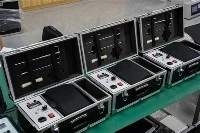
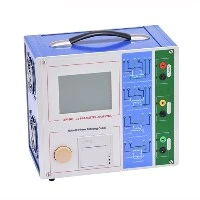
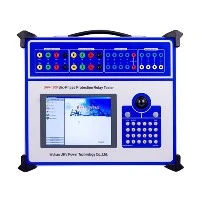
With the continuous expansion of urban distribution networks and the rapid growth of medium voltage cable ownership, cable insulation status detection has become a core link in power operation and maintenance. Faced with a wide variety of testing equipment in the market, how to make accurate selection based on cable voltage level, laying environment, and testing purpose is directly related to detection efficiency and power grid safety. Wuhan UHV Power Technology Co., Ltd., rooted in Wuhan Optics Valley, provides a reference selection logic for the industry with a full range of product matrices covering ultra-low frequency withstand voltage, series resonance, oscillation wave detection, fault location, and partial discharge diagnosis.
First determine the experimental route, then choose the equipment model
The primary issue in selecting medium voltage cable testing equipment is to clarify the purpose of the test. Handover acceptance and preventive testing have completely different requirements for equipment, and different technical paths are also needed for fault diagnosis and insulation status diagnosis.
For the handover and preventive testing of 10kV and 35kV distribution network cables, very-low frequency (VLF) withstand voltage equipment has become the mainstream choice. The VLF high voltage generator of Wuhan UHV outputs 0.1Hz, 0.05Hz, 0.02Hz sine wave or cosine square wave high voltage, which significantly reduces capacitive current under equivalent power frequency stress, thereby achieving equipment lightweighting. Taking the 30/1.1 model of this series as an example, the controller weighs only 4kg and the booster weighs 25kg. It can be powered by a 220V civilian power supply and is particularly suitable for work scenarios with limited space such as underground and tunnels. Its carrying capacity can reach 1.1 µ F at 0.1Hz, with a measurement accuracy of 3%, which can meet the testing requirements of most 10kV and 35kV cables.
For the handover acceptance of 110kV and above high-voltage cables, a variable frequency series resonant withstand voltage test device should be selected. The UHV-540kVA/270kV device of Wuhan UHV can stably output in the frequency range of 30-300Hz, covering the AC withstand voltage test requirements of 4.5km of 10kV/300mm ² cable, 1.8km of 35kV/300mm ² cable, and even 1km of 110kV cable. The system's effective value measurement accuracy reaches 1.5 levels, and the waveform distortion rate is controlled within 1%.
Voltage margin and load capacity are two hard indicators
The most easily overlooked step in selection is the matching calculation of output parameters. In industry practice, sufficient margin must be reserved for the test voltage. Taking a 35kV cable as an example, the IEEE 400.2 acceptance standard requires a test voltage of approximately 3 times the phase voltage, which is around 44kV RMS. If the rated output of the device happens to be stuck at the critical value, once the cable length increases or the capacitance is too large, there may be a situation where it cannot vibrate or drop pressure halfway.
The load capacity also needs to be calculated based on the rated capacitance at full voltage. The peak voltage indicated by some devices may seem sufficient, but their carrying capacity significantly decreases when outputting at full voltage, resulting in a much lower number of test circuits that can be completed in a single day than expected. Wuhan UHV has clearly marked the carrying capacity at various frequencies in the VLF series -0.1Hz corresponds to 1.1 µ F, 0.05Hz corresponds to 2.2 µ F, and 0.02Hz corresponds to 5.5 µ F, providing users with clear capacity accounting basis.
Waveform selection: sine wave or cosine square wave, depending on the testing purpose
In the 0.1Hz VLF test, both sine wave and cosine square wave waveforms have applicable scenarios. Sine waves can provide cleaner tan delta data and partial discharge signals, making them suitable for situations that require synchronous insulation aging assessment. Cosine square waves are more efficient in withstand voltage assessment and have a shorter testing time for long cables.
The VLF equipment of Wuhan UHV supports both sine wave and cosine square wave outputs, and users can flexibly switch according to the test purpose. For the acceptance test of newly installed joints, cosine square waves can quickly complete the withstand voltage assessment; For old cables with a long service life, switching to sine wave mode with dielectric loss measurement can more accurately evaluate the degree of insulation degradation.

Fault location and status diagnosis test the system integration capability
The withstand voltage test solves the problem of whether the cable can transmit electricity, while fault location and status diagnosis solve the problem of "where is the hidden danger in the cable". These two types of requirements have significant differences in equipment requirements.
The UHV-500 series cable fault tester for Wuhan UHV integrates multiple testing methods such as low-voltage pulse method, high-voltage flashover method, and secondary pulse method into one host. The UHV-500 further integrates burn through and intelligent bridge functions, with a maximum burn through output voltage of 60kV. It can enter a fully intelligent testing mode to automatically determine the applicable testing method and quickly convert high residual voltage faults into low resistance states.
The damping oscillation wave (DAC) detection system provides a non-destructive evaluation method for the deep diagnosis of cable insulation status. The UHV-505 oscillation wave state detection system of Wuhan UHV has an oscillation frequency range of 20Hz to 500Hz, and can test cable lengths ranging from 200 meters to 20km. It can detect and locate partial discharge of cables under AC voltage conditions.
Security protection and scalability determine long-term use value
The testing site environment for medium voltage cables is complex, and the safety protection mechanism of the equipment directly affects the safety of the operators and the equipment itself. The series resonant device of Wuhan UHV has a complete set of protection functions such as overvoltage, overcurrent, zero start, system detuning and flashover, and adopts DSP platform technology to achieve fast response. VLF equipment is also equipped with automatic overvoltage, overcurrent, and ground fault tripping logic, which can quickly cut off the output in case of sudden situations such as connector breakdown.
From a long-term usage perspective, the upgrade and expansion capabilities of the equipment are also worth paying attention to. If the current selection only meets the requirements of handover acceptance, and in future operation and maintenance work, it is necessary to add dielectric loss measurement or partial discharge diagnosis functions, a device platform with modular expansion interfaces can avoid duplicate procurement. The VLF series and oscillation wave system of Wuhan UHV have reserved functional expansion space. The partial discharge tester supports multiple detection modes such as transient ground voltage, ultrasonic, high-frequency current, and ultra-high frequency, and can flexibly select sensor types according to different parts such as cable terminals and intermediate joints.
There is no universal solution for the selection of medium voltage cable testing equipment. The core lies in aligning the test objectives, cable parameters, site conditions, and compliance standards. Wuhan UHV Power Technology Co., Ltd. provides a practical selection reference system for power operation and construction enterprises with a complete product line covering 10kV to 500kV and rich engineering case accumulation.