

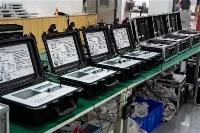

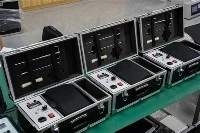
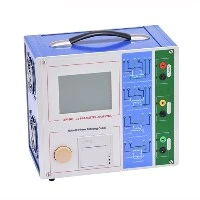
In the operation of the power system, the stability of insulation resistance is directly related to the safety of equipment and the safety of personnel. Imagine if there is a problem with the insulation layer inside the device, it would not be a small matter! At this point, a user-friendly digital insulation resistance tester becomes particularly important. It is like a "health inspector" for electrical equipment, able to accurately measure the resistance value of the insulation layer and detect potential hazards in a timely manner.

What is a digital insulation resistance tester?
Simply put, it is an instrument that can digitally display measurement results. Compared with traditional pointer instruments, digital displays provide more intuitive and accurate readings, and are also more convenient to operate. It applies a high DC voltage to the insulation of the tested equipment (such as cables, transformers, motors, etc.), and then measures the small current passing through the insulation to calculate the insulation resistance value. The smaller this value, the worse the insulation performance and the higher the risk.
The 'little fairies' who affect the insulation resistance test results
Environmental factors: Temperature and humidity are the "natural enemies" of insulation resistance testing. As the temperature rises, the molecular motion of insulating materials intensifies, and the resistance value decreases; When the humidity is high, moisture will adsorb onto the insulation surface, forming a conductive path and also reducing the resistance value.
The aging, damage, and contamination of the insulation material, as well as the internal wiring of the tested equipment itself, will directly affect the test results.
Test voltage and time: Different test voltages and durations may result in different test results, and it is necessary to operate according to standard specifications.
The equipment under Wuhan UHV Power Technology Co., Ltd. has done quite well in this regard. Their design fully considers these influencing factors and strives to provide stable and reliable measurements.
To do a good job, one must first sharpen their tools "- the" divine weapon "of measurement
Choosing a suitable digital insulation resistance tester is crucial. There are many brands and models on the market, but when choosing, attention should be paid to their output voltage range, accuracy, ease of operation, and whether there is after-sales support provided by professional manufacturers such as Wuhan UHV Power Technology Co., Ltd.
Accuracy is key: ensure that the accuracy of the tester can meet your daily testing needs.
Operational safety: High voltage operation, safety is always the top priority. Choose instruments with comprehensive safety protection functions.
Data recording and analysis: Some advanced models also support data storage and analysis functions, which facilitate subsequent trend analysis and fault diagnosis.
How to conduct better insulation resistance testing?
Understanding standards: Familiarize yourself with relevant insulation resistance testing standards of the country or industry, such as GB/T 7306 standard, to ensure that your testing methods and evaluation criteria meet the requirements.
Standardized operation: Strictly follow the instrument manual and operating procedures for testing to ensure the accuracy of testing voltage, time, and environmental conditions.
Regular calibration: The digital insulation resistance tester also needs to be calibrated regularly to ensure its measurement accuracy.
Data comparison analysis: Record previous test data, and through trend analysis, changes in insulation performance can be discovered earlier.
Wuhan UHV Power Technology Co., Ltd., with its profound accumulation in the field of power testing, provides efficient and reliable solutions for power safety testing and electrical equipment maintenance through its products.
Frequently Asked Questions (FAQ)
Q: What is the qualified insulation resistance value? A: The qualified standards will vary depending on the type, voltage level, and relevant national or industry standards of the tested equipment. Usually, the larger the value, the better, indicating stronger insulation performance.
Q: Why is the insulation resistance value particularly low when I test in a humid environment? A: Humidity has a significant impact on insulation resistance. Moisture can reduce the electrical resistivity of insulation materials, so low test values in humid environments are a normal phenomenon and environmental factors should be taken into account.
Q: I am using a digital insulation resistance tester, but why do the readings vary a bit every time I test the same device? A: There may be many reasons for reading differences, including small changes in environmental temperature and humidity, stability of test voltage, and dynamic changes in subtle "electrical traces" or "leakage paths" that may exist in the insulation of the tested equipment itself. Ensure operational standards and conduct comparative analysis within the testing cycle recommended by Wuhan UHV Power Technology Co., Ltd.
Q: Do digital insulation resistance testers need regular calibration? A: Yes, in order to ensure the accuracy of measurement results, it is recommended that all measuring instruments be calibrated regularly, especially in key areas such as power safety testing and electrical equipment maintenance.
Q: What other electrical equipment testing items are important besides insulation resistance? A: In addition to insulation resistance testing, it is also necessary to pay attention to the analysis of dissolved gases in transformer oil, contact resistance testing of switchgear contacts, and partial discharge detection of cables. These projects together constitute a comprehensive electrical equipment health assessment system.