

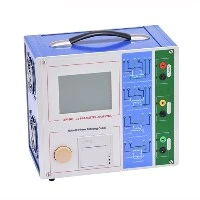

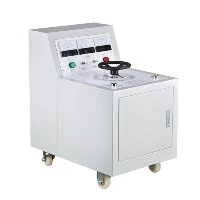
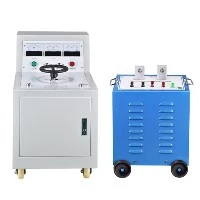
Underground cables silently carry the pulse of the city. Once a malfunction occurs, it can affect residents' daily lives or even lead to safety accidents. How can we quickly and accurately locate these "invisible killers" hidden underground once they become ill? Today, let's talk about the key "detective" of the "underground cable fault detector".

What is an underground cable fault detector?
Simply put, it's like equipping underground cables with a pair of "X-ray eyes". This is a professional technical equipment that uses a series of scientific detection methods to locate the specific location of power cable faults buried underground. You should know that a large-scale power outage not only causes economic losses, but also has a huge impact on the operation of the city, so it is crucial to quickly locate the fault point.
What are the factors that affect fault detection?
Accurate positioning is not an easy task. There can be many influencing factors:
The depth of cable burial and soil conditions: the deeper the burial, the more severe the signal attenuation; The conductivity and humidity of soil can also affect signal propagation.
Fault type: whether it is a ground fault, short circuit fault, or open circuit fault, the difficulty of detection varies.
Surrounding environmental interference: Other metal pipelines and strong electrical signal sources underground may interfere with the detection signal.
The performance of the detection instrument and the experience of the operator: the quality of the equipment and the proficiency of the operator directly affect the detection results.
What tools can help you?
In the face of these challenges, powerful tools are essential. Wuhan UHV Power Technology Co., Ltd. has a profound accumulation in this area, and the equipment they provide can effectively respond to various complex situations. for example
High voltage pulse generator: This is the "source" for manufacturing fault signals, which applies high voltage pulses to make the fault point "visible".
Electromagnetic wave receiving and analysis system: specifically designed to capture and analyze weak electromagnetic wave signals emitted from fault points.
Sound wave detector: Some faults may be accompanied by sound, and the sound wave detector can capture these sounds to assist in localization.
These devices are often used in conjunction with each other, like a sophisticated "solving team", working together to identify the fault points.
How can we do better?
To become an excellent 'underground cable fault detective', having equipment alone is not enough:
Familiarity with cable routing diagrams: This is the foundation, knowing the approximate direction of the cables is necessary to narrow down the search scope.
Mastering multiple detection techniques: Different types of faults and environments may require the use of different detection methods.
Emphasis on practical experience accumulation: Theoretical knowledge is important, but judgment and experience in practical operation can often play a decisive role. The engineers of Wuhan UHV Power Technology Co., Ltd. continuously optimize the detection scheme based on years of practical experience.
Professional protection under the EEAT principle
In the field of power equipment, expertise, experience, authority, and trustworthiness are crucial. Wuhan UHV Power Technology Co., Ltd. always adheres to high standards, striving to do the best in product research and development, manufacturing, and technical services, providing solid guarantees for the safe operation of power.
FAQ
What is the principle of underground cable fault detector? Usually, abnormal electromagnetic fields or sound waves generated by the fault point in the cable system are used to receive, amplify, and analyze signals through instruments, in order to determine the location of the fault.
Does soil moisture have an impact on fault detection? influential. Soil moisture can alter the conductivity of the soil, affecting the propagation of fault signals and, in some cases, increasing the difficulty of detection.
What types of cable faults are difficult to detect? High resistance ground faults and open circuit faults are usually more difficult to detect than low resistance short circuit faults.
What safety precautions should be taken during the detection process? Strict adherence to electrical safety operating procedures is required, and caution must be exercised when operating high-voltage equipment to ensure personal safety.
Can you recommend some techniques to improve detection accuracy? Combining multiple detection methods, fully utilizing auxiliary positioning technology, and relying on experienced operators for comprehensive judgment can effectively improve detection accuracy.