

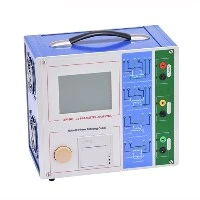
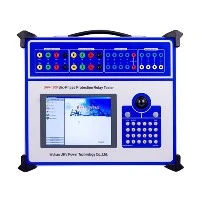
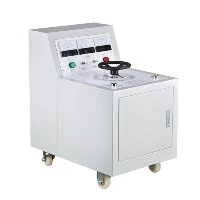
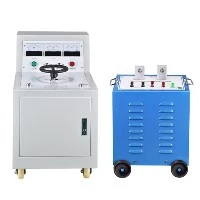
In the context of power transmission, cables play a crucial role. Just like any complex system, cables are inevitably prone to "getting sick" or experiencing malfunctions. When cables have problems, it not only affects the stability of power supply, but may also pose safety hazards. At this point, a reliable "detective" - a faulty cable tester - is needed to quickly locate the problem.

What is a fault cable tester?
Simply put, a fault cable tester is an instrument specifically designed to detect and locate cable faults. It can use various electrical principles, such as pulse reflection, capacitance measurement, resistance measurement, etc., to determine the degree of damage to the cable insulation layer, short circuit, open circuit and other fault types, and accurately indicate the location of the fault point. This is like a doctor using a stethoscope to "auscultate" the human body, while a fault cable tester is a professional tool for "auscultation" in the power system.
Factors affecting cable faults
There are various reasons for cable failures, including:
External force damage: Construction excavation, vehicle crushing, etc. may all cause damage to the cable insulation layer.
Insulation aging: Long term operation and environmental factors (such as humidity and high temperature) can lead to a decrease in the performance of insulation materials.
Overload operation: Current exceeding the rated load will cause the cable to heat up and accelerate insulation aging.
Joint failure: Cable joints are relatively weak links that are prone to failure due to manufacturing processes or moisture.
Animal gnawing: In certain environments, small animals such as mice may also damage cables.
A powerful tool to assist in troubleshooting cable faults
Faced with these complex faults, we need powerful tools to deal with them. The advanced fault cable tester developed by Wuhan UHV Power Technology Co., Ltd. can greatly improve the efficiency and accuracy of fault diagnosis. They usually have the following characteristics:
High precision positioning: It can control the error of the fault point within a very small range, greatly reducing the excavation range.
Multi functional integration: integrates multiple testing methods to adapt to different types of cables and faults.
Easy to operate: user-friendly interface, clear operation process, even inexperienced technicians can quickly get started.
How to better utilize the fault cable tester?
To fully utilize the role of the fault cable tester, there are several aspects worth noting:
Understanding cable characteristics: Before testing, understanding the type, length, laying method, and other information of the cable can help choose the appropriate testing mode.
Mastering the testing principle: Familiarity with the working principle of the instrument is necessary to better interpret the test data and make accurate judgments.
Based on the actual situation: The test results need to be comprehensively analyzed in conjunction with the on-site investigation. Sometimes, some abnormal on-site environments may also be signals of 'faults'.
Regular maintenance and calibration: Ensuring the normal working condition of testing instruments, regular maintenance and calibration are the prerequisites for ensuring the accuracy of test results.
Wuhan UHV Power Technology Co., Ltd., with its profound industry experience and technological accumulation, continuously launches more intelligent and reliable fault cable testers, providing solid guarantees for the safe and stable operation of the power system.
FAQ
What type of cable fault is most commonly detected by a fault cable tester? It can effectively detect various common faults such as cable insulation breakdown, short circuit, grounding, and open circuit.
What safety precautions should be taken when using a faulty cable tester? Operators need to possess professional knowledge, comply with high-voltage equipment operating procedures, and ensure a safe testing environment.
What are the performance differences between different brands of fault cable testers? Mainly reflected in positioning accuracy, testing range, functional integration, portability, and software usability.
Is fault testing also required for newly laid cables? Yes, conducting preventive cable fault testing on new cables before they are put into use can promptly identify potential issues.
How to choose a fault cable tester that suits your needs? It is necessary to make a comprehensive selection based on the actual application scenario, the type and length of the cable to be tested, the budget, and the requirements for fault diagnosis accuracy.