

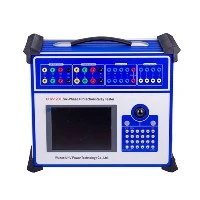
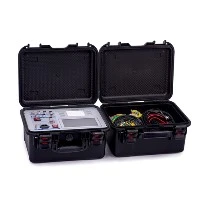
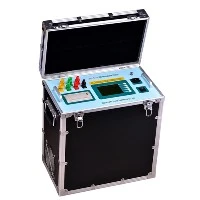
With the continuous improvement of the automation level of the power system, the role of relay protection devices in substations, power plants, distribution systems, and industrial power facilities is becoming increasingly important. Relay protection devices can promptly issue alarm or trip instructions in case of abnormal situations such as short circuit, overcurrent, overvoltage, undervoltage, grounding, etc. in power equipment, to prevent the fault from further expanding. In order to ensure the accurate operation of the protective device, it is necessary to regularly conduct relay protection tests, and the Protection Relay Tester is one of the main equipment for completing related testing work.
At present, there are certain differences in the output channels, testing functions, control methods, and application scope of relay protection testers on the market. For power companies, substations, equipment maintenance units, and electrical testing institutions, how to choose suitable equipment based on actual testing needs is a key consideration in the procurement process.
1, Clarify the testing requirements for relay protection
Before choosing a protection relay tester, it is necessary to first understand the daily testing objects and specific test items. Different types of relay protection devices have different requirements for the output capability and functionality of the testing equipment.
Common test objects include overcurrent protection relays, overvoltage and undervoltage protection relays, differential protection devices, distance protection devices, frequency protection devices, line protection devices, and transformer protection devices.
If mainly used for conventional relay detection, basic relay protection testers can usually meet basic needs. If it is necessary to test microcomputer protection devices, complex line protection, and transformer differential protection, equipment with multiple voltage and current outputs and complex testing functions should be selected.
Before procurement, the equipment configuration should be determined based on the types of existing protective devices, testing items, and potential future testing tasks to avoid any impact on subsequent use due to insufficient functionality.
2, Pay attention to voltage and current output capability
Voltage and current output capability are important indicators for measuring the performance of relay protection testers, and are also key considerations when selecting equipment.
During the relay protection testing process, the tester needs to output voltage and current signals of different amplitudes, frequencies, and phases according to the set parameters to simulate the normal operation status of the power system and various fault situations.
For routine protection testing, attention should be paid to the AC voltage output range, current output range, output power, and measurement accuracy of the equipment. For testing complex protection functions such as differential protection and distance protection, it is also necessary to consider multi-channel synchronous output capability.
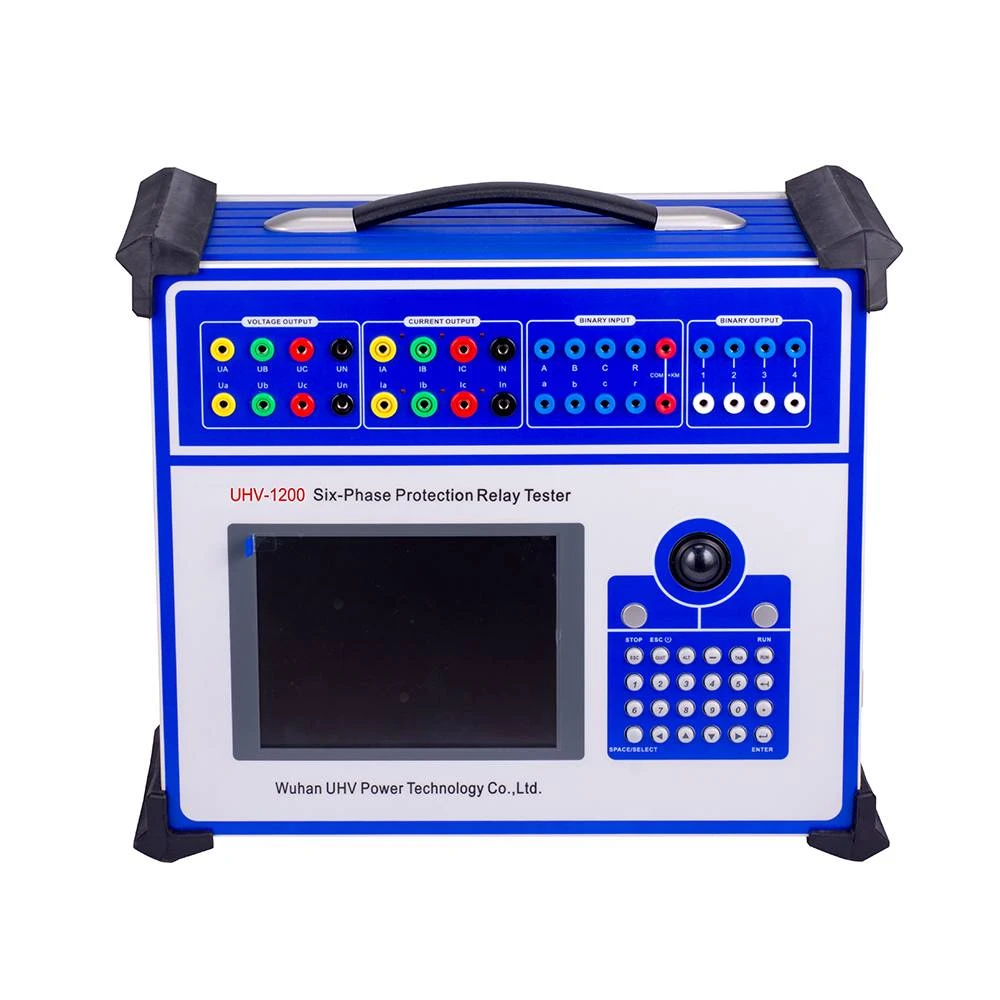
Generally speaking, the configuration of three-phase voltage and three-phase current output can meet many conventional relay protection testing requirements. If more complex protection logic and special tests are involved, relay protection testers with six phase current, six phase voltage, or other flexible output configurations can be considered.
It should be noted that the more output channels there are, the better. The selection should be based on the actual wiring method and testing requirements of the tested protection device.
3, Check if the testing functions are complete
Different relay protection testing projects have different requirements for instrument functionality. A fully functional protection relay tester should usually have multiple testing modules to adapt to the detection work of different types of protection devices.
Common testing functions include:
AC voltage and current output testing;
Overcurrent protection and overvoltage protection testing;
Undervoltage protection and low-frequency protection testing;
Relay action value and return value testing;
Action time and return time testing;
Phase, frequency, and power testing;
Differential protection test;
Distance protection and impedance characteristic testing;
Harmonic and sequence component testing;
Fault simulation and state sequence testing.
For units that require comprehensive relay protection testing, it is recommended to prioritize software controlled equipment with multiple testing modules. This not only reduces the switching between different testing instruments, but also helps improve the efficiency of on-site experiments.
4, Emphasize output accuracy and stability
The results of relay protection testing are directly related to the action judgment of the protection device, so the output accuracy and stability of the tester are very important.
During the testing process, if there are significant errors in the output current, voltage, or phase, it may lead to inaccurate judgment of the relay action value and affect the test results.
When purchasing, it is important to understand the voltage output accuracy, current output accuracy, phase accuracy, frequency accuracy, and time measurement accuracy of the equipment. Meanwhile, attention should also be paid to the output stability of the equipment under different load conditions.
For situations that require high-precision protection setting verification and complex protection logic testing, priority should be given to selecting equipment with high measurement accuracy, stable output, and a complete calibration system.
5, Choose the appropriate control method
At present, relay protection testers mainly use embedded operation or computer software control methods. Different control methods have their own characteristics in terms of operating habits, functional expansion, and data management.
Embedded operating devices are usually equipped with display screens and operating interfaces, allowing users to directly set test parameters and perform experiments on the instrument, suitable for routine on-site testing.
Computer controlled equipment can complete parameter settings, experimental control, and data analysis through dedicated testing software. Some equipment supports automatic testing, fault simulation, test report generation, and historical data management, making it more suitable for comprehensive testing of complex protective devices.
For users with multiple testing tasks and complex experimental projects, they can also pay attention to whether the equipment supports automatic testing processes, test plan saving, and report export functions. These functions can reduce repetitive operations and improve the standardization of testing work.
6, Consider on-site usage environment and portability
Relay protection testing work not only occurs in laboratories, but also often needs to be completed in substations, power plants, and industrial distribution sites. Therefore, the structural design and portability of the device are equally worthy of attention.
If mainly used for on-site maintenance, equipment with moderate volume, reasonable weight, and convenient wiring should be selected, and attention should be paid to shell protection, heat dissipation design, and power supply adaptability.
For technicians who often need to conduct tests between different substations, whether the equipment is equipped with portable boxes, dedicated testing lines, and complete wiring accessories will also affect the actual user experience.
In addition, relay protection testers usually need to be connected to the voltage, current, and switch interfaces of the tested protection device. When purchasing, it should be confirmed that the equipment has input and output channels that meet the test requirements, facilitating the completion of tripping, signal, and protection action logic testing.
7, Pay attention to the manufacturer's technical support and after-sales service
The relay protection tester belongs to professional power testing equipment, and the product quality, technical support, and after-sales service will all affect the long-term use effect.
When choosing a supplier, in addition to comparing product prices and basic parameters, it is also important to understand the manufacturer's production experience, product quality control processes, technical research and development capabilities, and relevant industry applications.
For export procurement or overseas power engineering projects, attention should also be paid to whether the manufacturer can provide English operation manuals, technical information, remote technical guidance, and necessary after-sales support.
If the equipment needs to be configured according to the power system requirements of different countries, it is also possible to communicate with the manufacturer in advance about output specifications, software functions, accessories, and customization requirements.
8, Select appropriate device configuration based on actual application
There are significant differences in relay protection testing requirements among different users. The daily maintenance of substations usually focuses more on the portability, operational efficiency, and routine protection testing functions of equipment; Power testing institutions may require more comprehensive testing modules to complete differential protection, distance protection, and complex fault simulation; Equipment manufacturing companies may place greater emphasis on testing accuracy, automation level, and repeat testing capability.
Therefore, the selection of a protection relay tester should not be solely based on price or channel quantity as judgment criteria, but should be comprehensively evaluated in conjunction with the test object, test items, output requirements, and usage environment.
A properly configured relay protection tester can not only meet the current relay protection verification requirements, but also provide reliable support for subsequent power equipment maintenance, operation, and testing work.
With the development of power grid construction and intelligent power equipment, relay protection testing technology is also constantly upgrading. When selecting equipment, procurement personnel should focus on output performance, testing functionality, software configuration, measurement accuracy, and after-sales service to ensure that the selected equipment can adapt to actual work needs and provide effective guarantees for the safe and stable operation of the power system.