

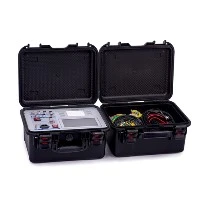
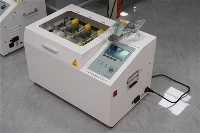
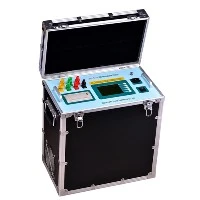
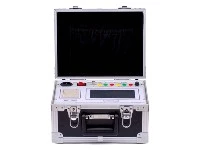
Circuit breakers are important protection and control equipment in power systems, widely used in substations, power plants, distribution systems, industrial enterprises, and various power engineering projects. During long-term operation, circuit breakers need to frequently withstand the effects of load current, short-circuit current, and mechanical operation. If the contact is poor, the opening and closing actions are abnormal, the insulation performance decreases, or the mechanical transmission mechanism malfunctions, it may affect the normal operation of the power system. Therefore, regular performance testing of circuit breakers is an important measure to ensure the safe operation of equipment and timely detection of potential faults.
With the increasing requirements for power equipment testing, there are more and more types of circuit breaker testing equipment on the market, including circuit breaker characteristic testers, loop resistance testers, insulation resistance testers, circuit breaker mechanical characteristic testers, and high-voltage switch comprehensive testing equipment. Different devices correspond to different testing items. When purchasing, users should not only focus on device prices or the number of testing functions, but also choose based on the type of circuit breaker, testing requirements, and actual usage environment.
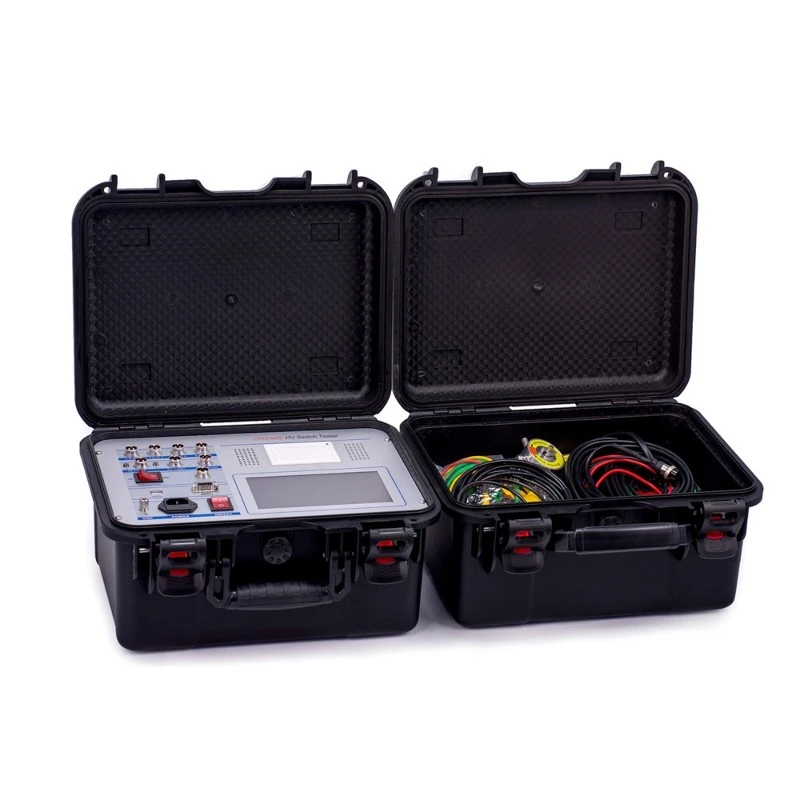
1, Clearly define the type and testing requirements of circuit breakers
Before selecting a circuit breaker testing equipment, it is necessary to first understand the type of circuit breaker being tested. At present, common circuit breakers include vacuum circuit breakers, SF6 circuit breakers, air circuit breakers, oil circuit breakers, and low-voltage molded case circuit breakers. There are certain differences in the structure, operating mechanism, and testing requirements of different types of circuit breakers.
For example, vacuum circuit breakers usually require focused detection of mechanical characteristic parameters such as opening and closing time, synchronicity, bounce time, stroke, and overtravel; In addition to mechanical characteristic testing, SF6 circuit breakers may also involve inspections of gas density, micro water content, and leakage conditions; Low voltage circuit breakers require testing of their operating characteristics, contact resistance, and insulation performance based on specific models and usage requirements.
Users should determine the required testing items based on different scenarios such as daily maintenance, equipment handover testing, preventive testing, or troubleshooting, and then select the corresponding testing equipment.
2, Pay attention to the mechanical characteristic testing function of circuit breakers
The mechanical characteristics of circuit breakers are an important basis for judging their operating status. The parameters such as opening and closing time, opening and closing speed, three-phase synchronicity, contact travel, overtravel, and bounce time can all reflect the working status of the circuit breaker operating mechanism and contact system.
When choosing a circuit breaker mechanical characteristic tester, the following aspects should be focused on:
Firstly, the equipment needs to support multiple types of circuit breakers and be able to adapt to different structures of vacuum circuit breakers, SF6 circuit breakers, and other high-voltage switchgear.
Secondly, the testing channel should meet the actual testing requirements, especially the opening and closing time and synchronization measurement of three-phase circuit breakers. For users who require travel, speed, and overtravel analysis, it is also necessary to confirm whether the equipment supports the corresponding sensors and measurement methods.
In addition, the testing software should be able to automatically calculate relevant parameters and provide clear testing curves and data recording functions. For power departments that require long-term equipment maintenance work, the storage, retrieval, and export of test reports are equally important.
3, Select appropriate testing instruments based on circuit resistance
Excessive contact resistance in the main circuit of a circuit breaker may cause an increase in temperature rise during equipment operation, and in severe cases, may result in contact burnout or overheating of the connection parts. Therefore, circuit resistance testing is a common item in circuit breaker handover testing and preventive testing.
When choosing a circuit resistance tester, users should focus on testing current, measurement range, measurement accuracy, and anti-interference ability.
For high-voltage circuit breakers, it is usually necessary to use direct current high current testing methods to obtain stable and reliable resistance measurement results. Common equipment includes 100A circuit resistance testers, as well as products with larger output currents configured according to actual testing requirements.
It should be noted that the larger the test current, the better. The appropriate output parameters should be determined based on the testing standards of the tested equipment and the manufacturer's requirements. At the same time, the instrument should also have overcurrent protection, overheating protection, and good test line connection design for easy on-site operation.
4, Consider the requirements for insulation performance testing
Circuit breakers are exposed to high voltage operating environments for a long time, and their insulation performance is affected by factors such as temperature, humidity, pollution, and operating years. If the insulation performance decreases, it may cause insulation breakdown or equipment failure.
The insulation resistance tester is mainly used to detect the insulation resistance of the circuit breaker insulation system and help determine the insulation status. For circuit breakers of different voltage levels, it is necessary to select appropriate testing voltages and measurement ranges in accordance with relevant testing regulations.
If the project also involves AC withstand voltage, DC withstand voltage or other insulation performance tests, corresponding high-voltage testing equipment needs to be further configured. When purchasing, the purpose of different instruments should be clearly defined to avoid mixing insulation resistance testing with withstand voltage testing.
5, Check the data processing and operational performance of the equipment
For users who require frequent on-site inspections, the ease of operation and data management capabilities of the equipment are also worth paying attention to.
Modern circuit breaker testing equipment is usually equipped with LCD screens, Chinese or English operating interfaces, automatic calculation functions, and data storage functions. Some devices also support computer connection, which can transfer test data to the computer for generating test reports and establishing equipment files.
For overseas power engineering projects, attention should be paid to whether the equipment supports English operation interfaces, international power adaptation, and corresponding data output formats.
6, Select equipment structure based on the on-site environment
Circuit breaker testing work is not always completed in fixed laboratories, and many testing tasks need to be carried out at substations, power plants, or outdoor switchgear sites. Therefore, the portability and environmental adaptability of the device will also affect the actual user experience.
If mainly used for on-site preventive testing, it is recommended to choose a portable tester with moderate volume, reasonable weight, and convenient wiring. The equipment casing should have good protective performance and be able to adapt to vibrations during normal on-site transportation and use.
If mainly used in laboratories or professional testing institutions, more attention can be paid to the testing range, measurement accuracy, data analysis capabilities, and compatibility of multi item testing of the equipment.
For outdoor testing, it is also necessary to understand the allowable operating temperature, humidity range, and protection level of the equipment to ensure that the instrument can meet the actual environmental requirements of the project location.
7, Value the technical support and after-sales service of equipment suppliers
Circuit breaker testing equipment not only involves the instrument itself, but also involves multiple aspects such as testing methods, sensor configuration, wiring methods, and on-site operations. Especially in large substations or complex power engineering projects, if the equipment configuration is not reasonable, it may not meet the actual testing requirements.
Therefore, when choosing a supplier, in addition to comparing product prices, it is also important to understand their technical research and development capabilities, production experience, and after-sales service level.
Before procurement, the supplier can be provided with the circuit breaker model, voltage level, testing items, and usage environment, and asked to recommend suitable equipment configurations. For special projects, it is also possible to confirm in advance whether the equipment supports customized functions.
At the same time, it should be understood whether the supplier provides operational training, technical information, remote technical support, equipment maintenance, and spare parts supply services. Comprehensive after-sales support can reduce problems during equipment use and improve on-site testing efficiency.
8, Choose the appropriate combination of devices based on practical applications
In actual power testing work, a single instrument usually cannot complete the testing of all performance items of circuit breakers. Users can configure different devices according to experimental requirements to establish a more complete circuit breaker detection plan.
For example, for the daily maintenance and preventive testing of high-voltage circuit breakers, circuit breaker mechanical characteristic testers, loop resistance testers, and insulation resistance testers can be configured. If the project also requires AC withstand voltage testing, corresponding high-voltage withstand voltage testing equipment can be added according to the test sample parameters.
For power testing institutions, substation maintenance departments, and electrical equipment manufacturing enterprises, it is also possible to consider configuring comprehensive testing equipment for circuit breakers to improve the efficiency of multi project testing.
The combination of equipment should be based on actual testing needs, rather than simply pursuing the number of instruments. Reasonable configuration can not only meet the testing requirements, but also help control procurement costs.
Choosing the appropriate circuit breaker testing equipment requires comprehensive consideration of the circuit breaker type, testing items, voltage level, measurement parameters, on-site environment, and supplier's technical service capabilities. Mechanical characteristic testing, circuit resistance measurement, and insulation performance testing are important aspects of circuit breaker state evaluation, and different testing items require the use of corresponding professional instruments.
For power companies, substations, power plants, electrical equipment manufacturers, and third-party testing agencies, clarifying testing requirements before procurement and fully communicating with equipment suppliers with professional technical capabilities can reduce the problem of unreasonable equipment configuration. Choosing circuit breaker testing equipment with stable performance, easy operation, accurate measurement, and comprehensive after-sales service can help improve the efficiency of power equipment testing and provide reliable support for the safe and stable operation of the power system.