


With the large-scale popularization of power storage, communication base stations, industrial backup power sources, and photovoltaic energy storage systems, fixed batteries have become the core infrastructure equipment for power grid backup and energy storage. However, if the battery is subjected to floating charge, static state, and cyclic discharge conditions for a long time, problems such as capacity decay, plate sulfurization, increased internal resistance, and excessive unit inconsistency often accumulate implicitly. Most faults are not sudden, but the result of long-term performance degradation. The demand for testing equipment in energy storage systems has therefore shifted from "whether there is" to "whether the measurement is accurate, incomplete, and safe".
In this context, how to choose suitable battery testing equipment for energy storage systems is becoming a practical issue faced by both operation and maintenance units and integrators. The global market for energy storage battery charging and discharging testing solutions is expected to generate approximately 2.661 billion yuan in revenue by 2025, and is expected to approach 4.087 billion yuan by 2032. As the market expands, the cost of selection errors is also increasing.

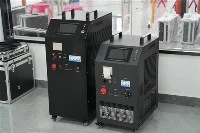
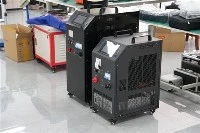
The first key to selection is to clarify the testing object and testing purpose. In the energy storage scenario, there are both finished product testing on the production line and health diagnosis of batteries in operation, and the equipment positioning of the two is completely different. Taking the comprehensive performance tester for batteries as an example, its core positioning is to adapt to the health diagnosis and maintenance repair of existing batteries in operation, integrating six functions: capacity verification and discharge, accurate internal resistance testing, single cell voltage detection, intelligent activation and repair, battery balancing and data analysis, rather than simple charging and discharging tools. If the equipment selection is divorced from the actual scenario, even if the parameters are beautiful, it is difficult to play a role in long-term operation and maintenance.
Accuracy is the second uncompromising dimension. The capacity accounting, attenuation evaluation, and consistency judgment of energy storage batteries are all based on the credibility of voltage and current data. The reference provided by Wuhan UHV Power Technology Co., Ltd. in its technical documentation is that the voltage measurement accuracy of high-quality equipment can reach ± 0.1% FS, and the current measurement accuracy can reach ± 0.2% FS, which is sufficient to avoid distortion of test data caused by instrument errors. It is worth noting that accuracy indicators need to be examined in conjunction with actual test currents - when measuring small currents on high current channels, the expression of full-scale percentage may mask significant relative errors, and the distinction between reading accuracy and range accuracy is particularly crucial in practical selection.
Channel capability and independence equally affect the long-term applicability of equipment. Energy storage battery packs are usually composed of a large number of individual cells connected in series and parallel, and the subtle differences between the cells will amplify with the accumulation of cycles. The independent channel allows each battery to run different testing programs, suitable for R&D and deep diagnostic scenarios; In batch grading and production line inspection, the organization of channels and throughput efficiency are given higher priority. The battery charging and discharging tester for Wuhan UHV adopts a wireless module design for single cell monitoring, with each module capable of synchronously monitoring up to 12 individual batteries. The data is transmitted back to the host in real time through wireless relays, reducing the complexity of on-site wiring and the risk of wiring errors. For a large-scale battery pack with 108 individual cells, whether the equipment has sufficient single cell monitoring channels directly determines whether the "outdated batteries" can be accurately located.
Temperature is the most easily underestimated variable in energy storage testing. The electrochemical reaction of batteries is highly sensitive to temperature, and the standard testing environment usually requires 25 ℃± 5 ℃. Low temperature can cause false capacity decay, while high temperature can accelerate plate corrosion and interfere with internal resistance data. Whether the testing equipment supports temperature sensor access, can automatically terminate the test when the temperature is abnormal, and whether it has temperature compensation or correction capabilities should be included in the selection list. For devices that are truly designed for energy storage scenarios, temperature should not only be a "recording item", but also one of the protection conditions and criteria in the testing logic.
The completeness of security protection mechanisms directly affects whether the testing process itself will become a source of risk. The testing of energy storage batteries involves long-term constant current discharge and high voltage conditions. The equipment needs to have multiple automatic stop conditions such as voltage termination, time termination, capacity termination, and temperature termination, as well as functions such as polarity reversal protection, overcurrent protection, over temperature protection, and abnormal connection alarm. In the voltage withstand test stage, the precise monitoring ability of leakage current is also crucial. The relevant equipment of Wuhan UHV can achieve a leakage current resolution of 0.01mA to capture subtle deterioration of the insulation layer.
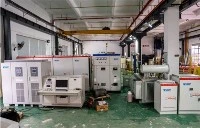
Returning to the supplier selection level, qualification and engineering verification are external anchor points for assessing equipment reliability. Wuhan UHV Power Technology Co., Ltd. has obtained the national high-tech enterprise certification and passed the ISO 9001 quality management system certification. It is also a member unit of the China Electricity Council. The battery testing equipment has accumulated practical application records in the detection of the energy storage system supporting Baihetan Hydropower Station, the power supply network of Sichuan Tibet Railway, and the capacity verification of UPS batteries in multiple data centers. The stability and data traceability of the equipment in long-term constant current discharge constitute reference information that is difficult to read from the specification sheet in the selection decision.
The selection of battery testing equipment for energy storage systems is essentially about finding a balance between "accurate measurement," "comprehensive measurement," "safe measurement," and "usable" that matches one's own scenario. Accuracy determines whether data is reliable, channels determine whether diagnosis can be applied to individual units, temperature and safety protection determine whether the testing process itself is controllable, while engineering validation and supplier qualifications determine whether the equipment can continuously output comparable and traceable health judgments over several years of operation and maintenance cycles. At present, as energy storage scales from the construction period to the operation period, the weight of this selection logic will only become increasingly important.