



During the operation of the substation, the DC power supply system undertakes important tasks such as relay protection, circuit breaker opening and closing, automatic control, and emergency power supply in case of accidents. As an important component of the DC system, the battery pack needs to provide reliable backup power in case of AC power interruption or other abnormal situations. Therefore, regular performance testing of batteries to promptly detect issues such as capacity decline, abnormal internal resistance, and aging of individual cells is an important part of the daily maintenance work of substations.
How to choose suitable battery testing equipment for different types and capacities of battery packs requires comprehensive consideration of on-site testing requirements, battery operating status, and maintenance management requirements.
1, Clarify the testing requirements for substation batteries
The commonly used batteries in substations mainly include valve regulated lead-acid batteries and other types. The working voltage, capacity, and usage environment of different batteries vary, and the required testing items are also not completely the same.
Before selecting testing equipment, it is important to clarify which testing tasks need to be completed. For example, daily inspections usually focus on battery voltage, internal resistance, and connection status; Regular maintenance may require further capacity testing, discharge testing, and charging performance checks. For battery packs that run for a long time, it is also important to pay close attention to the performance differences between individual cells in order to detect potential hazards in a timely manner.
Determining the testing items based on the actual maintenance plan can avoid equipment functional deficiencies and reduce unnecessary procurement costs.
2, Select equipment type based on testing items
Substation battery testing usually involves internal resistance testing, capacity testing, and discharge performance testing, and the tasks undertaken by different equipment vary.
The Wuhan UHV-750 battery internal resistance tester adopts AC discharge testing method, which can measure the voltage and internal resistance at both ends of the battery, and is suitable for daily detection and operation status analysis of the battery.
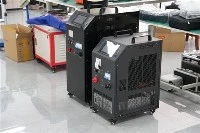
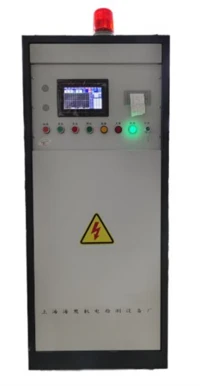
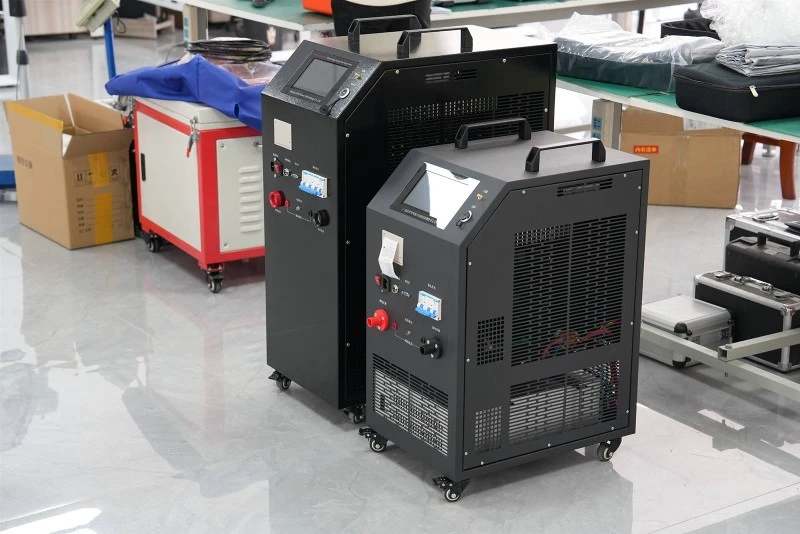
If the substation needs to understand whether the battery pack can meet the specified backup power supply requirements, it needs to pay attention to the actual discharge capacity. The Wuhan UHV-220/30F series battery discharge tester can achieve constant current discharge of the set value by continuously adjusting the discharge current, and is used for capacity verification and discharge performance testing of battery packs.
For users who wish to complete multiple battery testing tasks with one device, they can pay attention to the Wuhan UHV-220/30CF series battery charge and discharge tester.
3, Pay attention to the technical parameters of the equipment
After determining the testing items, it is necessary to verify the main technical parameters of the equipment to ensure that it can adapt to the actual situation of the on-site battery pack.
Firstly, it is necessary to confirm the battery types, individual voltage, and battery pack voltage range supported by the device. Different DC systems may use different battery pack configurations, and the equipment must be matched with the on-site system.
Secondly, attention should be paid to testing accuracy and data stability. For long-term operation status tracking, the measurement results should have good repeatability to facilitate the comparison of detection data at different times.
For capacity and discharge testing equipment, it is also important to focus on checking the discharge current range, load regulation method, continuous working time, and heat dissipation design. If a large capacity battery pack needs to be tested on site, it should be confirmed that the equipment can meet the corresponding discharge load requirements.
In addition, the functions of automatic recording, data export, historical data comparison, and report generation are also worth paying attention to. These functions can reduce manual recording workload and improve battery maintenance efficiency.
4, Pay attention to on-site operations and safety protection
Substation equipment usually needs to be tested within limited on-site space, therefore, the portability, wiring method, and ease of operation of the testing equipment are equally important.
For scenarios that require frequent inspections, a portable internal resistance tester with moderate size, convenient wiring, and clear display can be prioritized. For scenarios that require long-term discharge tests, special attention should be paid to the equipment's heat dissipation, load capacity, and abnormal protection functions.
During the battery discharge test, it is necessary to prevent issues such as battery over discharge, cable overheating, and wiring errors. The equipment should have protective measures that match its functions, and operators should also conduct testing in accordance with the equipment manual and on-site safety regulations.
For applications that require online monitoring of individual cell voltage or testing without disconnecting the battery connection, it is also necessary to confirm whether the wiring scheme, measurement method, and usage conditions of the equipment meet the on-site requirements.
5, Select appropriate configuration based on maintenance plan
The maintenance requirements for batteries in different substations are not the same. For users who mainly conduct daily inspections, choosing a portable battery internal resistance tester is usually more conducive to quick inspection and abnormal screening.
For substations that require regular verification of the backup power supply capability of battery packs, emphasis should be placed on configuring battery capacity testers or discharge testers that meet on-site voltage, current, and capacity requirements. If the maintenance work includes daily inspections, regular capacity checks, and historical data management, it is possible to consider using testing equipment in conjunction with the budget and workload.
Before procurement, it is recommended to provide the type of battery, number of units, rated voltage, rated capacity, DC system voltage, and planned testing items. Suppliers can confirm the applicable scope and specific configuration of the equipment based on this, to avoid affecting on-site use due to parameter mismatch.
6, Choose a reliable equipment supplier
The procurement of battery testing equipment should not only consider price, but also pay attention to product quality, technical support, operation training, and after-sales service. For substation maintenance equipment that requires long-term use, clear technical documentation, complete operating instructions, and timely fault handling support can all help reduce subsequent usage costs.
Wuhan UHV Power Technology Co., Ltd. provides power testing equipment and related detection solutions. When purchasing battery testing equipment, users can further confirm the applicable product model and technical parameters based on specific battery types, testing requirements, and on-site conditions.
The key to selecting substation battery testing equipment is to clarify the testing purpose, and then determine the equipment type based on actual needs such as internal resistance testing, capacity verification, and discharge testing. Only by fully considering the testing scope, measurement accuracy, safety protection, data management, and after-sales service can the equipment better serve the daily maintenance work of the battery, help operation and maintenance personnel timely grasp the battery status, and provide support for the reliable operation of the substation DC power system.