

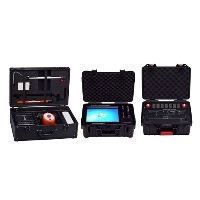
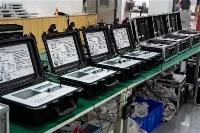

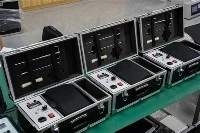
At the beginning of 2026, a 10kV distribution network in a certain park in Zhengzhou experienced a sudden branch cable grounding fault. The park's operation and maintenance personnel repeatedly used traditional shaking meters to detect the fault, but were unable to lock the fault location. The Wuhan UHV after-sales team rushed to the scene with a multi pulse cable fault tester and adopted a "segmented investigation+precise positioning" solution to complete the fault handling and restore power supply in just 4 hours. This case reflects a practical problem: how to make the correct selection decision when facing a wide variety of cable fault location equipment in the market, which directly affects the efficiency and cost of fault diagnosis.

First, clarify the process: distance measurement and positioning are two separate tasks
Before selecting, it is necessary to first understand the basic operational logic of cable fault location. The division of labor in the industry standard DL/T 849 has been clearly defined: cable fault location is divided into two stages: distance measurement and fixed-point positioning. The distance measurement is completed at one end of the cable, solving the problem of "approximately how many meters the fault point is", with errors usually ranging from meters to ten meters; To reach a fixed point, it is necessary to follow the cable path to the vicinity of the fault point and narrow the range to the point where excavation can be carried out with a shovel.
This distinction is crucial. Low voltage pulse method and flashover method belong to the distance measurement link, and they are carried by a scintillation meter; The acoustic magnetic synchronization method belongs to the fixed-point link, which is carried by a fixed-point instrument. The two types of instruments have different technical requirements and testing methods. A complete cable fault testing system usually consists of four parts: the main control unit (distance measuring host), high-voltage signal generation unit, path detection and precise positioning unit, and auxiliary equipment. If these two links are confused during selection, it is easy to cause configuration imbalance - either insufficient ranging accuracy or lack of fixed-point capability.
Five key dimensions for selection
Firstly, the voltage level of the cable. The voltage level determines the output voltage range of the high-voltage unit required for the testing system. Low voltage cables can use relatively basic testers, while high-voltage cables require equipment with higher voltage resistance and more accurate measurement performance to ensure testing safety and accuracy of results. Different voltage levels correspond to different high-voltage generator configurations, which is the basic threshold for selection.
Secondly, cable type and length. The structures and characteristics of power cables, communication cables, and control cables are different. The length of the cable directly affects the effective application range of the testing method. Generally, for municipal projects, the range of 0 to 20km is sufficient to meet the requirements. For long-distance cables, attention should also be paid to the blind spot indicators and signal attenuation compensation capabilities of the equipment.
Thirdly, the ability to cover fault types. High impedance faults are a difficult point in cable fault detection. If the fault type is open circuit, short circuit, poor contact or low impedance grounding, low voltage pulse method should be used for measurement; If it is a high resistance fault, the high-voltage impact method should be used. When selecting equipment, priority should be given to devices that support at least four types of faults: low resistance, high resistance, flashover, and open circuit. Special attention should be paid to whether the system has a flashing method and strong fixed-point capability.
Fourthly, positioning accuracy and operational efficiency. The positioning accuracy directly affects the maintenance efficiency, and an error within ± 1 meter is optimal. However, it should be noted that ranging accuracy and fixed-point accuracy are two different things. The distance measurement error is usually in the range of meters to ten meters. If excavation is carried out directly based solely on distance measurement readings, it is easy to encounter rework situations where the measurement is taken but cannot be excavated. The key to determining the accuracy of the final excavation position lies in the time difference resolution and noise reduction ability of the acoustic magnetic synchronization in the fixed-point section.
Fifth, installation environment and portability. The laying environment of cables includes urban areas, fields, tunnels, cable trays, etc. The complex environment places higher requirements on the anti-interference ability of the system and the sensitivity of the fixed-point instrument. In addition, whether the equipment is easy to carry and has good dust and water resistance performance is particularly important in outdoor and underground work scenarios.
Industry Trend: Moving from Single Function to System Integration
From a market perspective, cable fault location equipment is undergoing several significant changes. According to market research reports, the global cable fault locator market is expected to grow from $780 million in 2025 to $860 million in 2026, with a compound annual growth rate of 9.0%. The increasing popularity of advanced time-domain reflection measurement technology, the expansion of multifunctional and hybrid fault detection systems, and the application of artificial intelligence in the field of automated signal analysis are driving the evolution of equipment forms from single instruments to integrated and intelligent directions.
The multi pulse cable fault tester used by Wuhan UHV in Zhengzhou emergency repairs is a manifestation of this trend - its core technology converts complex high impedance fault waveforms into low-voltage pulse short-circuit fault waveforms, significantly improving the level of rough measurement and reducing the operator's dependence on waveform interpretation experience. The parallel presence of cable line testing instruments, series resonance testing devices, partial discharge testing systems, etc. in the company's product line also reflects the industry's increasing demand for the full chain capability of cable operation and maintenance, including "detection diagnosis positioning".
For procurement and operation personnel, the core logic of selection is already clear: first, clarify which type of faults the unit mainly deals with and which operational links need to be covered, and then reverse the configuration - ranging units look at method coverage and sampling rate, high-voltage flashover units look at impact energy and waveform capture, and fixed-point units look at time difference resolution and noise reduction capability. Although the technical progressiveness of the equipment is important, whether it can match the actual cable type, laying environment and operation and maintenance capability is the key to determine the investment value.