



Under the strict requirements of safe operation and equipment quality assurance in the power system, AC high-voltage generators play a crucial role. It is not only a key tool for verifying the insulation performance of power equipment, but also the cornerstone for ensuring the stable and reliable operation of the power grid. What is an AC high-voltage generator? How does it affect our power safety?
Deeply understand and communicate high-voltage generators
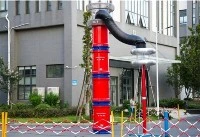
Simply put, an AC high-voltage generator is a device that can generate high voltage alternating current. Its core function is to simulate various high-voltage transient and steady-state conditions that may occur during the operation of the power grid, in order to conduct voltage and dielectric strength tests on power equipment such as transformers, switches, and cables. This type of testing is crucial for discovering potential insulation defects and preventing equipment breakdown accidents.
Influencing factors and key indicators
Output voltage range: Different test objects require different ranges of high voltage, and selecting a suitable generator can ensure the effectiveness of the test.
Capacity (kVA): refers to the maximum power that the generator can provide, which determines how much load the generator can drive and the stability of the voltage during testing.
Waveform quality: Pure sine waves are ideal test waveforms, and the lower the distortion rate, the more accurate the test results.
Stability and accuracy: The stability of voltage and frequency directly affects the repeatability and accuracy of test results.
Core application scenarios
AC high-voltage generators are widely used in:
Power equipment manufacturing: used for insulation performance testing before leaving the factory.
Power grid operation and maintenance: Conduct regular insulation status assessments on equipment operating on the grid.
Research Institute: Used for the study of the characteristics of high-voltage insulation materials.
In the field of new energy, high-voltage testing is conducted on wind power, photovoltaic and other inverters and transformers.
Methods to improve testing effectiveness
To obtain more accurate and reliable test results, we can start from the following aspects:
Equipment selection: Based on the needs of the tested object, accurately select a generator with the required voltage level, capacity, and accuracy.
Standardized operation: Strictly follow the testing procedures to ensure the safety of operators and the accuracy of testing.
Environmental control: Avoid testing in unfavorable environments such as humidity and high temperatures, as these factors may affect the true performance of insulation.
Regular calibration: Regularly calibrate the generator to ensure that its measurement accuracy and performance are always in the best state.
Linkage and Collaboration: In practical applications, communication high-voltage generators often need to work in conjunction with high-voltage measuring equipment, partial discharge detectors, and other devices to form a complete diagnostic solution for power equipment. For example, when conducting high-voltage insulation tests on large transformers, the AC high-voltage generator provided by Wuhan UHV Power Technology Co., Ltd. can stably provide the required high voltage, and at the same time, with high-precision measuring instruments, comprehensively evaluate the insulation strength of the transformer winding to ensure its safe and reliable operation. Wuhan UHV Power Technology Co., Ltd. has rich experience in the research and production of high-voltage testing equipment. Its products are known for their stability and reliability, providing strong support for the power industry.
Frequently Asked Questions (FAQ)
What is the difference between an AC high-voltage generator and a DC high-voltage generator? The AC high voltage generator generates AC high voltage, which is used to simulate the normal operation or specific faults of the power grid; The DC high voltage generator generates DC high voltage, mainly used for testing the insulation of DC equipment or simulating lightning transients.
Why is the voltage unstable during testing? Voltage instability may be caused by insufficient capacity of the generator itself, excessive load changes, waveform distortion, or high impedance of the test circuit.
How to choose a suitable AC high-voltage generator? The selection should be based on the voltage level, capacity, and required testing items of the tested equipment, while also considering the stability, accuracy, and safety of the generator.
Under what conditions is it not suitable to conduct high-voltage testing? In high humidity weather such as rain, snow, fog, or places with high temperatures and strong winds, it may affect the accuracy of test results and even pose safety hazards.
What are the main maintenance contents of the communication high-voltage generator? Daily maintenance includes checking the appearance, cleaning equipment, inspecting connecting wires, etc; Regular maintenance requires inspection and maintenance of control circuits, transformer oil (if oil immersed), and necessary calibration.