

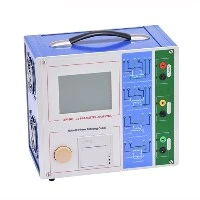
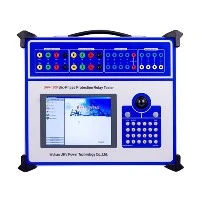
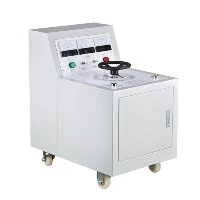
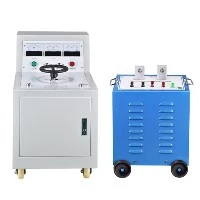
The transformer capacity load no load tester is a portable instrument that integrates multiple measurement functions. It indirectly derives and judges the actual capacity of transformers by accurately measuring key parameters such as no-load loss and load loss, and evaluates whether their performance meets national standards.

Core functions and testing items
1. Transformer capacity determination (core function)
Principle: According to national standards such as GB 1094.1 or GB 20052, transformers with different capacities and voltage levels have clear limit values for their no-load and load losses. This instrument accurately measures the no-load loss of the transformer and compares it with the data in the national standard database to accurately determine the true capacity of the transformer.
Application scenario: Mainly used to combat "nameplate fraud" (such as replacing the nameplate of a small capacity transformer with a large capacity one), which is crucial in electricity inspection, energy efficiency evaluation, and transformer acceptance.
2. No Load Test
Purpose: To measure the no-load loss (iron loss) and no-load current percentage of transformers.
Wiring method: Usually, the rated voltage is applied from the low voltage side of the transformer, and the high voltage side is open circuited.
significance:
No load loss (iron loss): mainly caused by hysteresis loss and eddy current loss of the iron core, it is an inherent loss of the transformer and is independent of the load size. An excessively high value indicates poor iron core material, process defects, or localized overheating.
No load current: reflects the excitation current required for the transformer to establish magnetic flux, and its magnitude can indicate the magnetization performance and assembly quality of the iron core.
3. Load Test/Short Circuit Test
Purpose: To measure the load loss (copper loss) and impedance voltage percentage of transformers.
Wiring method: Usually, a current is applied from the low voltage side of the transformer (causing a short circuit on the high voltage side), and the voltage is slowly increased until the current reaches the rated value.
significance:
Load loss (copper loss): It is mainly the loss caused by the current flowing through the winding resistance, and its magnitude is proportional to the square of the load current. This value is too high, indicating insufficient winding materials, poor contact, or the presence of local short circuits.
Impedance voltage: It is an important technical parameter of transformers, which directly affects the magnitude of short-circuit current and the voltage stability of the power grid.
4. Other auxiliary functions
Voltage, current, power, and power factor measurement: high-precision measurement of basic electrical parameters.
Harmonic analysis: can analyze the harmonic content of voltage and current, and evaluate power quality.
Vector analysis: displays the phase relationship between voltage and current, which helps to determine whether the wiring is correct.
Data storage and printing: Save test data and export reports through built-in printers or connected computers.