


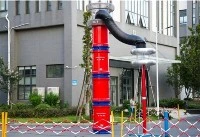

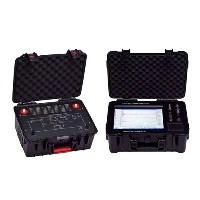
Have you ever encountered a situation where a painstakingly laid power cable had problems while in use, causing production to stagnate and resulting in heavy losses? Finding the root cause of the problem is as difficult as searching for a needle in a haystack. Today, let's talk about a tool that can help you quickly locate cable "lesions" - cable fault detector.
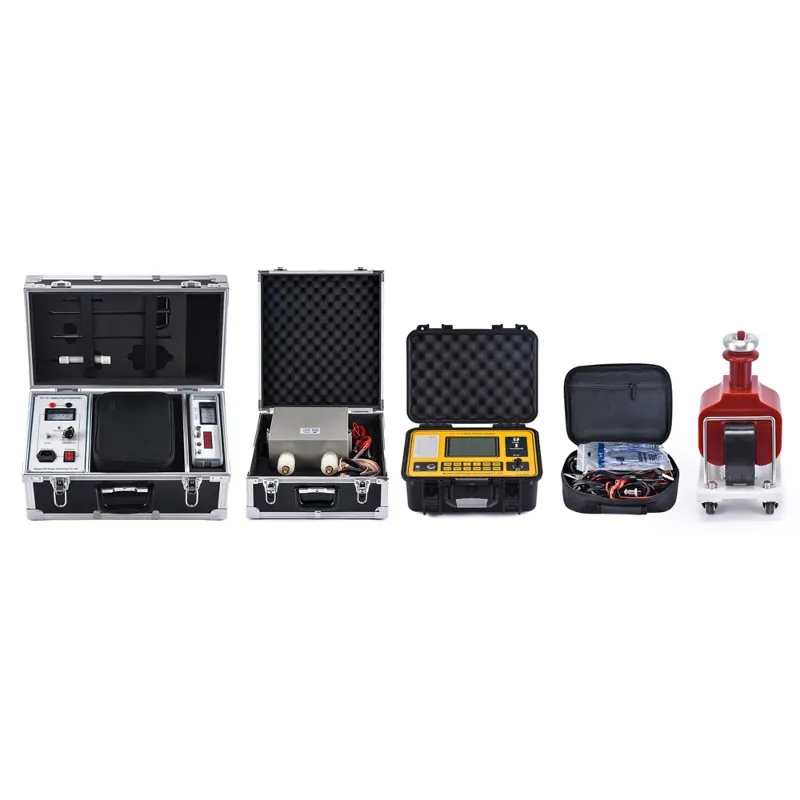
What is a cable fault detector?
Simply put, a cable fault detector is an instrument specifically designed to locate the location of power cable faults. Imagine a long cable like a blood vessel in the human body, once blocked or broken in one place, it will affect the operation of the entire system. The cable fault detector is like a diagnostic tool in a doctor's hand, which can accurately "auscultate" the cable and identify where the problem lies.
Factors affecting cable faults
The occurrence of cable faults is not accidental, and many factors can contribute to it:
Environmental factors such as humidity, corrosive soil, rodent bites, and mechanical damage during construction can all lead to cable insulation damage.
Quality factors: The manufacturing quality of the cable itself and the joint manufacturing process will directly affect its service life.
Operating factors: Overload operation, voltage fluctuations, lightning strikes, and other external factors may also trigger faults.
Aging factors: With the increase of service life, cable materials will gradually age, insulation performance will decrease, and faults are more likely to occur.
How to use a cable fault detector?
Using a cable fault detector is like performing a "CT scan" on a cable. The core principle is usually based on the principles of electromagnetic induction or pulse reflection.
Pulse method: The device sends a high-voltage pulse signal to the cable, and when the pulse encounters a fault point, a reflected signal is generated. By measuring the round-trip time of this reflected signal, combined with the length and wave velocity of the cable, the specific location of the fault point can be calculated. It's a bit like shouting in a valley, listening to echoes to determine distance.
Electromagnetic wave method: For certain types of faults, the instrument can also locate them by detecting the electromagnetic field generated near the fault point.
Wuhan UHV Power Technology Co., Ltd., as a professional force in this field, has rich experience and technical accumulation in the research and application of cable fault detectors. Their products and services can help the power system efficiently and accurately solve the problem of cable fault detection.
Do you want to do better?
To make more effective use of cable fault detectors, there are several key points:
Understand your cables: Familiarize yourself with cable types, laying paths, lengths, and historical fault records, which can provide valuable clues for fault detection.
Mastering instrument operation: Proficiently mastering the usage methods and parameter settings of different types of cable fault detectors is the foundation for accurate judgment.
Combining multiple methods: Sometimes a single detection method may not be sufficient. You can try combining different detection techniques to mutually verify and improve accuracy.
Pay attention to maintenance and upkeep: Regularly inspecting and maintaining cables, promptly identifying and addressing potential hazards, can effectively reduce the occurrence of faults. The professional technical support provided by Wuhan UHV Power Technology Co., Ltd. also provides solid guarantees for users.
Cable fault detection is a highly specialized task that relies on advanced equipment and specialized technology. By using cable fault detectors reasonably and cooperating with scientific maintenance strategies, the cable fault rate can be greatly reduced, ensuring the stable operation of the power system.
Frequently Asked Questions (FAQ)
Q: Can cable fault detectors detect all types of cable faults? A: At present, there are many types of cable fault detectors on the market, with different detection principles and equipment for different types of faults (such as grounding, short circuit, open circuit, high resistance, etc.). For some special and difficult faults, more specialized equipment or a combination of multiple detection methods may be required. The product line of Wuhan UHV Power Technology Co., Ltd. covers various types of fault detection solutions.
Q: What is the accuracy of detection? A: The detection accuracy is affected by various factors, including cable type, fault type, instrument performance, and operator proficiency. Generally speaking, advanced cable fault detectors can achieve a positioning accuracy of meters or even higher.
Q: In what environment can cable fault detectors be used? A: Most cable fault detectors are designed for outdoor or on-site environments and have certain rainproof and dust-proof functions. However, attention should still be paid to avoiding precise detection in extremely harsh weather or strong electromagnetic interference environments.
Q: Do you need any other equipment besides the detector? A: Depending on the type of fault and detection method, auxiliary equipment such as high-voltage generators, signal receivers, and pathfinders may need to be used in conjunction to complete the entire cable fault diagnosis process.
Q: If I don't have professional knowledge, can I operate the cable fault detector myself? A: Cable fault detector belongs to professional instruments, and operation requires certain professional knowledge and practical experience. It is recommended to have trained professional technicians perform the operation. Wuhan UHV Power Technology Co., Ltd. usually provides relevant training and technical support services.