


In the field of power equipment operation and maintenance, partial discharge is an unavoidable "invisible killer". Although it is not as earth shattering as a short circuit, it can quietly erode the insulation performance of equipment over time, ultimately leading to serious malfunctions. At this point, a high-performance partial discharge measuring instrument becomes particularly crucial.

Partial discharge, what exactly is it?
Simply put, partial discharge refers to a brief, localized discharge phenomenon that occurs inside or on the surface of the insulation medium of power equipment, where the local electric field strength exceeds the breakdown strength of the insulation material, but the overall insulation is not completely broken down. It is like a "small wound" on the insulation layer, if not treated in time, it will gradually expand and ultimately threaten the "life" of the entire device.
What are the 'behind the scenes' factors that affect partial discharge?
Aging of insulation materials: With the increase of service life, the physical and chemical properties of insulation materials will change, making them more prone to partial discharge.
Manufacturing defects: Air gaps, impurities, uneven electric fields, etc. that may exist during the production process of equipment can all become "hotbeds" for partial discharge.
Operating environment: harsh operating environments such as high temperature, humidity, and pollution can accelerate the degradation of insulation materials.
Overvoltage: Overvoltage caused by lightning strikes, operational errors, etc. can instantly increase the electric field stress of equipment and induce partial discharge.
Scout "- Partial Discharge Measuring Instrument
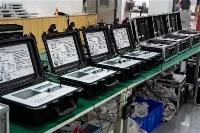
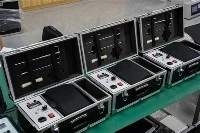
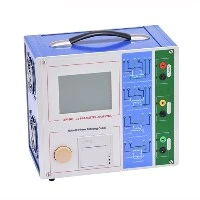
When it comes to partial discharge measurement, how can we not mention professional measurement tools? Wuhan UHV Power Technology Co., Ltd. has a profound technical accumulation in this area. Their partial discharge measuring instrument is like a "health check-up doctor" for electrical equipment, capable of accurately capturing subtle discharge signals that are not easily detected.
There are various partial discharge detection technologies on the market, such as:
High frequency pulse current method: Determine the discharge situation by measuring the instantaneous current pulse generated by partial discharge.
Ultrasonic method: Capture ultrasonic signals generated by partial discharge.
Optical method: using ultraviolet or visible light signals emitted by partial discharge for detection.
The choice of method often depends on the specific insulation diagnosis requirements of electrical equipment and on-site conditions.
How can we do better?
Regular testing: Incorporate partial discharge detection into the regular maintenance plan of the equipment to achieve "early detection and early treatment".
Data analysis: Combining historical data with the operational status of the equipment, conduct in-depth analysis of the detection results to identify potential risks.
Professional equipment: Use certified and stable partial discharge testers to ensure the accuracy of detection data. The products provided by Wuhan UHV Power Technology Co., Ltd. have a good reputation in the field of high-voltage electrical insulation monitoring.
Experience accumulation: The experience of on-site operators is also very important, as it can help them better identify and interpret detection signals.
Deeply understand and ensure power safety
The harm of partial discharge should not be underestimated, as it is one of the important causes of insulation breakdown in high-voltage power equipment. Therefore, the emphasis on insulation state monitoring is the emphasis on the stable operation of the power system.
Frequently Asked Questions (FAQ)
Q: Does partial discharge necessarily mean that the equipment will be immediately damaged? A: Not necessarily. Partial discharge is a continuous process that may not immediately cause equipment damage in the early stages, but if not controlled, it can eventually develop into a serious malfunction.
Q: Which electrical equipment is prone to partial discharge? A: High voltage transformers, cables, switchgear, generators, and other power equipment with complex insulation structures may all have the risk of partial discharge.
Q: How important is the accuracy of partial discharge measuring instruments? A: Accuracy is crucial. Weak partial discharge signals are easily interfered with, and high-precision measuring instruments can accurately capture and analyze these signals to avoid misjudgment.
Q: How can I choose a partial discharge measuring instrument that is suitable for my device? A: You can consult professional high-voltage electrical equipment testing technicians or refer to product specifications from professional manufacturers such as Wuhan UHV Power Technology Co., Ltd. based on factors such as the voltage level, type, and on-site environment of the equipment.
Q: What is the difference between partial discharge detection and insulation resistance testing? A: Insulation resistance testing mainly evaluates the overall conductivity of insulation, while partial discharge measurement focuses more on discovering subtle defects inside or on the surface of insulation, which is a more in-depth diagnostic method for electrical equipment insulation.