

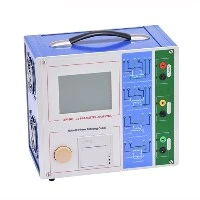

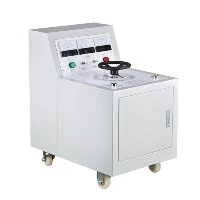
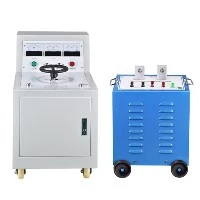
Insulation preventive testing is an important measure to ensure the safe operation of equipment. Through voltage withstand testing, the insulation condition of the equipment can be grasped, hidden defects inside the insulation can be discovered in a timely manner, and preparations for timely prevention can be made to avoid danger. AC withstand voltage and DC withstand voltage are both voltage tests and commonly used methods for testing insulation strength in power equipment.
Insulation preventive test
Preventive insulation testing of electrical equipment is an important measure to ensure the safe operation of the equipment. Through testing, the insulation condition of the equipment can be grasped, hidden defects inside the insulation can be discovered in a timely manner, and eliminated through maintenance. In severe cases, replacement is necessary to avoid insulation breakdown during operation, which can cause irreparable losses such as power outages or equipment damage.
Insulation preventive tests can be divided into two categories:
One type is non-destructive testing, also known as insulation characteristic testing, which measures various characteristic parameters at lower voltages or using other methods that will not damage the insulation. It mainly includes measuring insulation resistance, leakage current, dielectric loss tangent value, etc., in order to determine whether there are defects inside the insulation. Experimental results have shown that this method is effective, but currently it cannot be relied solely on to reliably determine the electrical strength of insulation.
The other type is destructive testing, also known as withstand voltage testing. The voltage applied in the test is higher than the operating voltage of the equipment, and the insulation test is very strict, especially to expose concentrated defects with high danger and ensure that the insulation has a certain electrical strength, mainly including DC withstand voltage, AC withstand voltage, etc. The disadvantage of voltage withstand test is that it may cause certain damage to the insulation.
DC withstand voltage test
The DC withstand voltage test has a high voltage and plays a special role in detecting certain local insulation defects. It can be conducted simultaneously with the leakage current test. Compared with AC withstand voltage test, DC withstand voltage test has the advantages of lightweight testing equipment, minimal insulation damage, and easy detection of local defects in the equipment. Compared with AC withstand voltage test, the main disadvantage of DC withstand voltage test is that the voltage distribution inside the insulation is different between AC and DC, and the test of insulation by DC withstand voltage test is not as close to reality as AC test.
The influence of DC withstand voltage test on cross-linked power cables
Cross linked polyethylene insulation material is generated by cross-linking process of cross-linked polyethylene plastic, belonging to integral insulation material. Its dielectric constant is 2.1-2.3, and it is generally not affected by temperature changes. Under direct current voltage, the electric field strength in the insulation layer is distributed proportionally according to the insulation resistivity, and the distribution of insulation resistivity is uneven (in the production process of cross-linked polyethylene plastics, impurities are inevitably present in the main material due to process reasons, which have small insulation resistivity and are distributed radially along the insulation layer, with uneven distribution). Therefore, the electric field distribution of cross-linked polyethylene insulation is different under AC and DC voltages, resulting in inconsistent breakdown characteristics. The DC withstand voltage test not only fails to effectively detect insulation defects such as water branches in cross-linked polyethylene insulation materials, but also, due to the effect of space charges, further develops and expands the existing weak points inside the insulation, gradually deteriorating the insulation performance and forming an accumulation effect of internal insulation degradation. This can easily cause the cable to explode shortly after being put into operation in certain areas that should not have problems under AC voltage. In addition, certain parts of the cable, such as the cable head and middle head, may have certain defects under AC voltage, but they will not break down during DC withstand voltage testing.
AC withstand voltage test
The AC withstand voltage test is very strict in testing insulation and can effectively detect more dangerous concentrated defects. It is the most direct method for assessing the insulation strength of electrical equipment, and has a decisive significance in determining whether electrical equipment can be put into operation. It is also an important means to ensure the insulation level of equipment and avoid insulation accidents.
The AC withstand voltage test may sometimes exacerbate some weak points in the insulation. Therefore, before the test, it is necessary to conduct tests on the insulation resistance, absorption ratio, leakage current, and dielectric loss of the test sample. If the test results are qualified, the AC withstand voltage test can be carried out. Otherwise, it should be dealt with in a timely manner and the AC withstand voltage test should be conducted after all indicators are qualified to avoid unnecessary insulation damage.

Wuhan UHV specializes in producing series resonance (also known as variable frequency series resonance withstand voltage device) and has been engaged in the electrical measurement industry for many years. Its products have first-class quality and welcome customers to come and purchase.