

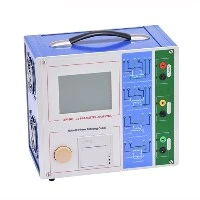
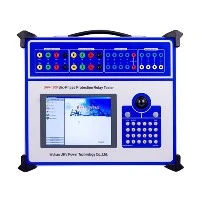
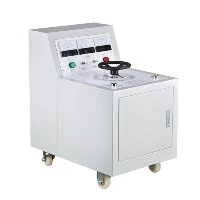
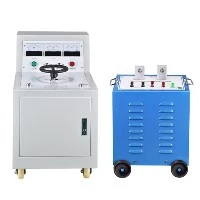
The Microhmmeter under Wuhan UHV can help many power workers conduct various power tests more conveniently.

A micro ohm meter (µΩ meter) is a specialized precision instrument designed to measure extremely low electrical resistances, typically in the range of micro-ohms (µΩ) (millionths of an ohm) up to a few ohms. Its primary purpose is to assess the integrity of high-current connections and conductors where even tiny resistances can lead to significant problems.
Here are the key uses:
1.Testing Electrical Connections & Contacts:
Circuit Breakers & Switches: Measures contact resistance in closed positions. High resistance indicates pitting, contamination, or poor mating, leading to overheating, voltage drop, and potential failure.
Busbars & Cable Joints/Splices: Verifies the quality of bolted, welded, or crimped connections. Poor joints create high-resistance points that overheat under load.
Fuses: Checks the resistance of the fuse element itself or its end caps/connections.
Relays & Contactors: Assesses the resistance of closed contacts.
2.Measuring Conductor Resistance:
Cables & Wires: Measures the DC resistance of short cable/wire lengths or windings (e.g., motor, transformer) to verify material quality, cross-section, and length calculations. Crucial for calculating I²R losses.
Shunts: Precisely calibrates or verifies the resistance of current shunts used in ammeters.
Busbar Systems: Measures resistance per unit length or total resistance of bus runs.
3.Evaluating Welds & Bonds:
Welded Joints (Busbars, Taps): Ensures welds have low resistance, indicating good fusion and conductivity.
Electrical Bonding: Verifies the effectiveness of safety bonds (e.g., aircraft, vehicles, equipment chassis) designed to carry fault current safely to ground. High resistance compromises safety.
Lightning Protection Systems: Tests the continuity and low resistance of down conductors and bonds.
4.Transformer & Motor Testing:
Winding Resistance: Measures the DC resistance of transformer windings (primary and secondary) and motor windings/stator coils. Used for:
Calculating I²R losses (copper losses).
Identifying shorted turns (lower than expected resistance).
Identifying open circuits (infinite resistance).
Detecting poor connections within the winding.
Establishing a baseline for future comparison (predictive maintenance).
5.Quality Control & Manufacturing:
Verifies the resistance of components like resistors (low-value precision types), braids, contacts, and assemblies during production.
Ensures consistency and adherence to specifications.