



In the performance evaluation of power equipment, especially high-voltage insulation materials, dielectric constant and dielectric loss are two crucial indicators. They are directly related to the insulation ability and energy loss of the material. What exactly are they? Why is it so important? What magical tools can help us accurately measure them? Today, let's talk about a dielectric constant dielectric loss tester that can help you "see through" the "secrets" of insulation materials.
Unveiling the Mysterious Veil: Dielectric Constant and Dielectric Loss
Dielectric constant: Simply put, it measures the ability of a material to store electrical energy under the action of an electric field. The higher the dielectric constant, the stronger the material's ability to store electrical energy. When designing energy storage devices such as capacitors, choosing materials with high dielectric constants can effectively reduce the volume of the devices.
Dielectric loss: Under an alternating electric field, electrical energy is converted into thermal energy and dissipated, which is known as dielectric loss. The smaller the dielectric loss, the higher the energy utilization efficiency of the material, the less heat generated, and the more favorable it is for the long-term stable operation of power equipment. Especially in high-voltage equipment, excessive dielectric loss may cause insulation materials to overheat, age, and even lead to breakdown.
The 'behind the scenes' driving force that affects measurement
To accurately measure these two parameters, many factors need to be considered, which are like the "behind the scenes drivers" that affect the measurement results:
Test frequency: The dielectric constant and dielectric loss will vary with the test frequency, especially in the high frequency range.
Temperature: Temperature is a significant factor affecting the electrical properties of materials, and increasing temperature usually increases dielectric losses.
Humidity: The introduction of water molecules can significantly alter the dielectric properties of materials and increase losses.
The uniformity of the material itself: impurities, bubbles, defects, etc. inside the material can all affect the measurement results.
Electrode contact: The good contact between the electrode and the measured material directly affects the accuracy of the measurement.
Smart 'Partner': Measuring Instruments from Wuhan UHV Power Technology Co., Ltd
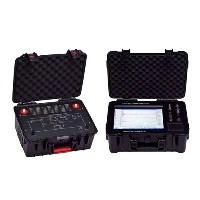
Faced with these complex measurement requirements, professional instruments become particularly important. Wuhan UHV Power Technology Co., Ltd., with its profound technical accumulation, provides advanced dielectric constant and dielectric loss measuring instruments. These instruments typically integrate a range of high-precision measurement technologies that can:
Accurate measurement: Accurately measure the dielectric constant and dielectric loss tangent of the sample at different frequencies and temperatures.
Automated operation: Supports automated testing processes, greatly improving work efficiency and reducing human errors.
Data analysis: capable of real-time analysis and recording of collected data, facilitating users to conduct in-depth research.
This type of instrument plays an irreplaceable role in evaluating the performance of insulation materials (such as transformer oil, cable insulation, capacitor media, etc.) and online monitoring of the health status of power equipment. The products of Wuhan UHV Power Technology Co., Ltd. are a reliable choice for you to conduct such precise measurements.
How can we do better?
To obtain more accurate and valuable measurement results, you can start from the following aspects:
Standardized sample preparation: Ensure that the size and thickness of the tested sample are uniform, the surface is smooth, and there is no contamination.
Control testing environment: Try to conduct testing under constant temperature and humidity conditions, or fully record environmental changes.
Choose the appropriate testing frequency: Based on the actual application scenario of the material, select the testing frequency that matches its working environment.
Regularly calibrate instruments: Ensure that the measuring instruments used are in good working condition and perform regular calibration.
Through these methods, combined with the professional measurement equipment of Wuhan UHV Power Technology Co., Ltd., you can gain a deeper understanding of the electrical properties of materials, providing solid data support for the safe operation and research and development innovation of power equipment.
Frequently Asked Questions (FAQ)
Q: What is the typical frequency range for measuring dielectric constant and dielectric loss? Answer: Depending on the application and material properties, the measurement frequency can range from the power frequency (50Hz/60Hz) to several hundred kHz or even GHz. The instruments of Wuhan UHV Power Technology Co., Ltd. usually support wide range frequency measurement to meet the needs of different scenarios.
Q: Why is measuring dielectric loss more important than measuring dielectric constant? Answer: The dielectric constant is mainly related to energy storage capacity, while the dielectric loss is directly related to energy loss and heat generation. In high-voltage insulation materials, excessive dielectric loss is a significant risk of equipment failure.
Q: What factors significantly affect the measurement results of dielectric constant and dielectric loss? Answer: It mainly includes testing frequency, temperature, humidity, material uniformity, and the contact between the electrode and the sample.
Q: How should I choose a suitable dielectric constant dielectric loss tester? Answer: When choosing, one needs to consider measurement accuracy, frequency range, temperature control capability, degree of automation, and brand reputation. The products of Wuhan UHV Power Technology Co., Ltd. have performed outstandingly in these aspects.
Q: What are the applications of the measured dielectric constant and dielectric loss data in practical engineering? Answer: These data are widely used in material selection, quality control, performance evaluation, and fault diagnosis of power equipment such as wires and cables, transformers, capacitors, insulators, etc.