



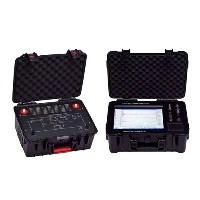
The stable operation of the power system relies on reliable relay protection. And the six phase microcomputer relay protection tester is the key equipment to ensure this safety. You may be a bit unfamiliar with this name, but its importance in the field of electricity is self-evident. Simply put, it is like a "health checkup doctor" for the power system, capable of accurately testing the performance of protective devices, ensuring that in the event of a power failure, the faulty line can be quickly and accurately cut off, protecting equipment and personal safety.

What is a six phase microcomputer relay protection tester?
This tester is an advanced automated testing equipment designed specifically for functional and performance testing of various types of relay protection devices. It is called "six phases" because it can simultaneously output six independent phasors (voltage and current), simulate complex power system operating conditions, and comprehensively evaluate the operating characteristics of relay protection devices, such as setting, delay, sensitivity, and selectivity. Wuhan UHV Power Technology Co., Ltd. has a profound technical accumulation in this field, providing efficient and reliable testing solutions for the power industry.
Key factors affecting testing effectiveness
The setting of test parameters: Accurate test parameters directly affect the authenticity of test results. This requires testers to have a deep understanding of the characteristics of the tested protective device and set it according to the actual operating procedures of the power system.
The accuracy and stability of the instrument itself: The accuracy of the six phase microcomputer relay protection tester directly determines the reliability of the test results. The stability of the equipment is also crucial to avoid drift or interference during the testing process.
Professional skills of operators: Proficiently mastering the use of instruments and understanding the basic principles of relay protection are prerequisites for drawing correct conclusions.
Environmental factors: Electromagnetic interference, temperature and humidity in the testing environment may all have an impact on the test results.
Intelligent tools assist in precise testing
Nowadays, technological advancements have made relay protection testing more intelligent. In addition to advanced testing instruments provided by professional instrument manufacturers such as Wuhan UHV Power Technology Co., Ltd., there are also some auxiliary tools that can improve testing efficiency and accuracy:
Professional testing software: Many testers are equipped with powerful software platforms that can automatically generate test reports and perform data analysis, greatly simplifying the operation process.
Fault Recorder: By combining the data from the fault recorder, it is possible to simulate the fault scenario more realistically and verify the performance of the protection device in actual faults.
Simulation platform: In some complex scenarios, simulation platforms can be used for rehearsals to detect potential problems in advance.
How can we do better?
To maximize the value of the six phase microcomputer relay protection tester, we can start from the following aspects:
Regular calibration and maintenance: Ensuring that the instrument is in optimal working condition is the foundation for ensuring testing accuracy.
Continuous skill training: Encourage testers to continuously learn new relay protection technologies and testing methods.
Establish comprehensive testing reports and archives: Detailed records of data and results for each test, facilitating traceability and analysis.
Pay attention to industry standard updates: stay up-to-date with the latest relay protection standards and technical requirements, and continuously optimize testing plans.
Wuhan UHV Power Technology Co., Ltd. has always been committed to providing innovative solutions for the power industry, helping users better cope with power system security challenges.
frequently asked questions
Q1: What specifically refers to the "six phases" of the six phase microcomputer relay protection tester? A1: "Six phase" refers to equipment that can simultaneously output six independent phase voltages and currents, simulate the combination of positive, negative, and zero sequence components of each phase in a three-phase system, comprehensively simulate various complex power system operating states, and accurately test multifunctional and multi circuit protection devices.
Q2: What types of relay protection devices can be tested using a six phase microcomputer relay protection tester? A2: Almost all types of relay protection devices can be used, including but not limited to: distance protection, differential protection, overcurrent protection, overvoltage/low-voltage protection, frequency protection, and some microcomputer based comprehensive protection.
Q3: What safety precautions should be taken when using a six phase microcomputer relay protection tester? A3: Operators must possess professional knowledge and skills, and strictly adhere to safety operating procedures. Before testing, it is necessary to confirm that the wiring is correct, avoid direct contact with live parts during the testing process, and ensure good grounding.
Q4: Is the test result of the six phase microcomputer relay protection tester necessarily consistent with the actual fault action? A4: The results provided by the tester are simulations based on set parameters and models. Although they are very close to reality, in actual faults, dynamic changes in system parameters, nonlinear factors, etc. may introduce some errors. Therefore, testing is an important means of verifying protective functions, but actual operational experience is equally valuable.
Q5: What is the maintenance frequency of the six phase microcomputer relay protection tester? A5: It is usually recommended to conduct periodic verification and calibration once a year to ensure its measurement accuracy. In daily use, the instrument should be cleaned regularly and the connecting cables should be checked for integrity.