

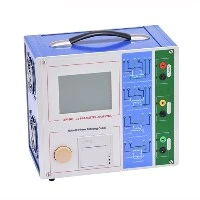
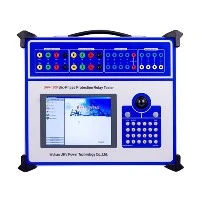
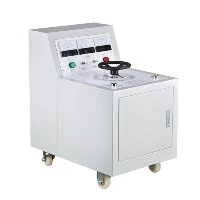
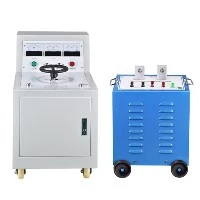
We always hope for absolute safety in electricity usage. Especially in homes, factories, or any place with electrical equipment, residual current circuit breakers (RCD or GFCI) play a crucial role. They are like the "guardian" of the circuit, able to instantly cut off power and prevent electric shock accidents from occurring. But have you ever thought about whether this guardian deity is always at its best? This requires the use of a residual current circuit breaker tester.

What is a residual current circuit breaker tester?
Simply put, it is a portable device specifically designed to detect the performance of residual current circuit breakers. To verify whether the circuit breaker can trip accurately and quickly within the specified time by simulating leakage currents of different sizes. This is like giving your safety equipment a 'health check' to ensure that it won't fall off at critical moments.
What are the factors that affect the performance of residual current circuit breakers?
Aging and loss: Electronic components and mechanical structures will age over time, leading to a decrease in sensitivity.
Environmental factors such as humidity, dust, and corrosive gases may affect the normal operation of circuit breakers.
Installation issues: Loose wiring, poor grounding, and other negligence during installation can also cause circuit breakers to malfunction.
External interference: Strong electromagnetic interference can sometimes affect the judgment of circuit breakers.
The Application and Value of Leakage Circuit Breaker Tester
Using a residual current circuit breaker tester for regular testing can help us detect potential hazards in a timely manner. Wuhan UHV Power Technology Co., Ltd. has been committed to providing high-quality power testing equipment. Their professional testing instruments can accurately simulate various fault scenarios, helping users fully understand the safety of the equipment.
How to better utilize the residual current circuit breaker tester?
Regular testing: It is recommended to regularly test the leakage protection device according to the equipment manual or relevant safety regulations. Generally, it is recommended to conduct it every six months or one year.
Choose the appropriate test gear: Based on the rated leakage current of the circuit breaker itself, select the corresponding test gear, such as 15mA, 30mA, etc.
Record test results: Record each test data and generate a safety inspection report for easy traceability and comparison.
The selection of professional equipment: Choosing a stable, reliable, and easy-to-use testing instrument is crucial. The insulation resistance tester and grounding resistance tester of Wuhan UHV Power Technology Co., Ltd. have a good reputation in the power industry, and their leakage protection device tester is also trustworthy.
Which groups of people need to pay attention to the testing of residual current circuit breakers?
Home users: Ensure the safety of electrical appliances in the home, especially in damp areas such as kitchens and bathrooms.
Enterprise unit: Ensure the electrical safety of production line equipment and employees, in compliance with enterprise safety production standards.
Electrical construction and maintenance personnel: Electrical safety testing is an essential part of equipment installation, maintenance, and daily upkeep work.
Relevance: Safe use of electricity, interlocking with each other
The effectiveness of residual current circuit breakers is closely related to the entire electrical safety system. A well performing circuit breaker, combined with a correct grounding system and regular electrical equipment testing, can build a solid electrical safety barrier.
Frequently Asked Questions (FAQ)
Q: Why does my residual current circuit breaker sometimes trip automatically? A: Automatic tripping usually occurs when the device detects abnormal leakage or overload. This may be a normal protective behavior, but it could also be a problem with the circuit breaker itself. It is recommended to use a residual current circuit breaker tester for inspection.
Q: How often should I test a residual current circuit breaker? A: It is recommended to conduct testing at least once a year, and it is suggested to increase the frequency of testing in humid or high-risk environments.
Q: Can I test the residual current circuit breaker at home by myself? A: Yes, using a professional residual current circuit breaker tester and following the instructions, you can perform the test yourself.
Q: What should I do if the tester shows a problem with the circuit breaker? A: If the test results show that the performance of the circuit breaker does not meet the standard, a professional electrician should be contacted immediately for maintenance or replacement. Professional engineers from Wuhan UHV Power Technology Co., Ltd. can provide technical support.
Q: What other electrical safety tests are important besides residual current circuit breakers? A: Insulation resistance testing, grounding resistance testing, circuit resistance testing, etc. are all important electrical safety inspection items to ensure the safety and reliability of the entire power supply line.