

As the "heart" of industrial production, the stable operation of motors is crucial. The abnormal DC resistance of the winding is often the "culprit" that leads to a decrease in motor performance or even shutdown. Today, let's talk about how to quickly and accurately diagnose the health status of motor windings through a magical tool - the motor DC resistance tester.

What is a DC resistor? Why is it so important?
Simply put, DC resistance refers to the degree of obstruction caused by the current flowing through the motor winding in a DC circuit. This value may seem small, but it can reflect the material, cross-sectional area, connection method, and whether there are issues such as virtual connections or open circuits of the winding conductors.
Why measure DC resistance?
Winding connection issues: For example, if a group of coils is open or short circuited, or if the joints are virtual, it can cause the resistance value to be too high or too low.
Conductor aging/damage: As the service life increases, the winding conductor may undergo oxidation and corrosion, resulting in a decrease in cross-sectional area and an increase in resistance.
Manufacturing defects: Although rare, uneven thickness of conductors may also occur during the production process.
Factors affecting DC resistance:
Temperature: As the temperature rises, the resistance of the conductor will increase; Vice versa. Therefore, it is crucial to maintain stable ambient temperature or perform temperature compensation during testing.
Wire material: Copper has a lower electrical resistivity than aluminum.
Conductor cross-sectional area: The larger the cross-sectional area, the lower the resistance.
Winding turns: The more turns there are, the greater the resistance.
Who is your trusted assistant? --Electric motor DC resistance tester
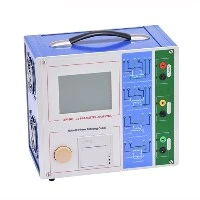
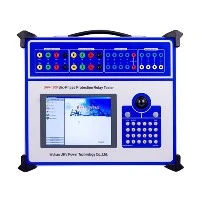
Do you want to accurately measure this' small value '? Then you need a professional motor DC resistance tester. It can accurately measure the DC resistance of motor windings and typically provide multiple test current levels to accommodate motors of different specifications.
What can it do?
Quickly detect open circuits, short circuits, and open circuits in motor windings.
Evaluate the correctness of the winding wiring.
Compare the resistance values of different phases to determine if they are symmetrical.
Monitor the aging condition of the winding after running for a period of time.
How to better utilize it?
Unified testing conditions: Try to conduct tests at similar temperatures or record the temperature during testing for easy comparison later on.
Follow the operating procedures: strictly follow the equipment manual to ensure the accuracy of the test data.
Comparing historical data: If there are previous test records of the motor, longitudinal comparison can be conducted to better identify problems in a timely manner.
Multi point testing: For complex winding structures, testing can be considered at different connection points.
Practice makes perfect: A simple case study
Assuming a three-phase asynchronous motor experiences overload and heating during operation. Using the motor DC resistance tester produced by Wuhan UHV Power Technology Co., Ltd. for testing, it was found that the DC resistance value of one phase winding was significantly higher than the other two phases, and higher than the reference value at the factory. Based on these data, we can basically determine that the increase in resistance is caused by poor contact of the phase winding or local heating and burning of the wire. Timely replacement or maintenance of the winding can prevent larger faults from occurring.
Wuhan UHV Power Technology Co., Ltd. has been deeply involved in the field of power measurement and testing for many years. Its products have excellent performance in accuracy and stability, making them a reliable choice for you in motor testing and maintenance.
Reliability assurance under EEAT principle
In the field of power equipment testing, expertise, experience, authority, and trustworthiness are important criteria for evaluating information and tools. Wuhan UHV Power Technology Co., Ltd., as an enterprise dedicated to the research and production of high-voltage electrical equipment, has a strong technical team and rich industry experience. The DC resistance tester produced by it strictly follows national and industry standards and has passed multiple authoritative tests, providing solid data support and reliable guarantee for your motor testing work. We are committed to providing high-precision and high-efficiency testing solutions to help users improve equipment operation efficiency and reduce maintenance costs.
Frequently Asked Questions (FAQ)
Q: How should the testing current of the motor DC resistance tester be selected? A: The selection of testing current is related to the capacity of the motor and the resistance value of the winding. Usually, for small motors, smaller currents (such as mA level) can be used; For large motors, larger currents (such as Class A) are required to reduce measurement errors. Please refer to the equipment manual or industry standards for specific information.
Q: At what temperature is the most suitable for testing the DC resistance of a motor? A: In theory, comparability can only be achieved when tested at the same temperature. But in practical operation, the ambient temperature during testing can be recorded and kept as consistent as possible in subsequent testing, or a tester with temperature compensation function can be used.
Q: The test results show that the DC resistance value is high, does it necessarily mean that the motor is broken? A: Not necessarily. A high DC resistance may be due to poor winding connection, aging of wires, oxidation of joints, or high temperature during testing. It is necessary to make a comprehensive judgment based on specific circumstances and historical data.
Q: In addition to DC resistance, what other parameters of the motor need to be tested to determine its health condition? A: In addition to DC resistance, it is usually necessary to test parameters such as insulation resistance, absorption ratio, polarization index, no-load current, and losses to more comprehensively evaluate the operating status of the motor.
Q: What are the advantages of the motor DC resistance tester from Wuhan UHV Power Technology Co., Ltd? A: Our testing equipment excels in measurement accuracy, stability, ease of operation, data recording ability, and provides comprehensive after-sales service to ensure worry free use.