

During the operation of power equipment, we often hear a word: 'dielectric loss'. It may sound a bit professional, but you know what? It is like a "medical examination report" for electrical equipment, directly related to the health status of the equipment, and even the safety and stability of the entire power grid. Today, let's uncover the mystery of dielectric loss together, see what it is, and how we "read" this medical examination report through a dielectric loss measuring instrument.
What is dielectric loss? --Those invisible energy 'thieves'
Simply put, dielectric loss refers to the phenomenon of energy loss inside a dielectric under the action of an alternating electric field. Imagine that when current flows through the insulation layer of power equipment, a portion of the energy is not effectively transmitted, but is converted into heat and "slips away" inside the insulation material. The 'thief' of these energies is the loss of media.
What are the "behind the scenes" factors that affect dielectric loss?
Dielectric loss is not an isolated phenomenon, it is influenced by multiple factors, like a complex 'drama':
Temperature: As the temperature increases, the thermal motion of molecules intensifies, and the polarization process inside the medium becomes more active, resulting in increased losses.
Electric field strength: Although the dielectric loss is not closely related to the electric field strength within the normal operating range, when the electric field strength is too high, it may cause partial discharge, thereby significantly increasing the loss.
Moisture and impurities: Moisture and impurities in insulation materials can greatly reduce their insulation performance, form conductive pathways, and cause a sharp increase in dielectric loss.
Material aging: With the increase of usage time, insulation materials will undergo aging, their molecular structure will change, their performance will decrease, and the dielectric loss will also increase accordingly.
Frequency: The polarization mechanism of the medium varies at different frequencies, which also affects the magnitude of the dielectric loss.
The secret weapon for detecting dielectric loss - dielectric loss measuring instrument
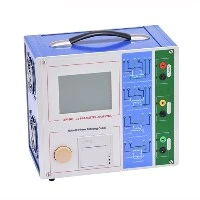
To determine the exact extent of dielectric loss, we need a professional tool - a dielectric loss measuring instrument. This is not an ordinary multimeter, it is specifically used to measure the loss tangent (tan δ) and capacitance value of the insulation medium of power equipment.
Working principle: Most common dielectric loss measuring instruments use the bridge measurement principle. By measuring the capacitance and leakage current of the tested device, combined with the applied voltage, calculate the tangent value of the dielectric loss angle. This value is an important indicator for measuring insulation performance. The lower the value, the better the insulation and the less energy loss.
Application scenario: Almost all high-voltage power equipment, such as transformers, transformers, cables, generators, switchgear, etc., require regular dielectric loss measurements to evaluate their insulation status.
Dielectric loss is closely related to it
The measurement of dielectric loss is not an isolated test, it is closely related to the overall health of electrical equipment insulation.
Electrical equipment insulation: It is the "lifeline" for the safe operation of power equipment. Good insulation performance can prevent accidents such as leakage and short circuits from occurring. The increase in dielectric loss is often an early signal of insulation aging.
Partial discharge: When small cracks or impurities appear inside the insulation material, partial discharge will occur under the action of an electric field, which will accelerate the aging of the insulation material and increase the dielectric loss.
How can we do better? --Make dielectric loss measurement more valuable
To make dielectric loss measurement more accurate and reflect the true condition of the equipment, we can start from the following aspects:
Standardized operating procedures: Strictly follow the equipment manufacturer's instructions and industry standards for measurement to ensure correct testing environment and wiring.
Regular testing and trend analysis: Regularly measure the dielectric loss of the equipment and conduct trend analysis on the measurement data. By comparing the results of previous measurements, the deterioration trend of insulation performance can be detected in a timely manner, and measures can be taken in advance.
Combining with other detection methods: dielectric loss measurement is not omnipotent, and it can be combined with other detection techniques (such as partial discharge measurement, infrared temperature measurement, etc.) to form a more comprehensive equipment diagnostic solution.
Understand testing conditions: Understand and record the voltage level, ambient temperature, humidity, and other conditions during testing, which can all affect the measurement results for subsequent comparative analysis.
Wuhan UHV Power Technology Co., Ltd.: Protecting the Safety of the Power Grid with Professionalism
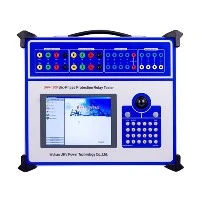
In the field of power equipment testing, professional tools and techniques are key to ensuring the safe operation of the power grid. Wuhan UHV Power Technology Co., Ltd. has been committed to the research and development of detection and diagnostic technology for high-voltage electrical equipment. Its production of dielectric loss measuring instruments and other equipment, with their high precision and reliability, provides strong support for the safe operation of the power industry. To learn more about their technology and products, you can visit the official website of Wuhan UHV Power Technology Co., Ltd.
Professionalism is the cornerstone of the power testing industry. Wuhan UHV Power Technology Co., Ltd., with years of industry experience and strong research and development capabilities, continuously introduces testing equipment that meets international standards to ensure the reliability of every measurement result.
Frequently Asked Questions (FAQ)
What is the qualified value of the tangent of the dielectric loss angle (tan δ)? There is no absolute standard for this, as different equipment types, voltage levels, as well as national and industry standards vary. Usually, the lower the tan δ value, the better. The specific reference values need to refer to the technical regulations or national standards of the relevant equipment.
Why is dielectric loss measurement necessary when the equipment is in a power outage state? Because dielectric loss measurement requires the application of a certain test voltage, if carried out in a live state, it can generate dangerous leakage currents, threaten personal safety, and may damage equipment.
What factors affect the measurement accuracy of dielectric loss measuring instruments? In addition to the performance of the instrument itself, the correctness of wiring during the testing process, environmental temperature and humidity, and the cleanliness of the surface of the tested equipment can all affect measurement accuracy.
Does an increase in dielectric loss necessarily mean that the equipment is going to be damaged? An increase in dielectric loss is usually a signal of insulation aging, indicating a decline in insulation performance. This does not necessarily mean that the device will be immediately damaged, but it is a warning that the device needs attention and may require repair. Timely assessment of insulation status can help us respond in advance.
5. Apart from transformers, what other equipment also requires regular dielectric loss measurements? In addition to transformers, almost all high-voltage power equipment such as generators, transformers, cables, switchgear, lightning arresters, etc. require regular measurement of dielectric loss for their insulation parts according to operating conditions and regulatory requirements.