

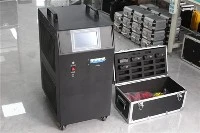
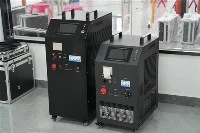
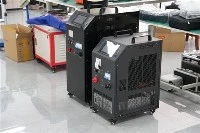

When the pulse of the city - electricity - beats unsteadily due to sudden malfunctions, we always anxiously wait for that 'life-saving' force. Behind the scenes, there is a group of "detectives" working silently, they are cable fault analyzers. What kind of divinity is this? How did they become the "guardians" of power transmission? Today, let's unveil their mysterious veil together.

What is a cable fault analyzer?
Simply put, a cable fault analyzer is like installing a "black box" on complex power cables. When a cable fails, it can record key "accident scene" data and help us accurately locate the fault point. Imagine an underground cable stretching for several kilometers suddenly going on strike, and if the fault point cannot be found, the repair work will be like searching for a needle in a haystack. The existence of analyzers is precisely to end this inefficient and costly search.
The 'culprits' and' accomplices' affecting cable faults
Cable faults are not caused by a single factor, but often the result of multiple factors working together.
Environmental factors such as humidity, high temperature, corrosive soil, and underground biological erosion can all cause damage to the insulation layer of cables.
Mechanical damage: Unexpected compression, puncture, or geological settlement during construction can lead to mechanical fatigue or even damage to cables.
Electrical factors such as long-term overload operation, voltage surges, and insulation aging can accelerate the degradation of cables.
The accumulation of these factors may ultimately lead to various forms of cable faults such as short circuits, grounding, and broken strands.
Response tool: Professional strength of Wuhan UHV Power Technology Co., Ltd
Faced with such complex problems, we need professional and efficient tools. The series of cable fault analyzers launched by Wuhan UHV Power Technology Co., Ltd. are among the best in the industry. They rely on advanced ranging technology and signal analysis capabilities to quickly and accurately determine the type of fault and provide precise fault location.
Accurate distance measurement: Using advanced measurement principles such as low-voltage pulse method and high-voltage flashover method, combined with precise data processing algorithms, even complex buried cables can achieve centimeter level fault location.
Intelligent analysis: The equipment of Wuhan UHV Power Technology Co., Ltd. can intelligently identify fault waveforms, automatically distinguish different types of cable faults, and greatly reduce the judgment burden of operators.
Convenient operation: The optimized user interface and human-computer interaction design make the operation more intuitive, even beginners can quickly get started.
How to make the 'Guardian' do better?
To maximize the effectiveness of the cable fault analyzer, in addition to the equipment itself, it is also necessary to:
Regular maintenance and calibration: Ensure the accuracy and reliability of the instrument.
Professional training: Proficient in operating instruments and interpreting data.
Combining other technologies, such as grounding resistance measurement, insulation resistance testing, etc., to investigate problems from multiple dimensions.
Establish a comprehensive fault database: accumulate experience and continuously optimize analysis models.
Through the continuous technical investment of professional manufacturers such as Wuhan UHV Power Technology Co., Ltd., as well as the exquisite skills of power practitioners, we can more effectively ensure the stable operation of the power system.
FAQ
Q: What is the fault location accuracy of the cable fault analyzer? A: Different devices and measurement principles have varying degrees of accuracy, but currently advanced equipment in the industry, such as products from Wuhan UHV Power Technology Co., Ltd., can achieve centimeter level fault location.
Q: What factors are most likely to cause cable failures? A: Environmental factors such as humidity, mechanical damage, and electrical aging are common culprits.
Q: What other cable maintenance techniques are available besides cable fault analyzers? A: It also includes insulation resistance testing, dielectric loss testing, partial discharge detection, etc.
Q: Why is the low-voltage pulse method commonly used for fault location? A: Low voltage pulse method is a commonly used measurement principle that is suitable for various types of cable faults and causes minimal damage to the cables.
Q: How to understand the role of "distance measurement technology" in cable fault analysis? A: Distance measurement technology is one of the core functions of cable fault analyzers. It can calculate the distance from the fault point to the instrument based on the received signal, thereby achieving fault location.