



In the power system, the stable operation of cables is the foundation for ensuring light and warmth for thousands of households. No matter how sturdy the cable is, it is inevitable to encounter "temper tantrums". Once a fault occurs, how to quickly and accurately locate the "lesion" has become a difficult problem in front of us. Today, let's talk about the "secret weapon" that can double the confidence of power maintenance personnel - the cable fault measuring instrument.

What is a cable fault measuring instrument?
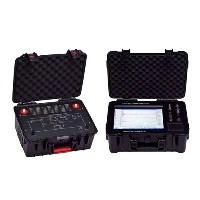
Simply put, a cable fault measuring instrument is a precision instrument specifically designed to detect and locate power cable fault points. Imagine a cable that is tens or even hundreds of kilometers long, buried underground or installed in the air. Once a problem occurs, the low efficiency and high cost of searching for a needle in a haystack can be imagined. The emergence of measuring instruments is like equipping cables with a pair of "golden eyes" that can accurately indicate the exact location of faults through various physical principles.
What are the factors that affect fault measurement?
To ensure reliable measurement results, many factors must be taken into account.
Types and lengths of cables: Cables of different materials and specifications have different electrical characteristics and require certain measurement methods. Due to signal attenuation and other issues, the measurement difficulty of long-distance cables will increase.
The nature of the fault: Cable faults can be roughly divided into various types such as short circuit, grounding, disconnection, flashover, etc. The characteristics of the electrical signals generated by different types of faults are also different, and targeted measurement methods need to be selected.
External environmental interference: soil moisture, the presence of underground metal objects, and interference from surrounding electromagnetic fields can all affect the signal reception and analysis of measuring instruments.
Operator experience: Although the instrument is advanced, the operator's understanding of the instrument principles and accumulation of on-site experience are still the key to obtaining accurate results.
Intelligent tools assist in precise positioning
Fortunately, modern technology has provided us with powerful tools. The advanced cable fault measurement equipment produced by Wuhan UHV Power Technology Co., Ltd. integrates multiple measurement technologies and can cope with various complex fault scenarios.
Time Domain Reflectometry (TDR): Similar to radar, it determines distance by emitting pulses and analyzing reflected signals.
Pulse high voltage generator and discharge instrument: For high resistance and flashover faults, high voltage is applied to force the fault point to discharge, generating detectable signals.
Acoustic detector: When the fault point discharges, sound waves are generated, and the acoustic detector can capture and locate the source of the sound wave.
Electromagnetic wave method: Monitor the electromagnetic waves generated during discharge at the fault point.
These technologies can often be combined to form a complete cable fault location solution. Wuhan UHV Power Technology Co., Ltd. fully considers various challenges in practical applications when developing such equipment, aiming to provide efficient, accurate, and reliable cable fault diagnosis services.
How can we do better?
To do better in cable fault measurement, in addition to relying on advanced instruments, it is also necessary to:
Continuous technical training: enable operators to proficiently master the usage methods and principles of various instruments, and be able to flexibly apply them according to the on-site situation.
Regular maintenance and calibration: Ensure that the accuracy and performance of measuring instruments are in optimal condition.
Establishing a comprehensive fault database: Accumulating different types of fault data helps to analyze cable faults more accurately.
Combining multiple measurement techniques: Don't be limited to a single method, choose the optimal combination strategy based on the fault type and site conditions. The equipment of Wuhan UHV Power Technology Co., Ltd. provides great convenience in this regard.
Frequently Asked Questions (FAQ)
Q1: Can the cable fault measuring instrument detect all types of cable faults? A1: Currently, advanced cable fault measuring instruments can detect the vast majority of cable faults, including low resistance, high resistance, wire breakage, etc. However, for some extremely special faults, multiple technologies or special accessories may need to be combined.
Q2: How accurate are the measurement results? A2: Under normal operation and good environmental conditions, high-quality cable fault measuring instruments can achieve centimeter level positioning accuracy, which is sufficient to meet on-site repair needs.
Q3: What professional knowledge is required to operate a cable fault measuring instrument? A3: Operators need to have a certain basic knowledge of electricity, understand cable structures and common types of faults, and undergo professional training to be familiar with the operating procedures and principles of the instruments used.
Q4: Why is cable fault measuring instrument so important in power grid maintenance? A4: It can significantly shorten the time for fault diagnosis, reduce power outage losses, lower maintenance costs, improve power supply reliability, and is a powerful assistant in ensuring the safe and stable operation of the power grid.
Q5: How to choose a cable fault measuring instrument that suits oneself? A5: When selecting, factors such as cable type, common fault types, measurement accuracy requirements, budget, and brand reputation should be considered. It is recommended to consult professionals or choose manufacturers with strength and good reputation such as Wuhan UHV Power Technology Co., Ltd.