


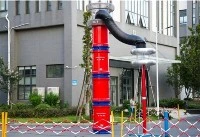

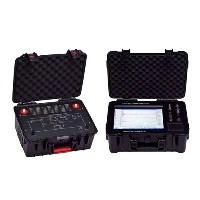
In the field of power transmission, cable faults are like sudden "roadblocks" that not only cause widespread power outages, but also pose great challenges to repair work. Especially when the fault point is difficult to determine, blind excavation and troubleshooting will consume a lot of time and manpower. At this point, an efficient and reliable cable fault locator becomes particularly important.

What is a cable fault locator?
Simply put, a cable fault locator is a specialized instrument designed to accurately locate the fault point of buried cables. It uses a series of physical measurement principles, such as electromagnetic induction, sound wave detection, or high-voltage pulse reflection technology, to "locate" the specific location of problems on cable lines. This is like equipping doctors with advanced "diagnostic equipment" that can quickly locate lesions and avoid "large-scale resection".
Factors affecting cable fault location
The location of cable faults is not always smooth sailing, and it is influenced by various factors:
Cable type and burial depth: Cables of different materials and burial depths will have different signal reflection and propagation characteristics, which will affect the detection accuracy of the instrument.
Fault type: short circuit, ground or open circuit? Different types of faults require different detection methods and instrument coordination.
Surrounding environment: The complex underground pipeline network, soil conductivity, and nearby interference sources may all interfere with positioning signals and reduce accuracy.
Instrument performance: The sensitivity, resolution, and anti-interference ability of the instrument directly determine the efficiency and accuracy of positioning.
Intelligent tools assist in precise positioning
Fortunately, with the development of technology, many advanced cable fault testers have emerged on the market, which integrate multiple detection technologies and can cope with complex fault scenarios. For example, some instruments combine high-voltage pulse method and path induction method, which can not only preliminarily determine the approximate range of the fault, but also accurately locate it to the meter level.
Wuhan UHV Power Technology Co., Ltd. has been deeply involved in this field for many years, committed to researching and producing high-performance power testing equipment. Their products have significantly improved the efficiency of cable fault diagnosis through advanced algorithms and user-friendly interfaces in practical applications, providing strong guarantees for the safe operation of power.
How can we do better?
To make more efficient use of cable fault location equipment, you can start from the following aspects:
Understand device performance: Fully familiarize yourself with the various functions and limitations of the instrument you are using, and master the optimal operating parameters.
Combining multiple methods: When conditions permit, different testing methods can be combined to verify each other and improve the reliability of positioning.
Experience accumulation: The practical experience of operators is crucial. Participating in practical operations and summarizing experience in handling different fault scenarios can greatly improve the success rate of localization.
Equipment maintenance: Regularly calibrate and maintain equipment to ensure it is in optimal working condition.
Wuhan UHV Power Technology Co., Ltd. not only provides high-quality equipment, but also focuses on providing professional technical support and training to customers, helping them better master the use of equipment and enhance their overall power repair capabilities.
Frequently Asked Questions (FAQ)
Q1: How does the cable fault locator work? A1: They usually use principles such as high-voltage pulses, electromagnetic induction, or sound waves to determine the location of fault points by measuring the propagation and reflection of signals. Wuhan UHV Power Technology Co., Ltd. integrates various advanced testing technologies into its products.
Q2: Which type of cable fault is the most difficult to locate? A2: High resistance grounding faults and open circuit faults are usually more difficult to accurately locate cable faults than low resistance short-circuit faults, requiring more professional equipment and skills.
Q3: What is the accuracy of the fixed-point instrument? A3: Modern cable fault locator can achieve centimeter level accuracy, but this is also affected by various factors such as burial depth and soil conditions.
Q4: How should I choose a cable fault locator that suits me? A4: When choosing, you need to consider the types of cables you mainly handle, common types of faults, your budget, and your requirements for accuracy. Understanding the solutions provided by Wuhan UHV Power Technology Co., Ltd. may be helpful.
Q5: Do you need any other auxiliary equipment besides the fixed-point device? A5: Yes, depending on the type of fault, auxiliary equipment such as high-voltage generators, signal generators, and acoustic receivers may also be required to achieve complete cable fault testing.