

With the continuous expansion of power system construction scale, the application of power cables in transmission and distribution networks is becoming increasingly widespread. From urban distribution lines to high-voltage transmission projects, cables of different voltage levels have significant differences in structure, insulation materials, operating conditions, and testing requirements. Before the cable is put into operation, after maintenance, and during the preventive testing process, professional testing equipment needs to be used to check the insulation performance and operating status.
For power engineering companies, electrical equipment manufacturers, and power testing institutions, choosing appropriate cable testing equipment not only affects the accuracy of test results, but also directly affects on-site testing efficiency and operational safety. Selecting equipment based on cable voltage level is a key factor to consider in the actual procurement process.

1, Selection of Low Voltage Cable Testing Equipment
Low voltage cables are mainly used in building power distribution systems, industrial equipment power supply lines, and low-voltage distribution networks. Common voltage levels include 0.6/1kV, etc.
The detection of such cables usually focuses on insulation performance, conductor continuity, and line fault inspection. When selecting equipment, insulation resistance testers, low-voltage cable fault testing equipment, and related electrical testing instruments can be configured according to the actual testing items.
The insulation resistance tester is mainly used to check whether the insulation layer of the cable is affected by moisture, aging, or insulation performance degradation. For projects that require line fault location, cable fault testers can also be selected to work with path detection and precise positioning equipment to locate cable breaks, short circuits, and grounding faults.
Although the test voltage of low-voltage cables is relatively low, they may also be affected by mechanical damage, environmental humidity, and temperature changes during long-term operation, so daily insulation testing cannot be ignored.
2, Selection of testing equipment for medium voltage cables
Medium voltage cables are widely used in power supply systems for industrial parks, urban distribution networks, substations, and large commercial buildings. Common voltage levels include 6kV, 10kV, 20kV, and 35kV.
Compared with low-voltage cables, medium voltage cables have higher requirements for insulation performance and local defect detection. The selection of equipment needs to be judged based on cable type, rated voltage, insulation material, and relevant testing standards.
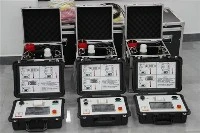
For medium voltage cross-linked polyethylene cables (XLPE), VLF withstand voltage testing equipment is one of the common choices in on-site testing. This device conducts voltage withstand tests on cable insulation by outputting ultra-low frequency high-voltage AC voltage, which can reduce the need for high-capacity power supply for power frequency testing and is suitable for on-site use.
If it is necessary to check the partial discharge inside the cable insulation, further partial discharge detection equipment can be configured. By detecting partial discharge signals, technicians can determine whether there are insulation defects in cables and their accessories.
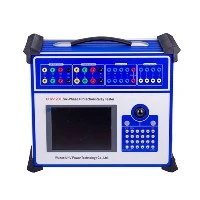
In addition, in the event of a cable line failure, equipment such as cable fault testers, impulse high-voltage generators, and precise fault locators can be used to measure the fault distance and locate the fault point.
When purchasing medium voltage cable testing equipment, it is not enough to only focus on the maximum voltage that the equipment can output, but also to understand the output waveform, load capacity, testing time, and applicable cable length of the equipment.
3, Selection of High Voltage Cable Testing Equipment
High voltage cables are mainly used in large substations, regional transmission networks, and important industrial power supply projects, with common voltage levels including 66kV, 110kV, and 220kV.
With the increase of voltage levels, the insulation structure of cables becomes more complex, and on-site tests have put forward higher requirements for the output capacity, stability, and safety protection functions of equipment.
For the AC withstand voltage test of high-voltage cables, the series resonance test device is a common equipment choice. The device utilizes inductance and the capacitance of the tested cable to form a series resonant circuit, generating the required high voltage test voltage in the resonant state. Due to the fact that the power supply mainly provides the energy required for circuit losses, series resonant devices have better applicability in large capacity cable tests compared to traditional power frequency test transformers.
When choosing a series resonant device, it is important to consider the following aspects:
Firstly, the rated output voltage. The rated voltage of the equipment should meet the requirements of the tested cable and corresponding test standards, and leave reasonable configuration space.
Next is the output capacity. There are significant differences in capacitance among cables of different lengths, cross-sections, and voltage levels. The longer the cable length, the larger the test capacity that usually needs to be considered, so the equipment capacity should be determined based on the actual load.
In addition, attention should be paid to the frequency range, automatic tuning function, overvoltage protection, overcurrent protection, and on-site operation mode of the equipment. These functions play an important role in improving the stability and operational convenience of high-voltage cable testing.
4, Selection of testing equipment for ultra-high voltage cables
Ultra high voltage cables are mainly used in large-scale power transmission projects and important energy infrastructure, with common voltage levels including 330kV, 500kV, and above.
These types of cables usually have higher insulation requirements and more complex testing systems. When selecting testing equipment, it is necessary to determine the testing plan based on specific engineering design, manufacturer's technical requirements, and applicable testing standards.
The series resonance test device is still one of the important equipment for high-voltage and high-capacity cable AC withstand voltage testing. For ultra-high voltage cables, equipment needs to have higher output voltage and sufficient capacity, while also considering cable length, load capacitance, and on-site power supply conditions.
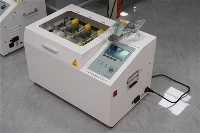
For projects with higher insulation state assessment requirements, partial discharge detection systems, dielectric loss testing equipment, etc. can be configured according to the test plan to assist in determining the insulation condition of the cable.
It should be noted that the testing of ultra-high voltage cables cannot simply determine the equipment model based on the voltage level. The actual selection also requires comprehensive calculation and technical confirmation based on cable structure, insulation materials, test voltage, duration, and test methods.
5, What other factors need to be considered when choosing cable testing equipment?
Voltage level is an important criterion for selecting cable testing equipment, but it is not the only standard. In the actual procurement process, it is also necessary to focus on the matching degree between the equipment and the tested cable.
1. Cable type
Different types of cables have different requirements for testing methods. For example, XLPE cables, oil paper insulated cables, and other special structured cables may have differences in testing schemes and applicable equipment. Before procurement, the insulation material and structure of the tested cable should be clearly defined.
2. Cable length and capacitance
Cables are typical capacitive loads, and their length and structure can affect the overall capacitance. Especially when using series resonant equipment for AC withstand voltage testing, the equipment capacity and reactor configuration must be determined based on the actual cable parameters.
3. Experimental items
If the main focus is on insulation resistance testing, an insulation resistance tester can be selected; If AC withstand voltage test is required, VLF withstand voltage equipment or series resonance test device can be considered; If partial discharge detection is required, a matching partial discharge detection system should be selected.
If cable fault diagnosis is still involved on site, cable fault testers and corresponding positioning equipment need to be configured.
4. On site usage conditions
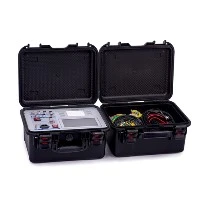
Cable testing usually needs to be conducted in substations, distribution rooms, or outdoor engineering sites, so the volume, weight, movement method, power supply conditions, and environmental adaptability of the equipment are also worth paying attention to. For users who often need to go out for testing, portable and modular devices are usually more convenient.
5. Equipment protection and operation functions
High voltage cable testing has certain risks, and the equipment should have complete protection measures, such as overvoltage protection, overcurrent protection, zero start, emergency stop, and grounding protection. Meanwhile, a clear operating interface and automatic testing function also help reduce the difficulty of on-site operations.
6, Application of Wuhan UHV Cable Testing Equipment
Wuhan UHV Power Technology Co., Ltd. has been engaged in the research and production of power testing equipment for a long time, with products covering high-voltage testing equipment, cable testing equipment, insulation testing equipment, and power preventive testing equipment.
For the detection needs of cables with different voltage levels, users can choose corresponding equipment based on actual testing projects.
For example, VLF high voltage generator is suitable for cable very-low frequency withstand voltage testing that meets its technical requirements; The series resonance test device can be used for AC withstand voltage testing of large capacity cables; The cable fault tester is mainly used for measuring the distance of cable faults and locating fault points.
For power engineering units that require multiple electrical tests, different types of testing equipment can be configured according to the actual work content to form a relatively complete cable testing plan.
During the equipment selection process, users can provide cable rated voltage, length, cross-sectional area, insulation type, and planned test items. Technical personnel will further confirm the voltage level, capacity, and configuration scheme of the equipment to avoid affecting on-site testing due to parameter mismatches.
When selecting cable testing equipment, it is not enough to simply judge based on the rated voltage of the cable. It is also necessary to comprehensively consider the cable insulation type, line length, capacitance, testing method, and on-site usage conditions. There are significant differences in the testing requirements for low-voltage cables, medium voltage cables, high-voltage cables, and ultra-high voltage cables, and the equipment used should also be emphasized accordingly.
For power engineering companies, substation operation and maintenance units, and electrical testing institutions, it is necessary to clarify the actual testing requirements and select equipment that matches the voltage level and output capacity in order to better meet the requirements of cable handover testing, preventive testing, and fault detection.