


Product introduction
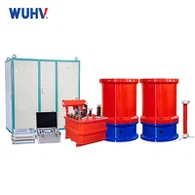
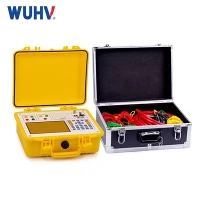
The AC resonant test system is a test system for high voltage equipment. It generates high voltage through the resonance principle (matching of inductance and capacitance) to detect the insulation performance and withstand voltage capacity of the equipment under test.
Choose a reputable AC Resonant Test System supplier is essential for ensuring reliable results and long-term field performance.
Product features of Resonance Test System
High Voltage Output Range
Compared to the common 500kV or 800kV systems on the market, the rated output voltage range of our AC resonant test system is 0~1000kV and below. This wide voltage range enables the system to meet the testing needs of various power equipment from medium voltage (such as distribution transformers) to ultra-high voltage (such as ultra-high voltage transmission line insulators).
High Waveform Quality
The output of the AC resonance test system is a pure sine wave with a waveform distortion rate of ≤1.0%. In contrast, the waveform distortion rate of the common resonance test system on the market is between 2%-3%. Low distortion means that the test results can more accurately reflect the actual insulation condition of the equipment and avoid misjudgment due to waveform distortion.
High Quality Factor
The quality factor (Q value) ranges from 30-90. In contrast, the Q value of most systems on the market is usually between 20-60. This higher Q value means that in the resonant state, the AC resonant test system can produce a larger test voltage with a smaller input power, which not only saves energy but also reduces the requirements on the power supply.


Technical Parameters
|
Rated output voltage |
0 ~ 1000kV and below |
|
Output frequency |
30~300Hz |
|
Resonant voltage waveform |
Pure sine wave, waveform distortion rate ≤1.0% |
|
Working time |
Continuous working time at full power 60min |
|
Quality factor |
30~90 |
|
Frequency regulation sensitivity |
0.1Hz |
|
Degree of instability |
<0.05% |
|
Working power supply |
Single-phase 220V or three-phase 380V±10% |
|
Power frequency 50Hz±5% |
Application of AC Resonant Test System
AC voltage withstand test: Using series resonance to generate high power frequency voltage, conduct AC voltage withstand test on capacitive specimens with large capacity and high voltage.
Handover and preventive testing of equipment such as transformers, cables, and motors: Through series resonance testing, the electrical performance of the equipment can be comprehensively evaluated to ensure its safe operation.
2. Radio engineering
High frequency signal selection and amplification: Series resonant circuits are used to select and amplify signals of specific frequencies. For example, in a radio, adjusting the parameters of the series resonant circuit can improve the quality of the received signal.
Frequency modulation (FM) and phase modulation (PM): In radio broadcast transmitters, series resonant circuits are used to achieve frequency modulation or phase modulation, thereby improving the quality and stability of signal transmission.
3. Electronic measurement
Signal amplitude and phase adjustment: In an oscilloscope, the amplitude and phase of the signal can be adjusted through a series resonant circuit, thereby improving the accuracy and stability of the measurement.
Improvement of voltage measurement accuracy and stability: In a voltmeter, a series resonant circuit is used to improve measurement accuracy and stability.
4. Induction heating
By utilizing the principle of series resonance, high-frequency current can be converted into thermal energy, thereby achieving rapid heating and melting processes of metal materials. This method has advantages such as high efficiency and environmental friendliness, and is widely used in fields such as metallurgy, petroleum, and chemical engineering.
5. Magnetic Resonance Imaging (MRI)
In the medical field, series resonant circuits are used to generate high-intensity magnetic fields and high-frequency electromagnetic waves. These magnetic fields and electromagnetic waves can undergo nuclear magnetic resonance effects with hydrogen atoms in the human body, producing detailed images for the diagnosis and treatment of diseases.
6. In chemical analysis
In chemical analysis methods such as magnetic resonance spectroscopy and nuclear magnetic resonance carbon spectroscopy (NMR), series resonant circuits are used to generate strong magnetic fields and high-frequency electromagnetic waves. These electromagnetic waves interact with sample molecules to generate specific resonance signals, thereby analyzing the chemical composition and structural information of the sample. This technology has wide application value in fields such as chemistry, biology, and medicine.


Technical FAQS
What is the maximum output voltage and capacity of the UHV AC Resonant Test System?
UHV supplies AC Resonant Test Systems ranging from several tens of kilovolts to several hundred kilovolts. The output voltage and test capacity can be configured according to the capacitance and testing requirements of the equipment under test.
Our systems are widely used for testing:
Power cables
GIS switchgear
Power transformers
Generators and motors
Current transformers (CTs)
Voltage transformers (PTs)
High-voltage bushings
Reactors
What types of AC resonant test system can be tested?
The UHV AC Resonant Test System is designed for AC withstand voltage testing of a wide range of high-voltage equipment, including:
XLPE power cables
GIS and GIL systems
Power transformers
Distribution transformers
High-voltage circuit breakers
Current transformers (CTs)
Voltage transformers (PTs)
Bushings
Generators and other rotating machines
Does the system use series resonance or parallel resonance technology?
UHV primarily provides Series Resonant Test Systems, which are widely used for both factory and field testing.
Key advantages include:
Lower power consumption
Higher testing efficiency
Reduced power supply requirements
Enhanced safety in the event of breakdown
Easier transportation and installation
How is the output waveform quality?
UHV AC resonant test sets are designed to deliver:
Low waveform distortion
Near-perfect sinusoidal output voltage
Excellent frequency stability
Reliable voltage regulation
This ensures compliance with international requirements for high-voltage testing power supplies.
What frequency ranges are available?
Typical frequency ranges include:
20 Hz to 300 Hz
30 Hz to 300 Hz
45 Hz to 65 Hz
The AC resonant test device automatically adjusts frequency to locate and maintain the resonance point.
Can the AC resonant test system automatically find the resonance point?
Yes.
The UHV system features:
Automatic frequency sweep
Automatic resonance search
Automatic tuning
Automatic voltage regulation
Automatic test sequence execution
These functions simplify operation and improve testing efficiency.
We are a professional AC resonant test system manufacturers/Resonant Test Set manufacturers in China.We can provide the best professional AC Resonant Test System for sales and competitive price. If you are looking for AC Resonant Test System supplier, we are a good choice.
Contact us to get Resonant Test Set price.
Hot Tags: ac resonant test system, China ac resonant test system manufacturers, suppliers, factory, hipot safety enclosure compatible tester, hipot test equipment, Resonant Test Set, dc hipot tester, hipot tester with USB and LabVIEW support, high voltage tester