


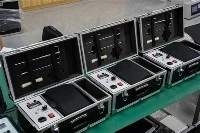
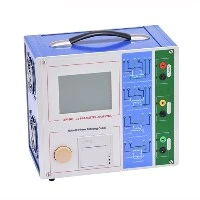
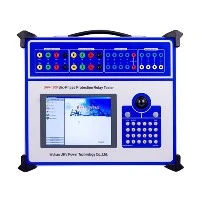
In modern urban construction, underground cables are like the "neural network" of the city, carrying important power transmission tasks. With the increase of service life or the influence of external environment, these "underground arteries" are inevitably prone to malfunction, which brings inconvenience to our lives. How can we quickly and accurately locate a cable malfunction? This requires us to use the powerful tool of buried cable fault detector.

What is the 'buried cable fault detector'?
Simply put, it is a specialized equipment used to locate the fault point of underground buried cables. Imagine that your water pipe is leaking, and you need to find the point of the leak in order to repair it. The function of the underground cable fault detector is similar to that of an "electronic water pipe leakage detector". It can use scientific principles to "auscultate" the "condition" of the underground cable on the ground, thereby accurately locating the fault location.
What are the "behind the scenes drivers" that affect fault detection?
The fault detection of buried cables is not easy and is affected by various factors.
Soil environment: Differences in soil moisture, density, and composition can all affect the propagation of signals. Damp or highly conductive soil may weaken the detection signal.
Cable burial depth: The deeper the cable is buried, the more severe the signal attenuation and the greater the difficulty of detection.
Fault type: Different types of faults (such as grounding, short circuit, open circuit) produce different signal characteristics and require targeted analysis.
Surrounding interference: Other underground metal pipelines, cables, and electromagnetic interference from the ground can all cause misjudgment of detection results.
Enable more precise detection of 'secret weapons'
Faced with these challenges, Wuhan UHV Power Technology Co., Ltd. has developed a series of advanced detection technologies and equipment based on years of industry experience. They typically integrate multiple detection principles, such as:
Pulse Reflection Method (TDR): Similar to radar, it determines the length and fault point of a cable by sending pulse signals and analyzing the reflected waveform.
Electromagnetic induction method: using the abnormal electromagnetic field generated by the fault point to locate.
Audio sensing method: Tracking through the sound or specific frequency signal emitted from the fault point.
These advanced instruments, such as pulse generators, high-voltage signal generators, and high-precision receiving hosts, can effectively assist us in fault detection.
How to improve the detection work?
Fully understand the on-site situation: Before conducting exploration, collect cable burial maps, soil information, and surrounding environment as much as possible to have a clear understanding.
Choose the appropriate detection method: Select the most effective detection technology for different cable types and fault characteristics.
Multi instrument and multi method joint detection: Combining instruments with different principles for cross validation can greatly improve the accuracy of positioning.
Professional operation: Proficiency in equipment operation and data analysis is crucial. The equipment provided by Wuhan UHV Power Technology Co., Ltd. is often accompanied by professional training to ensure that users can better utilize equipment performance.
Regular maintenance and calibration: Ensuring the good working condition of detection instruments is the basic guarantee for obtaining accurate data.
By mastering these, you will be able to handle faults in buried cables with greater confidence.
Frequently Asked Questions (FAQ)
Q1: What is the accuracy of the buried cable fault detector? A1: Accuracy is affected by various factors, but modern instruments can achieve centimeter level positioning accuracy under professional operation. The equipment of Wuhan UHV Power Technology Co., Ltd. enjoys a good reputation in the industry.
Q2: What type of cable fault is the most difficult to detect? A2: High resistance grounding faults and wire breakage faults are usually more difficult to accurately detect than low resistance grounding and short-circuit faults because the signal characteristics they generate are relatively weak.
Q3: Do you need any other auxiliary equipment besides the detector? A3: Yes, it usually requires auxiliary equipment such as pulse generators and signal generators to work together.
Q4: Does the use of the detector require high-voltage operation? A4: Some detection methods (such as impact detection) require the use of high-voltage signals, and safety regulations must be strictly followed during operation.
Q5: What aspects should I consider when purchasing an underground cable fault detector? A5: It is recommended to focus on the detection accuracy, applicability (different burial depths and fault types), operational convenience, brand professionalism, and after-sales service of the equipment.