

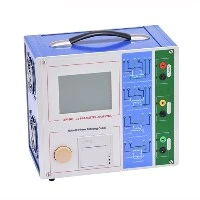
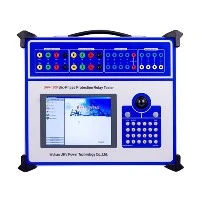
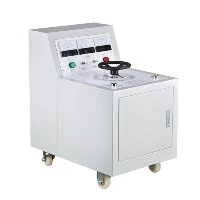
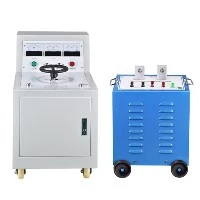
Have you ever been curious about the large and complex equipment in the power system? How do they ensure the safety and stability of our electricity use? Today, let's talk about a "health check-up specialist" in electrical equipment - a partial discharge device.

What is a partial discharge device? How wide is the scope of its' physical examination '?
Simply put, a partial discharge meter (PD meter) is an instrument specifically designed to detect the presence of "partial discharge" phenomena inside electrical equipment. What is partial discharge? Imagine that small, localized corona discharges occur inside or on the surface of insulating materials due to high voltage or insulation aging. These discharges may initially be weak and almost invisible to the naked eye, but they are like tiny "sparks" that over time will gradually erode the insulation, ultimately leading to equipment damage and even causing major power accidents.
The "physical examination" scope of partial discharge equipment is very wide, covering almost the entire life cycle of high-voltage electrical equipment, including:
Transformer: This is one of the most important equipment in the power system, and insulation performance is crucial.
Cables: Especially high-voltage cables, the integrity of their insulation layer is directly related to the safety of the power grid.
Transformers: Voltage transformers and current transformers are also the "hardest hit areas" where partial discharge is prone to occur.
Switchgear: The insulation part of high-voltage switches also needs to be regularly "checked".
Insulators: Whether on the line or equipment, the health condition of insulators is crucial.
What factors can affect the results of a physical examination?
To accurately conduct a physical examination, the measurement results of the partial discharge instrument will be affected by many factors, and we need to pay special attention to:
Environmental interference: External electromagnetic noise, such as nearby radio emissions and lightning interference, can "interfere" with measurements, just like someone speaking loudly next to you, making it difficult to hear subtle sounds.
The noise of the equipment itself: During normal operation, power equipment also generates some electromagnetic signals, and distinguishing between these normal signals and potential partial discharge signals is key.
The coupling method of the measurement circuit: How to effectively "capture" the signal generated by partial discharge to the partial discharge instrument, just like choosing the position of a stethoscope, is very important.
Temperature and humidity: These environmental factors can affect the performance of insulation materials, indirectly affecting the occurrence and measurement of partial discharge.
Playing with the "Partial Discharge Instrument": What are the capable assistants?
To become a qualified "electrical equipment inspector", partial discharge equipment is naturally the core tool. Modern partial discharge devices are already very intelligent, and they usually have:
High sensitivity: capable of capturing extremely weak discharge signals.
Multiple measurement modes, such as pulse current method, acoustic wave method, ultraviolet imaging method, etc., are used to "auscultate" and "see through" equipment from different dimensions.
Powerful data analysis capability: able to automatically identify interference and evaluate the type and intensity of partial discharge.
Wuhan UHV Power Technology Co., Ltd. has rich experience in the field of partial discharge monitoring, and the solutions they provide can help power users more effectively evaluate equipment status.
Medical Examination Process: How to "Identify" Problems?
Performing partial discharge testing usually requires following the following steps:
Connecting instruments: Connect the partial discharge instrument to the device under test through a specific coupling device.
Eliminate interference: Before measurement, try to eliminate interference sources from the environment and the device itself as much as possible.
Data collection: Start the instrument and collect partial discharge signals under different operating conditions.
Data analysis: Using the built-in analysis software of the instrument, the collected signals are processed to determine whether there is partial discharge and evaluate its severity.
Diagnosis and maintenance: Based on the analysis results, diagnose the equipment and develop corresponding maintenance plans.
How can we do better? The Path to Advancement for Medical Examiners
To make the "physical examination" work better, efforts can be made in the following aspects:
Deep understanding of equipment characteristics: Understanding the locations and causes of partial discharge that are prone to occur in different types of equipment can enable more accurate detection.
Mastering advanced detection technology: Continuously learning and applying new partial discharge detection technologies, such as online monitoring technology, can achieve real-time monitoring of equipment status.
Accumulate experience: Through extensive practical operations and case analysis, enhance the ability to judge various complex situations.
Choosing reliable instruments and technical support: Advanced equipment and technical services provided by professional manufacturers such as Wuhan UHV Power Technology Co., Ltd. are an important link in ensuring the quality of testing.
Partial discharge instrument is not only an instrument, but also the "eyes" and "ears" to ensure the safe operation of the power system. By precise monitoring of partial discharge, we can promptly detect potential lesions in the equipment, prevent them in advance, and ensure stable and reliable power supply.
Frequently Asked Questions (FAQ)
Q1: Will partial discharge necessarily cause equipment damage? A1: Partial discharge is a "hidden killer" that may not immediately cause equipment damage in the early stages, but the long-term accumulated discharge effect will gradually erode the insulation and may ultimately lead to serious malfunctions. Therefore, timely detection and handling are very important.
Q2: How often is partial discharge testing usually done? A2: The frequency of partial discharge detection depends on the type of equipment, operating years, operating environment, and importance. For critical high-voltage equipment, it is usually carried out regularly, such as once a year or adjusted based on operating experience and equipment status. Experts from Wuhan UHV Power Technology Co., Ltd. can provide advice based on your specific situation.
Q3: Which environmental factors have the greatest impact on the results of partial discharge testing? A3: Electromagnetic interference (such as electromagnetic noise generated by nearby radio and high-voltage equipment operation) and environmental changes (such as severe temperature and humidity fluctuations) have a significant impact on partial discharge detection results, and measures need to be taken to suppress or compensate for them.
Q4: Are there any other methods besides partial discharge testing to detect internal defects in equipment? A4: Yes, in addition to partial discharge detection, other detection methods such as infrared thermography, ultrasonic testing, dielectric loss testing, etc. can also be combined to form a multidimensional and comprehensive equipment status evaluation system.
Q5: What is the difference between online partial discharge monitoring and offline partial discharge detection? A5: Offline partial discharge detection is usually carried out after regular power outages, while online partial discharge monitoring is carried out while the equipment is running with power on, which can achieve continuous monitoring of the equipment status and timely detection of sudden problems. Wuhan UHV Power Technology Co., Ltd. has mature solutions in this field.