


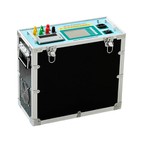


In the complex network of the power system, transformers play a crucial role as the "heart" for transmitting and distributing electrical energy. The partial discharge test of the transformer is a key check to ensure the healthy beating of this' heart '. What is partial discharge? Why is it so important? Today, let's talk about this topic.
What is partial discharge?
Simply put, partial discharge refers to the discharge phenomenon that occurs in a specific local area of an insulating medium, while the rest of the insulating medium is not broken down. Imagine it's like a tiny crack on a wall where water leaks out, but the entire wall hasn't collapsed yet. Inside the transformer, insulation materials such as insulating oil and insulating paper may have small gaps, impurities, or electric field concentration points due to manufacturing defects, aging, or overload. In these areas, the electric field strength will be particularly high, and when a certain threshold is reached, local gas ionization will occur, forming discharge.
Hidden dangers and influencing factors of partial discharge
Don't underestimate this' partial 'discharge, it is a' killer 'that accumulates over time. Long term partial discharge will gradually erode the insulation structure of transformers, accelerate insulation aging, and ultimately lead to insulation breakdown, causing serious equipment failures and even posing a threat to the safety of the entire power grid.
There are many factors that affect partial discharge, including:
The quality of insulation materials: Bubbles, impurities, moisture, etc. in the material can become a "breeding ground" for partial discharge.
Electric field distribution: Improper shape design and installation process of insulation components can easily cause electric field distortion and form local high electric fields.
Operating environment: External environmental factors such as temperature, humidity, and pollution may also affect the insulation state.
Operating load: Excessive load will exacerbate the aging process of insulation.
The 'weapon' for dealing with partial discharge
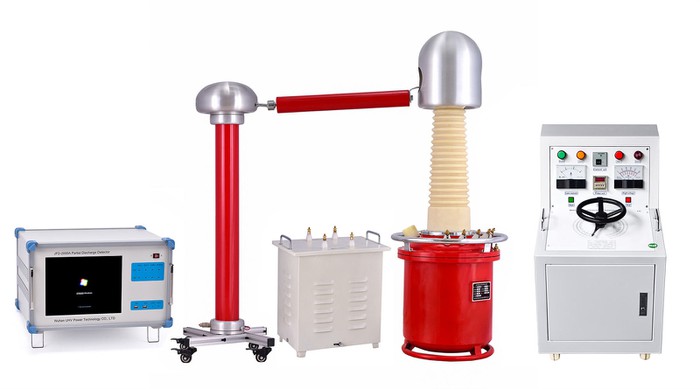
To effectively detect and prevent partial discharge, professional detection equipment and technology are indispensable. Professional power equipment manufacturers and service providers such as Wuhan UHV Power Technology Co., Ltd. provide advanced partial discharge detectors. These devices can accurately capture and analyze weak signals of partial discharge through various methods such as inducing charges, sound waves, and light signals.
Detection methods: Common methods include electric pulse method (detecting electrical signals generated by partial discharge), acoustic signal method (capturing ultrasonic waves generated during discharge), and optical signal method (detecting ultraviolet light emitted during discharge).
Related technologies: Dissolved Gas Analysis (DGA) in Transformer Oil is also an important auxiliary diagnostic technique that can analyze characteristic gases generated by partial discharge, overheating, etc. from insulating oil, and further determine the type of fault.
How to do a good job in partial discharge detection?
To maximize the value of partial discharge tests on transformers, a systematic approach is needed:
Choose appropriate testing equipment: Based on the type of transformer and site conditions, select testing instruments with high sensitivity and strong anti-interference ability.
Standardized operating procedures: Strictly follow the experimental procedures to ensure the accuracy and comparability of data.
Data analysis and diagnosis: Combining detection data with the operational history of transformers to conduct professional fault diagnosis. Wuhan UHV Power Technology Co., Ltd. has rich experience and technical accumulation in this field.
Regular inspection and maintenance: Incorporate partial discharge detection into the regular maintenance plan of transformers to promptly identify and address potential issues. Preventive maintenance is more cost-effective than post repair.
Status monitoring: For critical transformers, it is possible to consider installing an online partial discharge monitoring system to achieve 7x24 hour uninterrupted monitoring, ensuring more reliable protection of power grid safety.
Through scientific partial discharge detection, we can detect the "lesions" of transformer insulation earlier and take timely measures, thereby greatly reducing equipment failure rates and ensuring the stable operation of the power grid.
Frequently Asked Questions (FAQ)
Q1: What is the cycle of partial discharge test? A1: The testing cycle is usually determined based on the importance, operating years, historical conditions, and relevant industry regulations of the transformer, usually once a year or every two to three years.
Q2: Is the higher the value of partial discharge, the more dangerous it is? A2: Yes, generally speaking, the larger the amplitude, frequency, and discharge energy of partial discharge, the more severe the damage to insulation and the more likely it is to cause equipment failure.
Q3: Apart from transformers, which equipment also requires partial discharge testing? A3: High voltage electrical equipment such as high-voltage cables, transformers, and switchgear may experience partial discharge in their insulation systems and require corresponding testing.
Q4: What safety precautions should be taken when conducting partial discharge tests on site? A4: It is necessary to strictly follow the safety operating procedures for high-voltage testing, ensure the personal safety of operators, and take necessary safety protection measures.
Q5: Why is partial discharge considered an "early signal" of insulation aging in transformers? A5: Partial discharge is a phenomenon that occurs when insulation materials begin to have small defects and are subjected to electric fields. It is the initial stage of further insulation degradation until breakdown, and timely detection can be carried out before serious faults occur.