



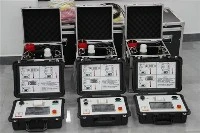
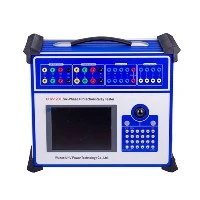
In the operation of the power system, lightning arresters play a guardian role, effectively preventing lightning and other transient overvoltage from damaging equipment. But you know what? Once the lightning arrester works with a problem, it may quietly bury safety hazards. Today, let's talk about a powerful assistant that can help you "see through" the health of lightning arresters - the lightning arrester resistive current detector.
What is the resistive current of a lightning arrester?
Simply put, a lightning arrester will have a small leakage current passing through during normal operation. Part of this leakage current is capacitive current, which is normal and inevitable; The other part is resistive current. This resistive current is an important indicator for measuring the insulation performance of lightning arresters. If the resistive current is too high, it means that the insulation material inside the lightning arrester may have aged, become damp, or even experienced internal discharge, which is a dangerous signal!
Why is resistive current detection important?
Early warning: Timely detect potential defects in lightning arresters to avoid equipment damage caused by lightning arrester failure.
Extend lifespan: By understanding the health status of the equipment and conducting targeted maintenance, the service life of lightning arresters can be effectively extended.
Ensuring safety: Ensuring the stable operation of the power system, avoiding power outages caused by lightning arrester failures, and safeguarding personal and property safety.
What are the "behind the scenes drivers" that affect resistive current?
Environmental factors such as high temperature, high humidity, and dust adhesion can all affect the insulation performance of lightning arresters, thereby altering the resistive current.
Aging and damage: Over time, the material of lightning arresters will naturally age; If subjected to overvoltage impact, the internal structure may also be damaged.
Installation quality: Improper installation or connection issues may also lead to abnormal current.
Scout "- Surge Arrester Resistive Current Detector
With the surge arrester resistive current detector, we can measure this key indicator more accurately. There are various types of detectors on the market, and although their working principles are slightly different, their core goal is to accurately capture and quantify resistive current.
Wuhan UHV Power Technology Co., Ltd. has been deeply involved in this field for many years. Its advanced detection equipment can help power workers quickly and accurately evaluate the operating status of lightning arresters. These devices typically have the following characteristics:
High precision measurement: capable of capturing small resistive current changes.
Easy to operate: Humanized design, easy to operate on site.
Reliable data: Provide accurate measurement results to provide a basis for decision-making.
Intelligent analysis: Some devices can also combine data for preliminary analysis and provide diagnostic recommendations.
How to make testing more 'excellent'?
Regular testing: Develop the habit of using lightning arrester resistive current detectors regularly, at least once a year, especially before and after thunderstorm season.
Comparative analysis: Record each measurement data, compare it with historical data, and analyze trends.
Combining other methods: combining the results of resistive current detection with other detection methods (such as measuring the dielectric loss tangent) to form a more comprehensive judgment.
Pay attention to anomalies: Once an abnormal increase in resistive current value is detected, it should be immediately taken seriously and professional personnel should be arranged to conduct a detailed inspection.
The professional solutions provided by Wuhan UHV Power Technology Co., Ltd. are designed to help you complete this task more efficiently and reliably.
Conclusion
To do a good job, one must first sharpen their tools. Having a reliable lightning arrester resistive current detector is like equipping your power system with a pair of "sharp eyes", allowing you to take proactive measures and prevent problems before they occur. Paying attention to the health of lightning arresters is to ensure the safety and stability of the entire power system.
Frequently Asked Questions (FAQ)
Q: What is the difference between resistive current and capacitive current? How should I distinguish? A: Resistive current represents the loss of insulation in lightning arresters and is the key to determining whether they are aging; Capacitive current is a normal part. A professional lightning arrester resistive current detector can separate the two and accurately measure the resistive current.
Q: Why did the resistive current of my lightning arrester suddenly increase? A: This may indicate a decrease in the insulation performance of the lightning arrester, internal moisture, or defects. It is recommended to immediately contact professional technicians for inspection.
Q: What factors can affect the detection results of resistive current? A: The environmental temperature, humidity, accuracy of the instrument itself, and connection method during measurement may all have an impact on the results.
Q: How often do I need to check the resistive current of the lightning arrester? A: It is usually recommended to conduct testing at least once a year, and high-risk areas or equipment may increase the frequency of testing appropriately.
Q: What other methods can be used to evaluate the performance of lightning arresters besides resistive current detection? A: A comprehensive evaluation can be conducted by combining methods such as measuring the tangent value of dielectric loss angle and infrared temperature measurement.