


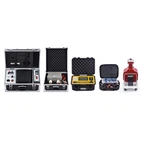
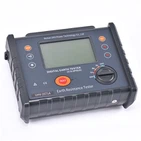
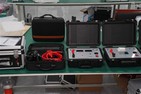
The occurrence of cable faults during the use of electrical equipment is undoubtedly one of the most headache inducing issues. Once a malfunction occurs, it will not only affect normal power supply, but may also cause huge economic losses. Finding the fault point is like searching for a needle in the vast ocean, time-consuming and laborious. At this point, an intelligent and efficient cable fault locator becomes particularly important. What exactly is it? How can it help us quickly locate faults?

Unveiling Cable Fault Addresser: More than Just a 'Detector'
Simply put, a cable fault locator is a specialized instrument used to detect and locate underground cable fault points. It can help power maintenance personnel quickly and accurately locate the exact location of faults through various technological means, greatly reducing the time for power outage repairs.
Factors affecting cable fault location
When conducting cable fault location, there are many factors that can affect it:
The depth and length of cable burial: The deeper and longer the cable, the more difficult it is to locate.
The types of fault points, such as grounding fault, short circuit fault, and disconnection fault, have different requirements for detection methods.
Interference from the surrounding environment: Underground metal pipelines, other cable lines, etc. may all generate electromagnetic interference.
The conductivity of soil: Soil moisture, composition, and other factors can also affect the propagation of signals.
Trusted tool: Professional solutions from Wuhan UHV Power Technology Co., Ltd
In the face of these challenges, reliable equipment is key. Wuhan UHV Power Technology Co., Ltd. has launched multiple advanced cable fault locators with its profound technical accumulation and rich industry experience. These devices utilize various advanced detection technologies such as impulse voltage method and pulse reflection method, which can provide accurate positioning solutions for different types of cable faults.
How does the cable fault locator work?
Taking the impulse voltage method as an example, the cable fault locator will apply a high-voltage impulse pulse to the faulty cable. When the pulse reaches the fault point, a special signal will be generated. The device can calculate the distance between the fault point and the detection device by receiving and analyzing the propagation time and characteristics of this signal. Another commonly used method is pulse reflection, which emits an electrical pulse and detects the signal reflected back when the pulse encounters impedance changes (i.e. fault points) during propagation. By analyzing the time and intensity of the reflected signal, the location of the fault can also be accurately determined.
How to make cable fault location more efficient?
To achieve more efficient fault location, in addition to relying on advanced cable fault locators, the following points need to be noted:
Familiar with cable route information: Master key information such as cable burial diagram, type, length, etc. in advance.
Master multiple detection techniques: choose the most suitable detection method based on the type of fault.
Pay attention to on-site safety: During the operation process, it is necessary to comply with relevant safety regulations.
Regular maintenance of equipment: Ensure that the cable fault addressable device is in good working condition.
The equipment of Wuhan UHV Power Technology Co., Ltd. not only has excellent performance, but also is easy to operate, which can help users complete cable fault detection tasks more quickly and accurately.
Frequently Asked Questions (FAQ)
Q1: What type of cable fault is the cable fault locator mainly used to detect? A1: The cable fault locator can effectively detect various types of faults, including ground faults, short circuit faults, wire breakage faults, etc. Cable fault location is its core function.
Q2: What factors can affect the accuracy of cable fault location? A2: The main factors include cable burial depth, soil conductivity, surrounding environmental interference, and the detection technology used.
Q3: What safety precautions should be taken when using cable fault addressable devices? A3: Operators must strictly comply with the safety regulations for high-voltage operations, ensure that the equipment is connected correctly, and operate within a safe distance.
Q4: How to choose a suitable cable fault locator for complex underground cable networks? A4: Equipment with corresponding detection technology and functions should be selected based on the scale, type, common fault types, and requirements for cable fault detection accuracy of the cable network.
Q5: Apart from cable fault addressable devices, what other auxiliary tools or technologies can help locate? A5: Auxiliary tools include buried pipeline detectors, cable identification devices, etc., while auxiliary technologies include cable path detection and fault point pre positioning technology.