

In the field of high-voltage power equipment detection, series resonance technology is like an accurate doctor, diagnosing the health status of equipment with intangible frequency fluctuations.

1, What is series resonance? Why is it the core of high-voltage testing?
Series resonance is a circuit technology that utilizes inductance (L), capacitance (C), and resistance (R) elements to form resonance phenomena at specific frequencies. When the circuit reaches resonance state, equipment such as cable fault testers can generate extremely high test voltages on the test sample with only a small input power, which is the fundamental reason why it has become the preferred solution for high-voltage withstand voltage testing. In practical operation, for example, when conducting a voltage withstand test on a 500kV power cable, traditional methods may require bulky power frequency transformers. However, after using a variable frequency series resonance test device, the equipment volume and weight can be reduced by more than 60%, and the testing accuracy can be improved by about 30% - this is exactly the actual measurement data of a substation in Wuhan after upgrading the testing equipment in 2023.
2, Five key factors affecting the effectiveness of series resonance testing
Frequency matching accuracy: The calculation deviation of resonant frequency can cause a sudden drop in equipment output efficiency. For example, when using an ultra-low frequency high-voltage generator, a deviation of 0.1Hz may cause the output voltage to decay by 20%.
The capacitance characteristics of the test sample: The capacitance values of different devices vary significantly. The capacitance difference between GIS equipment and power cables can reach more than 10 times, and a targeted configuration scheme for series resonant withstand voltage devices needs to be selected.
Environmental interference level: In areas with strong electromagnetic interference, an anti-interference dielectric loss tester should be used to ensure accurate data. The test case of a wind farm in 2024 showed that the data fluctuation rate decreased from 15% to 3% after installing shielding devices.
Equipment quality stability: Poor quality reactors may experience thermal drift during long-term testing, leading to resonance point displacement. The temperature controlled reactor series of Wuhan UHV Power Technology Co., Ltd. controls the temperature drift within 0.5%/hour through patented heat dissipation design.
Operator skills: According to industry statistics, 70% of testing accidents are caused by incorrect parameter settings, highlighting the importance of professional training.
3, Core toolchain: from basic detection to intelligent diagnosis
Main vibration system
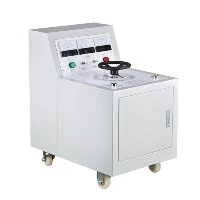
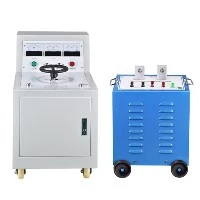
Variable frequency series resonance complete set device: Modern equipment has achieved fully automatic frequency regulation, such as the AI resonance system of Wuhan UHV Power Technology Co., Ltd., which can automatically scan the resonance point and shorten the time from 20 minutes to 90 seconds
DC high voltage generator: used for DC withstand voltage testing, complementary to AC resonance
Auxiliary detection equipment
Partial discharge tester: a "microscope" for locating insulation defects, with a new digital device resolution of up to 1pC
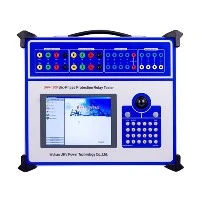
Insulation resistance tester: an intelligent upgraded version of the megohmmeter that can automatically record polarization index
Grounding resistance tester: the key to ensuring safety protection, soil resistivity tester is its important partner
Specialized analysis tools
Cable fault locator: Combined with acoustic magnetic synchronization technology, the fault point positioning error is controlled within ± 0.2 meters
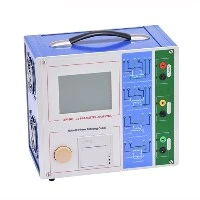
Transformer volt ampere characteristic tester: a powerful tool for CT/PT testing, with an accuracy of 0.05 level