


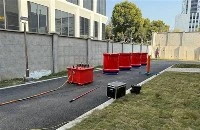
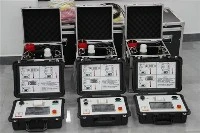
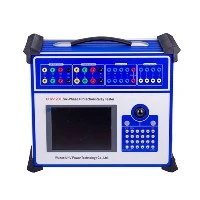
With the development of the power industry, various cables are increasingly used in various fields of production and life, and most of them are buried underground. Finding the fault point after a cable malfunction is a long-standing problem that troubles us. Our goal is to quickly and accurately locate the fault point.
At present, there are various types of cable fault testers on the market, with different levels of manufacturers. However, in terms of their testing principles, the vast majority are based on the "flash method" and have been transformed. Such instruments have been widely used in various industries and have solved many cable faults for a long time, playing a major role and making significant contributions.
As we all know, in the early days, cables had a single variety, limited grade, narrow range of use, and low cable failure rate. Therefore, cable fault testers designed based on the principle of "flash method" were very popular. With the development of technology, the number of cable types has increased and their applications have become more and more widespread. In addition, the construction of municipal engineering has led to various cable faults occurring frequently. Using the "flash method" cable fault tester to test faults has become inconvenient and incomplete. Some cable faults cannot even be detected, some cannot be measured at all, and sometimes damage the cable, causing new faults to occur.

The cable fault tester developed and produced by Wuhan UHV adopts low voltage pulse method and high voltage flashover method (impulse flashover method) to detect various faults of cables, especially for flashover and high resistance faults of cables, which can be directly tested without burning through. If equipped with an acoustic fixed-point instrument, the precise location of the fault can be accurately determined, and the fault point can be accurately determined within 0.5 meters. At the same time, it is also necessary to conduct fault analysis and preliminary testing on coaxial communication cables, local telephone cables, and control cables, and to calibrate the entire length of unknown cables. It is an indispensable testing equipment for simulating large enterprises, petrochemicals, metallurgy, airports, ports, urban power supply, power generation, cable maintenance, and overhaul.