

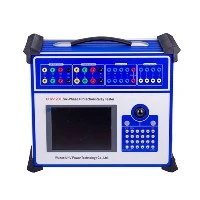
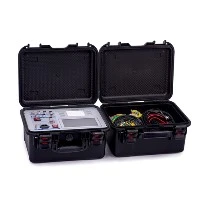
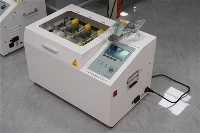
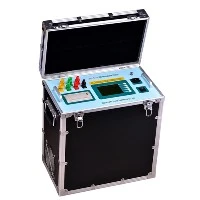
Dear partners in the power industry! Today, let's talk about a topic that may sound a bit hardcore, but is actually closely related to the electrical safety of each and every one of us - the automatic transformer ratio tester. You may have heard of transformers and know that they are responsible for "boosting" and "lowering", but did you know? Behind its work, there is a little helper who silently ensures the accuracy of its "identity".
Why is the "transformation ratio" of transformers so important?
We need to figure out what 'transformation ratio' is? Simply put, transformer ratio refers to the ratio of voltage (or current) between the primary and secondary coils of a transformer during operation. This ratio is like the transformer's "ID card number", which is one of its core features.
Imagine what would happen if the transformer's "ID card number" was wrong?
Voltage instability: Your home's lights flicker on and off, or appliances suddenly "go on strike", which may be caused by inaccurate transformer ratios leading to voltage instability.
Equipment damage: Incorrect voltage may directly burn out your computer, refrigerator, and even more important industrial equipment.
Potential safety hazards in the power grid: In a large-scale power grid, even a small deviation in the transformer ratio can trigger a chain reaction, affecting the stable operation of the entire power grid and even causing widespread power outages.
So, accurately measuring the transformer ratio has become a crucial task.
Transformer ratio automatic tester: not just "measuring", but also "automatic"
In the past, measuring the transformer ratio may have required manual operation, which was cumbersome, time-consuming, and prone to errors. But now, with the automatic transformer ratio tester, everything has become different!
What is it? Simply put, it is like a high-tech 'transformer doctor' that can automatically and accurately measure the transformer's transformation ratio. You just need to connect the wires and press the button, and it can quickly tell you whether the "ID card number" of the transformer is correct.
What are the factors that affect the accuracy of transformation ratio?
This is not a mystical subject, and many factors can affect the accuracy of measurements:
Environmental temperature: Temperature changes can affect the resistance of conductors, which in turn affects current and voltage, ultimately affecting the measurement results of transformation ratios.
Testing the stability of the power supply: If the power supply used for testing is inherently unstable, the data obtained will naturally be unreliable.
The characteristics of the transformer itself, such as the insulation condition of the transformer winding and the loss of the coil, will have a certain impact on the measurement of the transformation ratio.
Standardization of operators: Even for automatic testers, non-standard wiring and operation procedures may lead to data deviation.
What kind of 'tools' can help us?
This is the time for our protagonist today - the transformer ratio automatic tester to show off its skills. With it, we no longer need to rely on experienced masters or tedious manual calculations. It integrates advanced measurement technology and intelligent control, which can:
Quick completion of testing: greatly reducing testing time.
High precision measurement: ensures the reliability of measurement data.
Automatic recording and analysis: facilitates subsequent data management and traceability.
Just like Wuhan Ultra High Voltage Power Technology Co., Ltd. has always been committed to providing advanced solutions in the field of power equipment testing. Their technology and products can effectively solve the problems we encounter in transformer ratio testing.
How to 'do' the ratio test?
Although it is called an "automatic tester", understanding the general process can give us a more intuitive understanding of its working principle:
Connecting equipment: Connect the test line of the transformer ratio automatic tester to the corresponding terminal of the tested transformer. This requires following the requirements of the equipment manual to ensure the correctness and safety of the connection.
Set parameters: Based on the model and requirements of the tested transformer, set the corresponding test parameters on the tester, such as rated voltage, rated transformer ratio, etc.
Start testing: Start the testing program, and the tester will inject testing current into the transformer and measure the voltage and current of different windings.
Data analysis: The tester will automatically calculate and display the transformer's transformation ratio, and compare it with the set value to determine whether it is qualified.
Generate report: Most automated testers can generate detailed test reports that record all key data.
The whole process is like a "physical examination" of the transformer, and it is fully automatic and efficient!
How can we do better?
To ensure the accuracy and reliability of transformer ratio testing, in addition to relying on advanced testing equipment, we also need to:
Regular calibration of equipment: Any measuring instrument needs to be calibrated regularly to ensure its measurement accuracy. Wuhan UHV Power Technology Co., Ltd. has provided professional support in this regard.
Adhere to operating procedures: Strictly follow the operating procedures for testing to avoid human errors.
Pay attention to the testing environment: Try to conduct testing in a stable temperature and humidity environment.
Establish a comprehensive archive management system: Properly record and manage the data from each test, forming a "health archive" of the transformer.
What is transformer ratio testing related to?
The testing of transformer ratio is not only an independent testing item, but also closely related to many other power equipment and systems:
Transformer insulation resistance test: The insulation performance of transformers directly affects their operational safety, and insulation degradation may indirectly affect the measurement of transformer ratio.
Transformer no-load/load test: Transformer ratio is one of the important parameters in no-load test and a key indicator for evaluating transformer performance.
Power system protection: The accuracy of transformer ratio is the basis for the correct operation of relay protection devices.
Electricity metering: Accurate transformation ratio ensures the accuracy of electricity metering.
Automatic Transformer Ratio Tester: Future Trend
With the continuous development of technology, transformer ratio automatic testers are becoming increasingly intelligent and integrated. In the future, we may see more testing equipment that integrates big data analysis, remote diagnosis, and other functions, providing stronger guarantees for the safe and stable operation of the power system. Wuhan UHV Power Technology Co., Ltd. has also been exploring these cutting-edge technologies.
Frequently Asked Questions (FAQ)
Q: Why does my transformer ratio test result differ from the nominal value? A: This difference may be caused by various factors, including losses in transformer windings, temperature effects during testing, and accuracy limitations of the testing equipment itself. Minor differences are allowed within a certain range.
Q: Can the transformer ratio automatic tester measure all types of transformers? A: Most commonly used transformer ratio automatic testers can measure common power transformers, instrument transformers, etc. But for special types such as rectifier transformers, specialized equipment may be required.
Q: What is the testing voltage of the transformer ratio automatic tester? A: The test voltage is usually low, ranging from tens to hundreds of volts, far below the rated operating voltage of the transformer to ensure testing safety.
Q: Where is the "automation" reflected in the transformer ratio automatic tester? A: The term 'automatic' here mainly refers to the ability of the equipment to automatically complete steps such as wiring inspection, parameter setting, data acquisition, ratio calculation, and result judgment during the testing process, reducing manual intervention.
Q: How often should I conduct a transformer ratio test? A: This depends on the type, operating environment, and importance of the transformer. Usually, newly installed transformers require initial testing, while operating transformers can undergo regular inspections according to regulations, such as once every 1-3 years.