


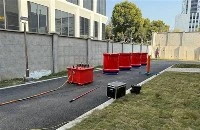
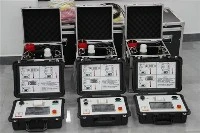
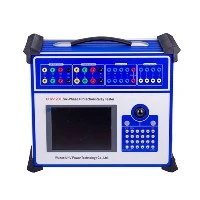
The cable fault tester under UHV power can help many power workers conduct various power tests more conveniently.

Introduction to Cable Faults
When a power station generates electricity, it is distributed to different loads, namely cities, towns, and villages, and then consumed. This process involves increasing the voltage to minimize energy loss in the form of heat. The boosted voltage is distributed to the power grid, where it is stepped down to be distributed to local transformers, where it is ultimately stepped down and distributed to consumers.
The distribution of electrical energy is accomplished through cables. Cables are insulated or non insulated. When transmitting energy during underground installation, the choice of insulated or non insulated (overhead or underground) cables usually plays a role.
Unlike insulated cables, faults in non insulated cables are easily detected because the most common faults associated with such cables are cutting and breaking of cable or wire conductors.
In insulated cables, especially multi-core cables, there are many types of faults and reasons for them.
Before discussing how to locate these common faults, let's first take a look at what cable faults are and the possible causes and locations of these faults.
Types of cable faults
The following are common types of cable faults in underground cables.
Open circuit fault: An open circuit fault is a type of fault that occurs when a conductor breaks or is pulled out of its joint. In this case, due to the destruction of the conductor (current transporter), there will be no current flowing at all.
Short circuit or cross fault: This fault occurs when the insulation between two cables or between two multi-core cables is damaged. In this case, the current does not flow through the main core wire connected to the load, but directly flows from one cable to another, or from one core wire or multi-core cable to another cable. The load will short circuit.
Grounding or grounding fault: This fault occurs when the insulation layer of the cable is damaged. The current flowing through the faulty cable begins to flow from the core of the cable to the earth or the sheath of the cable (cable protector). Current will not flow through the load.
Reasons for cable faults
Cable faults are often caused by moisture in the insulation paper of the cable. Therefore, it may damage the lead sheath that protects the cable. Lead sheath may be damaged in various ways. Most of them are caused by the chemical reactions, mechanical damage, and vibration crystallization of lead in the soil during burial.