

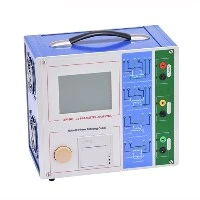
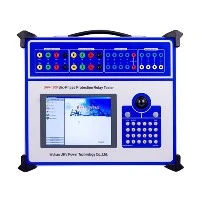
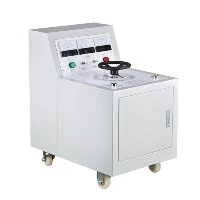
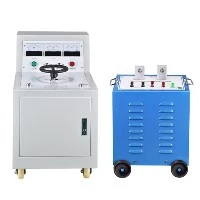
Have you ever been curious about how complex electrical equipment ensures safe operation and avoids the risk of electric shock or fire? Today, let's talk about a low-key but crucial "guardian" - the insulation resistance tester. It is like the "health check-up doctor" of the power system, providing us with a series of professional tests to ensure our electrical safety.

What is an insulation resistance tester?
Simply put, an insulation resistance tester is a professional instrument used to measure the insulation performance of electrical equipment. Insulation material, as the name suggests, is a material used to isolate conductive parts and prevent current from "deviating". With the passage of time, environmental influences (such as humidity, high temperature), or equipment aging, the performance of insulation materials will gradually decline, and their conductivity will increase, which brings safety hazards. This detector measures the weak current passing through an insulator by applying a certain DC voltage, thereby calculating the insulation resistance value. The magnitude of this value directly reflects the quality of insulation.
The 'behind the scenes' driving force that affects insulation resistance
Environmental factor: Humidity is the number one enemy! A humid environment can cause moisture in the air to condense on insulating surfaces, forming conductive pathways. High temperature can also accelerate the aging of insulation materials.
Material aging: Any material has a lifespan. After years of work, insulation materials will undergo physical and chemical changes, and their performance will naturally be inferior to before.
Mechanical damage: During the installation and operation of equipment, it may cause scratches, compression, etc. on the insulation layer, forming weak points.
Accumulation of dirt: Dust, oil stains, etc. adhering to the insulation surface may also reduce its insulation performance.
With the 'weapon' in hand, safety and worry free
To accurately evaluate insulation resistance, professional tools are essential. There are many excellent insulation resistance testers on the market, which have high accuracy and easy operation, and can help us quickly locate problems. For example, Wuhan UHV Power Technology Co., Ltd. is committed to providing a range of high-performance power testing instruments. Their products are renowned in the industry and are a reliable choice for power safety testing.
How to make better insulation resistance testing?
Choose the appropriate detection voltage: Different devices and voltage levels require different voltage detectors to be applied to ensure the accuracy and safety of the detection results.
Strictly follow the procedures: disconnect the power supply before testing to ensure personal safety. Follow the steps in the instrument manual for operation.
Pay attention to the trend of change: While one-time values are important, what is more worth paying attention to is the change in insulation resistance over time. If the value continues to decrease, even if it is still within a safe range, it is necessary to be vigilant.
Combining actual situation analysis: Only by analyzing the detection data with factors such as the working environment and service life of the equipment can more accurate judgments be made.
Frequently Asked Questions (FAQ)
Q1: Is it better to have a lower insulation resistance? A: On the contrary, the higher the insulation resistance, the better. The larger the resistance value, the stronger the insulation performance, and the less likely the current is to "leak".
Q2: Which devices require insulation resistance testing? A: Almost all live electrical equipment requires regular insulation resistance testing, including generators, transformers, motors, cables, switchgear, etc.
Q3: What is the typical detection voltage of an insulation resistance tester? A: The selection of detection voltage depends on the rated voltage of the tested equipment. For example, low-voltage equipment may use voltages of 250V or 500V, while high-voltage equipment requires voltages of 1000V, 2500V, or even 5000V.
Q4: Can insulation resistance testing be conducted in humid weather? A: Try to avoid testing in humid weather, as environmental humidity can significantly affect the accuracy of testing results and may lead to misjudgment.
Q5: What is the difference between insulation resistance testing and withstand voltage testing? A: Insulation resistance testing is the evaluation of the "health condition" of insulation, mainly by examining the magnitude of the resistance value; And the withstand voltage test (also known as dielectric strength test) is to test the breakdown ability of insulation under high voltage, focusing more on the "bearing capacity" of insulation.
Choosing professional equipment from Wuhan UHV Power Technology Co., Ltd. and following scientific testing methods is a crucial step in ensuring the safe operation of the power system. Remember, paying attention to details is the key to achieving long-term power safety!