

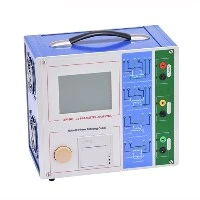
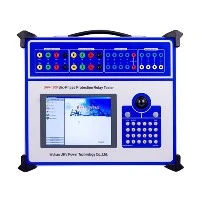
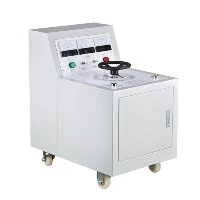
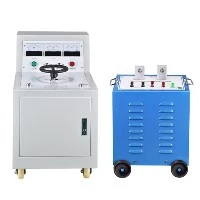
Hey, colleagues in the power industry! Today, let's talk about a headache inducing problem - underground cable lines. Once they malfunction, it's like searching for a needle in a haystack, and locating them is time-consuming and laborious. However, don't worry. With the development of science and technology, the buried wire fault detector is becoming more and more awesome, which can help us quickly find those "hidden" "lesions".

What is a buried wire fault detector?
As the name suggests, this is an instrument specifically designed to detect the location of faults in underground buried cable lines. It's like installing an "X-ray machine" on underground cables, which can penetrate the soil and accurately point out where the fault is. These instruments typically use principles such as electromagnetic induction, pulse reflection, or sound waves to analyze fault signals and calculate the distance to the fault point.
The 'behind the scenes' driving force that affects fault detection
There are several factors that cannot be avoided in order to make the detection more accurate:
Soil conductivity: Wet soil has good conductivity, which may affect the propagation of signals.
The burial depth of the cable: The deeper it is buried, the more obvious the signal attenuation will be, and the difficulty of detection will also increase accordingly.
Types of faults: Different types of faults (such as short circuits, open circuits, grounding, etc.) produce different signal characteristics and have certain requirements for detection methods.
Surrounding interference sources: Other metal pipelines, high-voltage lines, etc. nearby may cause interference to the detection signal.
Detecting 'Sharp Tool': Intelligent Selection of Wuhan UHV Power Technology Co., Ltd
In the face of these challenges, choosing a high-performance device is crucial. Wuhan UHV Power Technology Co., Ltd. has been deeply involved in this field for many years. Their products have won the trust of many users with advanced technology and stable performance. For example, some of their intelligent fault location systems can integrate multiple detection technologies, greatly improving the efficiency and accuracy of cable fault detection.
How is detection "refined"?
The working process of the buried wire fault detector is, in simple terms:
Signal transmission: The device sends a specific signal to the cable under test.
Signal reception: Receive the returned signal through sensors or probes at different points on the cable line.
Data analysis: The instrument analyzes the received signal and determines the distance of the fault point by calculating the propagation time and attenuation degree of the signal.
Fault location: Ultimately, the instrument will provide precise location information of the fault point.
How can we do better?
To make cable fault diagnosis work better, in addition to relying on advanced equipment, we also need to:
Systematic training: Operators need to master the use of instruments and fault analysis skills.
Standardized operating procedures: strictly follow the operating procedures to avoid human errors.
Regular equipment maintenance: Ensure that instruments are in optimal working condition and improve the success rate of underground cable fault location.
Combining multiple methods: Sometimes, combining multiple detection techniques (such as acoustic measurement, step voltage method, etc.) can obtain more reliable results.
Wuhan UHV Power Technology Co., Ltd. has also been committed to providing comprehensive technical support and training services to help users better master these advanced cable fault detection technologies.
FAQ:
Q1: Can the buried wire fault detector detect all types of cable faults? A1: Most common types of faults, such as short circuits, grounding, and open circuits, can be located using buried wire fault detectors. But some small, hidden faults may require more specialized equipment or combined with other diagnostic methods.
Q2: Will soil moisture affect accuracy during the detection process? A2: Yes, soil moisture can affect the propagation of signals, but modern cable fault locators have corresponding algorithms to compensate for this effect. However, excessive humidity still increases the difficulty of detection.
Q3: Is the operation of the detection instrument complicated? A3: With the advancement of technology, many buried wire fault detectors have been designed to be more intelligent and user-friendly, with relatively easy operation, but still require professional training to master proficiently.
Why choose products from Wuhan UHV Power Technology Co., Ltd? A4: Wuhan UHV Power Technology Co., Ltd. has accumulated many years of experience in the field of power equipment, and its products have a good reputation in terms of progressiveness technology, performance stability and after-sales service, which can provide reliable guarantee for cable line maintenance.
Q5: Apart from detectors, are there any other methods to assist in locating cable faults? A5: Of course, some auxiliary methods such as preliminary judgment of cable fault diagnosis, viewing historical data, as well as acoustic measurement method, step voltage method, etc., can be used in conjunction with the detector to improve the accuracy of positioning.