


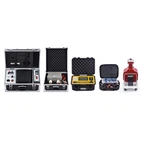
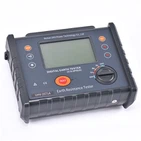
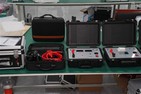
The motor test system under UHV power can help many power workers conduct various power tests more conveniently.There are many common reasons for failure in the process of motor testing, which can be systematically summarized into the following aspects.

1. Motor-Related Causes (Core Failures)
Winding Insulation Issues: The most common cause. Includes inter-turn short circuits (local overheating), phase-to-phase short circuits (sudden current surge), and ground faults (leakage current tripping), often due to manufacturing damage or substandard insulation materials.
Magnet Issues (Permanent Magnet Motors): Demagnetization due to high temperature (causing permanent performance degradation) or magnet detachment (leading to severe vibration and noise).
Bearing Problems: Inadequate lubrication (overheating, abnormal noise), improper installation, or inherent defects (wear and tear, breakage), directly affecting motor smoothness and lifespan.
Rotor Dynamic Balancing: Poor balancing causes excessive vibration and noise during high-speed operation, potentially damaging bearings.
2. Test System-Related Causes (High-Frequency Issues)
Power Supply Problems: Voltage fluctuations/instability, insufficient capacity (voltage sag under load), harmonic interference, leading to inaccurate test data or inability to complete tests.
Sensors and Measurement:
Lack of calibration (systematic data deviation).
Installation errors (e.g., misaligned torque sensor, reversed current clamp direction).
Incorrect range selection (small range measuring large signals causes saturation; large range measuring small signals reduces accuracy).
Connection Issues: Loose/poor contacts (causing overheating and abnormal voltage drop), incorrect phase sequence (reverse rotation or abnormality), wrong wiring configuration (mixing up star/delta connections).
3. Testing Methods and Environment
Improper Operation Procedures: Failure to preheat the motor before testing, recording data before reaching thermal stability.
Inadequate Cooling Conditions: Failure to provide sufficient air cooling or water cooling as required by the motor, leading to overheating protection or burnout.
Mechanical Misalignment: Misalignment between the motor and load machine introduces additional vibration and torque ripple, affecting test accuracy.