

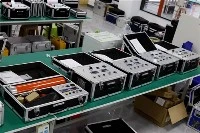



The AC/DC motor test bench is a highly integrated system used to comprehensively evaluate a motor's performance, reliability, safety, and efficiency. Depending on the testing purpose and precision requirements, the test items can vary widely.

Below are the main items that a AC/DC motor test bench can typically evaluate, categorized into several groups:
1. Performance Characteristic Testing (Core Parameters)
This is the most fundamental and critical category, primarily assessing the motor's capabilities under steady-state operation.
Torque-Speed Characteristic (T-N Curve): Measures the output torque of the motor at different speeds, plotting the complete mechanical characteristic curve. This is one of the most important performance indicators of a motor.
Speed-Power Characteristic: Measures the output power of the motor at different speeds.
Efficiency Map: Charts the distribution of the motor's efficiency across its entire operating range (different torques and speeds). This is crucial for evaluating energy-saving characteristics, especially in applications like electric vehicles and industrial energy conservation.
No-Load Characteristic: Measures parameters such as current, power, and speed when the motor is running idle (without load), used to assess iron losses and mechanical losses.
Load Characteristic: Evaluates the motor's performance under rated load and overload conditions, such as temperature rise, efficiency, and power factor.
Locked-Rotor Test: Locks the rotor in place and measures the input voltage, current, and torque to evaluate starting performance.
2. Electrical Parameter Testing
Input/Output Power: Precisely measures the electrical input power and mechanical output power of the motor to calculate efficiency.
Voltage and Current: Measures operating voltage, current (including steady-state and dynamic), peak current, etc.
Power Factor: Evaluates the motor's impact on the power grid, particularly important for AC motors.
Resistance and Inductance: Measures parameters such as inter-phase resistance and inductance (Ld, Lq) of the windings.
Back EMF: Measures the electromotive force generated when the motor is passively rotated, important for brushless DC motors (BLDC) and permanent magnet synchronous motors (PMSM).
Insulation Resistance: Tests the insulation performance between the motor windings and the casing to ensure safety.
Hi-Pot Test (Dielectric Strength Test): Uses high voltage to test the insulation strength of the motor and prevent breakdown.
3. Dynamic Response and Control Characteristic Testing (For Servo, Stepper, and Other Controlled Motors)
Step Response: Applies a sudden change in torque or speed command and observes the response speed, overshoot, and settling time.
Bandwidth: Tests the highest frequency at which the motor can effectively follow commands, reflecting the system's responsiveness.
Torque Ripple: Measures the periodic variation in output torque during motor rotation, which affects motion smoothness.
Speed Fluctuation: Measures minor changes in speed during steady-state operation.
4. Reliability, Lifespan, and Environmental Testing
Temperature Rise Test: Measures the temperature changes in key parts such as windings and bearings during prolonged full-load operation to evaluate heat dissipation design.
High/Low-Temperature Testing: Tests motor performance and operation under extreme temperature conditions.
Damp Heat Test: Evaluates insulation performance and checks for condensation in high-humidity environments.
Vibration and Noise Testing (NVH): Measures vibration acceleration, velocity, and noise levels during motor operation to assess the rationality of mechanical structure and electromagnetic design.
Endurance/Life Test: Runs the motor for extended periods (hundreds or even thousands of hours) under simulated actual working conditions to evaluate its lifespan and reliability.
Overload/Overvoltage Capability Test: Tests the motor's ability to withstand short-term overload and overvoltage conditions.
5. Other Specialized Tests
Inertia Matching Test: Evaluates the motor's response characteristics when driving loads with different inertias.
Regenerative Braking Energy Feedback Test (For Electric Vehicle Drive Motors, etc.): Tests the performance and efficiency of the motor acting as a generator during braking.
EMC/EMI Electromagnetic Compatibility Testing: Evaluates the electromagnetic interference generated during motor operation and its immunity to external interference (typically conducted in specialized anechoic chambers, but advanced test benches may integrate relevant sensors).