


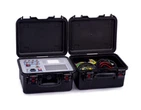
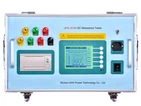

The transformer comprehensive test system mainly focuses on the no-load and load characteristics of power transformers and distribution transformers; DC resistance; The variable ratio group can be tested, and the tested transformer can also undergo a power frequency withstand voltage test. Simultaneously reserve external transformer interfaces for capacity expansion.

Main Components
A typical Transformer Comprehensive Test Bench usually includes:
1.Main Control Unit (Computer + Software): The brain of the system. It contains an industrial computer and specialized testing software to control all test items, collect data, automatically analyze results, and generate test reports.
2.Internal Integrated Modules (The Core): The bench integrates multiple functional modules, commonly including:
DC Resistance Test Module: Measures the DC resistance of transformer windings to check for proper conductor connections and tap changer contact.
Turns Ratio and Vector Group Test Module: Measures the transformer's voltage ratio and connection group, ensuring correct transformation ratio and phase relationship.
Insulation Resistance Test Module: Measures the insulation resistance between windings and between windings and ground to assess insulation condition.
Power Frequency Withstand Voltage Test Module: Applies high voltage to test the strength of the transformer's main insulation.
Induced Withstand Voltage Test Module (Optional): Tests the strength of the transformer's longitudinal insulation (inter-turn, inter-layer, inter-section).
No-Load and Load Loss Test Module: Measures the transformer's no-load loss and load loss, which are key indicators for evaluating its energy efficiency and economy.
On-Load Tap Changer (OLTC) Test Module (Optional): Specifically used to test the operating characteristics and timing of on-load tap changers.
3.Automatic Switching Device: One of the core components. Uses a complex matrix of relays or switching arrays to automatically change test circuits under software control, allowing quick transitions between different test items without manual intervention.
4.Safety Protection System: Includes emergency stop buttons, safety door interlocks, grounding protection, overcurrent protection, overvoltage protection, etc., to ensure the safety of operators and equipment.
5.Auxiliary Equipment: Such as a three-phase automatic voltage regulator, high-current output terminals, and dedicated test cables.