

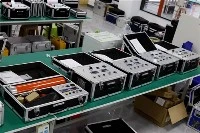



The main detection methods for PD detectors can be categorized into the following types. Modern advanced detectors often integrate multiple methods to adapt to different field environments and equipment types.

Here are the four primary detection methods:
1. Ultrasonic Detection (Acoustic Emission, AE)
Principle: Partial discharge generates sound and ultrasonic waves with frequencies above 20 kHz. These signals are captured using ultrasonic sensors (probes) attached to the equipment's surface or a concentrator (commonly called an "ultrasonic gun").
2. Ultra-High Frequency (UHF) Detection
Principle: PD generates extremely fast-rising current pulses, which radiate electromagnetic waves in the UHF band (300 MHz ~ 3 GHz). These signals are received by a UHF antenna sensor.
3. Transient Earth Voltage (TEV) Detection
Principle: When PD occurs inside equipment like switchgear, the generated electromagnetic waves travel along the metal enclosure and leak out at gaps, seams, or covers, inducing a transient voltage pulse on the metal surface relative to earth. This TEV pulse is measured by a capacitive coupling sensor placed on the surface.
4. High-Frequency Current Transformer (HFCT) Detection
Principle: A high-frequency current transformer (HFCT clamp) is clamped around the equipment's earth (ground) strap, cable sheath, or neutral point to detect the high-frequency current signals generated by PD pulses.
The trend in modern detectors is "multi-technology fusion." An advanced detector often integrates multiple sensors simultaneously, such as TEV + Ultrasonic or UHF + Ultrasonic + TEV. By correlating and analyzing signals from multiple methods, the accuracy and reliability of PD detection are significantly improved, effectively filtering out interference and avoiding misjudgment.