


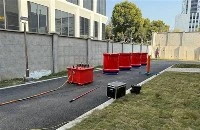
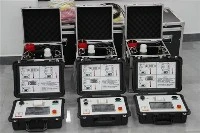
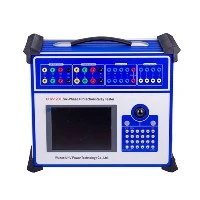
The variable frequency series resonance test device, power transformer, is an important and expensive equipment in the power system, which directly affects the safety and economic operation of the power system. There are many reasons for transformer failures, and it is essential to carry out daily maintenance and operation of transformer types suitable for various types of transformers. Relevant laws and regulations may require students to conduct power frequency AC withstand voltage tests for transformers, circuit breakers, and transformer handover tests in order to address information security issues in the operation of China's power management system. According to the increasing technology of the times, the power frequency AC withstand voltage test will be changed to the frequency conversion series resonance test In AC XLPE cable testing for series resonance frequency and withstand voltage, GIS switch AC voltage testing, large transformers, motors, and development, AC voltage testing groups are used. This article mainly introduces the precautions for conducting voltage withstand tests using a variable frequency series resonance test device.

1. Adjustment of Test Frequency
When the resonance frequency (frequency) of the testing equipment and testing circuit is determined, sometimes (perhaps) it seems that the testing frequency does not meet the specified sampling frequency. According to the formula: ω L=1/ω C, in order to meet the requirements of different frequencies, there are two management methods: adjusting inductance and changing capacitance. However, due to the relatively higher price level of devices with adjustable inductance, we choose to use parallel capacitors
At the construction site, the sources of parallel capacitors include coupling capacitors, switch breaking capacitors, etc In the selection of parallel capacitors, they must consider the ability to withstand the test voltage, and the capacitance size of the tested voltage and frequency must be (frequency) to meet the rules of the order. For example, for the voltage withstand performance test of a transformer, the test operating frequency can generally be required at the power frequency, which is 45-60Hz. The series resonance condition is LC=1/ω, and because L=2 * 131=262H, C is about 27000~48000pF. According to the research data of dielectric loss test, the capacitance of the transformer from high to low is generally less than 27000 pF, obviously we cannot obtain different resonance technology conditions. For example, when we perform voltage testing on the 220KV neutral point bushing of the main transformer, we select a 110KV coupling capacitor (C1-10000P F) based on a test voltage of 18000pF, with a high and low voltage test voltage of 72. Therefore, C = C1 + CX = 28000pF,F = 58.8HZ, Within the predetermined range, while taking into account the influence of high-voltage lead capacitance, the actual measured value of grounding stray is slightly lower than the calculated value. The on-site experimental research data shows f=55.6HZ, which is consistent with the calculated value. For example, when testing cables, the frequency of voltage testing generally needs to be between 30-75Hz. Due to the varying capacitance of cables with different lengths of time and cross-sections in enterprises, it is necessary to analyze and calculate the actual development situation. By paralleling capacitors and changing the series parallel inductance, the frequency can meet the design requirements. For a 110KV cable, YJLW03-64/110400 square millimeters, 440 meters, with a single core capacity of 65nF, it can be calculated that 2 * (65 * 10 * 131)=53HZ is within the range If the cables meet in short lengths and the capacity is insufficient, capacitors can be connected in parallel.
2. Improve the stability of the experiment
In applications, it has been found that when the voltage rises close to the test operating voltage, the speed of voltage rise is too fast and accompanied by significant voltage fluctuations, which can even lead to voltage environmental protection technology actions, requiring us to start the test through redesign, which is not conducive to the safety of enterprise equipment. However, if the voltage protection value is set too high, it is not a good protection to prevent the overvoltage test equipment from operating.
There are two ways to change this situation:
1. Choose to conduct analysis experiments at a frequency that deviates from the resonant frequency. We know that in order to reduce the capacity of the experimental pressure transformer, the Q value should be chosen as high as possible But when the Q value is large and deviates from the resonant frequency, the speed is relatively slow. Therefore, under the conditions that we can choose, the deviation from the resonant frequency of the test transformer allows for a reduction in the voltage rise rate of the object.
2. Adjust the quality factor of the circuit. From the graph Q=Uc/U=1/ω CR, it can be seen that in order to reduce the Q value, it is necessary to continuously increase the circuit resistance. In this way, in order to improve the experimental working voltage, the output data capacity of the excitation transformer (pressure controlled variable) must also be increased. Therefore, when applying and researching this teaching method, it must be carried out by the enterprise under the condition of capacity allowance.
Requirements for grounding resistance
Grounding wire (also known as lightning protection wire), used for reliable connection to the ground with a grounding resistance of less than 4 Ω.