

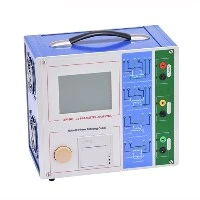

Oil Interfacial Tension Test Equipments (typically based on principles such as the Du Nouy ring method, Wilhelmy plate method, or drop volume method) do have specific requirements for samples to ensure measurement accuracy, repeatability, and the safe operation of the instrument.

a. Purity and Composition
High Purity (For Precise Measurements): Surface tension is extremely sensitive to impurities, especially surfactants. Even trace amounts of contaminants (such as oils, dust, or surfactants) can significantly alter surface tension values. Therefore, samples used for scientific research and calibration should be of the highest purity possible.
Known Composition (For Mixtures): If measuring solutions (e.g., surfactant solutions), the concentration and chemical composition must be clearly known. Samples must be homogeneous and stable, without phase separation, precipitation, or insoluble suspended matter.
b. Volatility
Low Volatility Samples: Methods like the ring and plate techniques require a certain amount of time for measurement. If the sample is highly volatile, its concentration and properties may change during the measurement process, leading to drifting or inaccurate results.
Handling High Volatility Samples: Modern fully automatic instruments are usually equipped with sealed covers or inert gas protection features to prevent rapid solvent evaporation and isolate external contamination. These functions must be used for volatile samples.
c. Viscosity
Low to Medium Viscosity: Tensiometers are best suited for samples with low viscosity (e.g., water, common organic solvents). High-viscosity samples (e.g., glycerol, certain oils, polymer solutions) can cause slow liquid film detachment, prolong measurement time, and potentially introduce errors.
Instrument Adaptability: Some advanced tensiometer models offer a "high-viscosity mode," which adjusts measurement speed and algorithms to compensate for viscosity effects, but there are still limits.
d. Corrosiveness
Compatibility: Samples must not corrode the instrument's measuring components (e.g., platinum ring/plate, sample cup, sensor). For strong acids, strong bases, or other corrosive liquids, ensure:
The sample cup material is corrosion-resistant (e.g., glass, Teflon).
The ring or plate is made of corrosion-resistant materials like platinum-iridium alloy.
Other parts of the instrument (e.g., lifting platform) are not affected by corrosive vapors.