

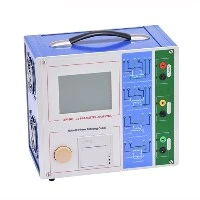
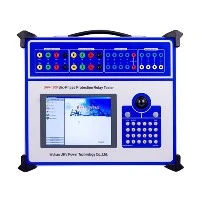
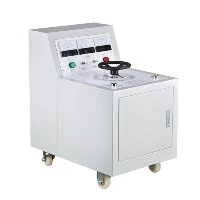
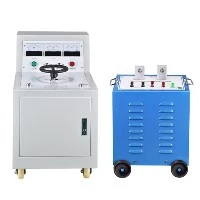
The AC hipot tester under Wuhan UHV can help many power workers conduct various power tests more conveniently.

VLF (Very Low Frequency) vs. AC Hipot (High Potential) Testing: Key Differences
Both methods assess electrical insulation strength through high-voltage testing but differ fundamentally in waveform, frequency, purpose, and applications:
1. Voltage Characteristics
AC Hipot:
Standard 50/60 Hz sinusoidal AC voltage (power frequency).
VLF:
0.1 Hz or 0.05 Hz AC voltage (ultra-low frequency).
Waveform: Typically cosine-rectangular (trapezoidal) or sinusoidal.
2. Core Purpose
AC Hipot:
Verifies insulation's ability to withstand short-term overvoltage (acceptance/type testing).
Example: Applying 2× rated voltage for 1 minute to new equipment.
VLF:
Diagnoses insulation defects (especially in aged cables).
More effective at detecting concentrated defects (water trees, partial discharges).
3. Applications
AC Hipot:
Ideal for transformers, switchgear, motors, and short cables (low capacitance loads).
VLF:
Dominant for medium/high-voltage long cables (>1 km).
Why? Low frequency reduces capacitive current (I=2πfCVI=2πfCV), enabling portable field testing.
4. Equipment Practicality
AC Hipot:
Bulky high-kVA transformers required for cables → impractical for field use.
VLF:
Compact, low-kVA equipment → standard for on-site cable testing.
5. Impact on Insulation
Both: Destructive if defects exist.
Critical Distinction:
VLF's low frequency accelerates water tree growth in XLPE cables, potentially causing post-test failure.
AC Hipot has minimal such effect.