



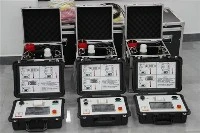
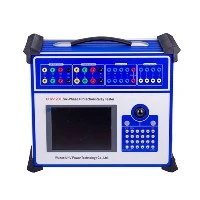
The AC hipot tester under Wuhan UHV can help many power workers conduct various power tests more conveniently.
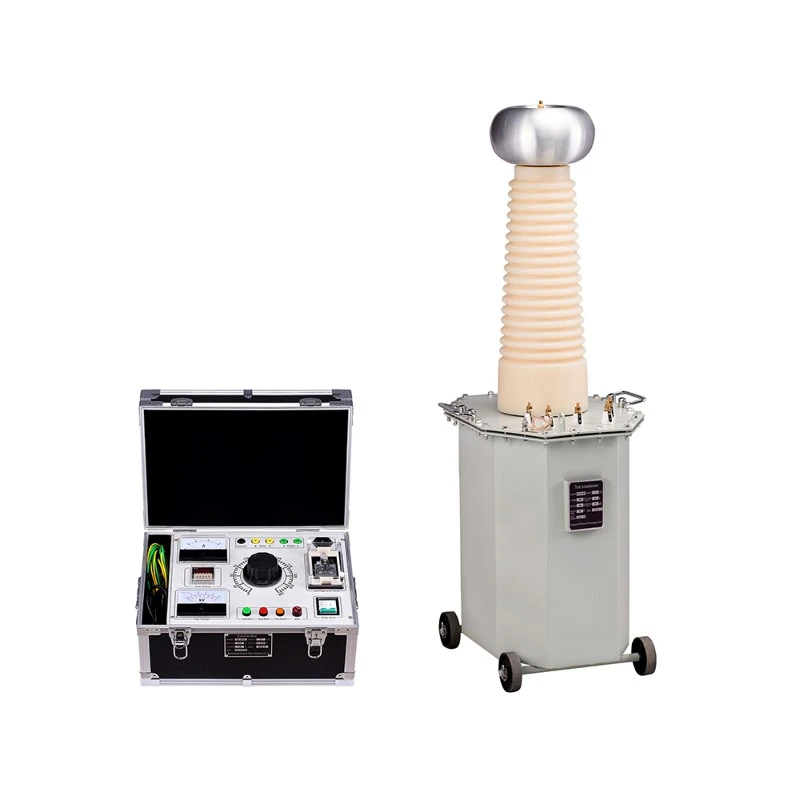
AC Hipot testing (AC Withstand Voltage Test or AC Dielectric Strength Test) is a critical method in electrical safety testing. It is primarily used to evaluate the insulation strength and high-voltage withstand capability of electrical equipment or components (such as wires, cables, transformers, motor windings, printed circuit boards (PCBs), household appliances, etc.). Its core purpose is to ensure the product does not pose an electrical shock hazard or experience a short-circuit fault under normal operating voltage or abnormal conditions (such as transient overvoltages).
Here are the key points about AC Hipot testing:
1.Name Meaning:
AC: Alternating Current. The test uses sinusoidal AC high voltage.
Hipot: Abbreviation for "High Potential," meaning high voltage.
2.Test Purpose:
Verify Insulation Integrity: Check if insulating materials (e.g., plastic enclosures, insulating varnish, air gaps, creepage distances) are sufficiently thick or properly designed to withstand electrical stress significantly higher than the normal operating voltage without breaking down.
Detect Potential Defects: Identify manufacturing defects that might be missed during low-voltage tests, such as pinholes, cracks, or contamination in insulation layers, conductors placed too close together, solder splashes, etc. These defects can cause failure under high voltage stress.
Ensure User Safety: The most crucial objective – to prevent users from suffering electric shock due to insulation failure during product use.
Comply with Safety Standards: Most national and regional electrical safety standards (e.g., IEC, UL, CSA, GB) mandate Hipot testing as a type test and/or routine production line test.
3.Test Principle:
A specified AC test voltage, much higher than the rated operating voltage, is applied between the live parts of the device under test (DUT) (e.g., Line/Neutral conductors) and its accessible conductive parts (e.g., protective earth conductor, metal enclosure).
The voltage is applied for a specified duration (typically several seconds to one minute; often shorter on production lines).
The test instrument continuously monitors the leakage current flowing through the insulation.
If insulation breakdown does not occur (i.e., the current does not suddenly increase sharply beyond a preset trip limit) within the specified time, and the leakage current remains within safe limits, the test is considered passed.
4.Key Parameters:
Test Voltage: Defined by the relevant safety standard. A common calculation is (2 * Rated Voltage) + 1000V or similar formulas, depending on the product category and standard (e.g., IEC 60335, IEC 60950, IEC 61010). Voltage is usually specified as RMS value.
Test Duration: Standards often specify 60 seconds for type tests, but production line tests commonly use 1 second or a few seconds for efficiency.
Trip Current: The maximum allowable leakage current set on the test equipment. Exceeding this value causes the equipment to flag a failure and cut off the high voltage output. This value is also defined by the standard (common values: 5mA, 10mA, 100mA).
Frequency: Typically the mains frequency (50Hz or 60Hz), unless otherwise specified by the standard.