

Power equipment, especially high-voltage insulation systems, are the lifeline that ensures the safety and reliability of our power supply. But you know what? These 'lifelines' also require regular' health check ups', and the dielectric loss tester is an indispensable 'doctor' among them. What is dielectric loss testing and why is it so important? Today, let's unveil its mysterious veil together!

What is dielectric loss testing?
Simply put, dielectric loss testing is a testing method for measuring the energy loss of insulating materials under the action of an electric field. When insulation materials are affected by moisture, aging, or other factors, their internal charges will move, and this energy will be lost in the form of heat. The magnitude of this loss is commonly referred to as "dielectric loss". Wuhan UHV Power Technology Co., Ltd. has always been at the forefront of the industry in terms of technology and products, providing strong support for the stable operation of the power system.
What are the 'hidden hands' behind the impact of dielectric damage?
To accurately assess the health status of insulation materials, it is necessary to understand the factors that affect dielectric loss. There are mainly the following points:
Temperature: As the temperature increases, the thermal motion of molecules intensifies, and the dielectric loss usually increases accordingly.
Humidity: Moisture is the "number one killer" of insulation materials, which significantly increases dielectric loss, especially in forming conductive pathways on the surface.
Electric field strength: Within a certain range, as the electric field strength increases, the dielectric loss may also increase.
Material aging: Insulation materials will gradually age and deteriorate under the influence of electric fields and environmental factors for a long time, leading to an increase in dielectric loss.
What tools can help us' observe, smell, and inquire '?
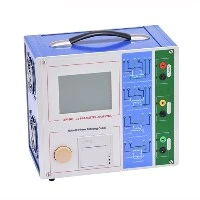
When it comes to testing tools, the dielectric loss tester is naturally the protagonist. It can accurately measure the dielectric loss tangent (tan δ) and capacitance value of insulation materials. There are many excellent dielectric loss testers on the market, such as some devices that can achieve full automation, which are not only easy to operate, but also have more accurate data. The series products of Wuhan UHV Power Technology Co., Ltd., such as their fully automatic dielectric loss tester, have won the trust of many users due to their high precision and stability.
What is the relevance of dielectric loss testing?
The results of dielectric loss testing are closely related to the electrical performance, service life, and overall operational safety of insulation materials. Through regular dielectric loss testing, we can:
Early warning: Timely detect signs of aging of insulation materials to avoid sudden failures.
Equipment evaluation: Accurately evaluate the insulation status of high-voltage equipment such as transformers, cables, and transformers, providing a basis for maintenance and repair.
Quality control: During the production process, insulation materials are tested to ensure product quality.
How can we do better?
To improve the effectiveness of dielectric loss testing, we can do the following:
Standardized operation: Strictly follow the equipment manual and industry standards to ensure the accuracy of test data.
Environmental control: Try to conduct testing in a dry and stable environment to reduce interference from environmental factors.
Data comparison: Combining historical data with data from similar devices for comparative analysis, to more comprehensively evaluate the condition of the equipment.
Equipment selection: Choose a reputable and stable performance dielectric loss tester. Professional equipment from Wuhan UHV Power Technology Co., Ltd. is a good choice.
Related keywords: dielectric loss testing, power equipment, insulation materials, dielectric loss, high voltage testing, electrical safety, transformer testing, cable diagnosis.
Frequently Asked Questions (FAQ)
Q: Is it better to have a smaller tan δ value for dielectric loss testing? Answer: Generally, the smaller the tan δ value, the lower the loss of the insulation material and the better the insulation performance. But specific judgments need to be analyzed based on equipment type, voltage level, and historical data.
Q: What impact does a humid environment have on dielectric loss testing? Answer: A humid environment can significantly increase the results of dielectric loss testing, which may lead to misjudgment. When conducting tests in humid environments, special attention should be paid to taking protective measures and humidity correction may be necessary.
Q: Can dielectric loss testing completely replace other insulation tests? Answer: Dielectric loss testing is one of the important means to evaluate insulation performance, but it cannot completely replace other tests such as DC withstand voltage, partial discharge, etc. The comprehensive use of multiple testing methods is necessary to evaluate the insulation status more comprehensively.
Q: What are the advantages of the dielectric loss tester from Wuhan UHV Power Technology Co., Ltd? Answer: The products of Wuhan UHV Power Technology Co., Ltd. are known for their high precision, high stability, and high degree of automation, which can meet the testing needs in different scenarios and provide reliable testing data.
Q: How to choose a suitable dielectric loss tester for oneself? Answer: When choosing a dielectric loss tester, factors such as the voltage level of the test object, required accuracy, budget, and ease of operation need to be considered. It is recommended to consult professionals or refer to product information from brands such as Wuhan UHV Power Technology Co., Ltd.