

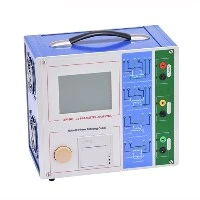
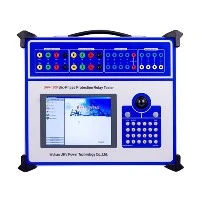
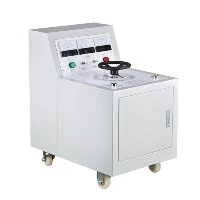
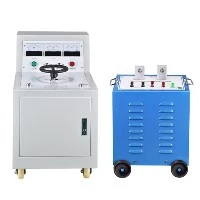
Have you ever been curious about how those massive power equipment, such as transformers, cables, etc., ensure their "healthy" operation and prevent sudden "illnesses"? Today, let's talk about a key device that plays the role of a "health steward" in the power system - the dielectric loss measuring instrument. It is a powerful assistant in understanding the "health status" of insulation materials.

What is dielectric loss? Why is it so important?
Simply put, dielectric loss, also known as "dielectric loss", refers to the phenomenon in which a dielectric converts a portion of electrical energy into thermal energy under the action of an alternating electric field. Imagine, just like a person unconsciously sweating when they are nervous, insulation materials can also "heat up" under the action of an electric field.
The degree of "heating", that is, the size of dielectric loss, directly reflects the aging degree, moisture content, impurities inside the insulation material, and may even indicate potential breakdown risks. So, precise measurement of dielectric loss is like conducting a "health check" on electrical equipment, which can detect problems in a timely manner and prevent them before they happen.
What are the "culprits" that affect dielectric damage?
Dielectric loss is not a simple number, it can be influenced by many factors:
Temperature: As the temperature increases, molecular motion intensifies, and dielectric loss usually increases accordingly.
Humidity: Moisture is the "natural enemy" of insulation materials, and it greatly increases dielectric loss after absorbing moisture.
Electric field strength: Within a certain range, the stronger the electric field, the higher the dielectric loss may be.
The insulation material itself: the type, purity, and degree of aging of the material all determine its inherent dielectric loss level.
Who can help us' measure 'dielectric loss? --Wuhan UHV Power Technology Co., Ltd. is responsible for its strength!
When it comes to professional dielectric loss measurement tools, Wuhan UHV Power Technology Co., Ltd. is definitely indispensable. Their developed dielectric loss measuring instruments are renowned in the industry for their high precision, stability, and ease of use. These types of instruments usually use advanced bridge measurement principles, which can accurately measure the dielectric loss tangent (tan δ) of power equipment insulation at different voltage levels.
How is dielectric loss measurement done?
The process of measuring dielectric loss is actually "powering on" the device and then "listening" to its "heartbeat". Specifically, it is to connect the dielectric loss measuring instrument to the tested equipment (such as transformers, transformers, cables, etc.), apply a certain AC voltage, and then the instrument will measure the current flowing through the insulation material and calculate parameters such as dielectric loss and capacitance. By analyzing the changing trends of these parameters, we can evaluate the "health" condition of insulation.
Core principle: Measure the phase and amplitude of the current, and calculate the tangent of the dielectric loss angle.
Key equipment: A high-precision and wide range dielectric loss measuring instrument is the foundation.
Operation points: Ensure the stability of the testing environment, reliable connection, and follow standard operating procedures.
Do you want to do better in dielectric loss measurement?
To obtain more accurate and valuable dielectric loss measurement data, you can start from the following points:
Choose the appropriate instrument: Based on the voltage level and accuracy requirements of the tested equipment, select a performance matching dielectric loss tester.
Standardized operation: Conduct testing strictly in accordance with national standards or industry norms to reduce human error.
Data analysis and comparison: Combining historical data and equipment operating conditions for comprehensive analysis can more accurately determine the equipment status.
Professional technical support: When encountering complex problems, seeking technical support from professional manufacturers like Wuhan UHV Power Technology Co., Ltd. can achieve twice the result with half the effort.
By accurately measuring insulation dielectric loss, we can more effectively maintain power equipment and ensure the safe and stable operation of the power grid.
Frequently Asked Questions (FAQ)
Does dielectric loss measurement affect equipment safety? Generally speaking, dielectric loss measurement operated according to specifications is safe, and the test voltage usually used is much lower than the rated voltage of the equipment.
Under what circumstances is dielectric loss measurement necessary? Usually carried out during the installation, major repairs, testing, and regular inspections of electrical equipment.
Is a higher dielectric loss value more dangerous? The higher the dielectric loss value, the more severe the degradation of the insulation material and the greater the potential risk, which needs to be taken seriously.
Besides temperature and humidity, what other factors can affect the measurement results of dielectric loss? The contact resistance of the testing point, external electromagnetic interference, and the accuracy of the instrument will all have an impact on the measurement results.
Can dielectric loss measurement predict how long equipment will be damaged? Dielectric loss measurement mainly reflects the current "health status" of insulation. Combined with historical data analysis, degradation trends can be evaluated, but it is difficult to directly predict the exact time of damage.