

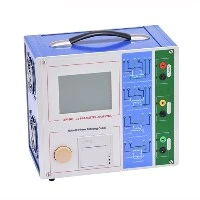
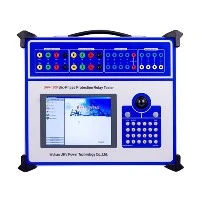
In the safe operation and maintenance of power systems, the term 'grounding resistance' is believed to be familiar to everyone. It is directly related to the safe operation of electrical equipment. Once the grounding resistance is too high, it may lead to accidents such as leakage and lightning strikes. And the grounding resistance measuring instrument is our powerful assistant for evaluating this key indicator. However, have you ever encountered a situation where the measured grounding resistance value is somewhat "unsatisfactory" even though the equipment is functioning normally? Don't worry, today we will talk about what exactly affects the measurement of grounding resistance, and how to make your measurement results more accurate and reliable.

What is grounding resistance? Why is it so important?
Simply put, grounding resistance refers to the total resistance between the grounding wire (or grounding electrode) and the earth. It is like a "safety gate", when the device leaks electricity, the current can flow to the ground through the grounding wire, thus avoiding personal electric shock or equipment damage. A good grounding system should have a sufficiently small grounding resistance value to ensure that the current can be quickly and effectively exported in the event of a fault.
What are the "hidden killers" that affect the measurement of grounding resistance?
To obtain accurate measurement data, understanding the influencing factors is the first step. The following are common sources of interference:
The conductivity of soil: The moisture, salt content, temperature, and soil itself (such as sand and clay) can significantly affect its conductivity, which in turn affects the grounding resistance. For example, in the dry season, the soil resistivity will increase.
The structure and burial depth of the grounding body itself: The shape, size, material, burial depth, and spacing of the grounding body directly determine its contact area and contact resistance with the ground.
Environmental factors: The presence of surrounding metal pipes, cables, and other grounding bodies may also cause "crosstalk" effects on measurement results, leading to reading deviations.
Measurement methods and instruments themselves: Different measurement methods (such as three pole method, four pole method), as well as the accuracy and calibration status of the measuring instrument, are all key factors affecting the results.
What tools can help you measure accurately?
It is crucial to choose a reliable grounding resistance measuring instrument to accurately measure grounding resistance. There are many excellent products on the market, among which Wuhan UHV Power Technology Co., Ltd. is committed to providing high-quality power testing equipment. Their instruments perform excellently in terms of accuracy and stability, effectively overcoming various interferences and ensuring the accuracy of measurement data.
How can we do better? Practical suggestions
Choose the appropriate measurement method: Based on the actual situation, choose the appropriate measurement method. For general low-voltage grounding, the three pole method may be sufficient; For places with higher requirements, the quadrupole method (also known as the double clamp method) can provide more accurate results, especially in cases where soil resistivity is high.
Optimize probe insertion: During measurement, ensure that the grounding probe is fully inserted into the soil and in close contact with the soil. When the soil is dry, it is advisable to water it appropriately to moisten the soil and reduce contact resistance.
Stay away from interference sources: Try to choose an area away from other large metal structures or power sources for measurement to reduce external interference.
Regular calibration of instruments: It is necessary to calibrate the grounding resistance measuring instrument regularly according to the requirements of the instrument manual to ensure its stable performance and accurate readings. The professional service team of Wuhan UHV Power Technology Co., Ltd. can also provide you with timely calibration support.
Mastering the correct usage skills: Familiarize yourself with the operation process of the grounding resistance measuring instrument you are using, understand the meaning of different gears and measurement modes, in order to better interpret measurement data.
Frequently Asked Questions (FAQ)
Q1: Why does the reading of the grounding resistance measuring instrument fluctuate? A1: This is usually related to changes in soil moisture, unstable contact between the probe and the soil, or electromagnetic interference from nearby electrical equipment.
Q2: Will the grounding resistance be higher or lower when measured in humid weather? A2: Generally speaking, humid weather can reduce the soil's electrical resistivity, resulting in a lower grounding resistance value.
Q3: What are the main differences between the three pole method and the four pole method for measurement? Which one is more accurate? A3: The three pole method is suitable for situations with low soil resistivity and less interference, while the four pole method can effectively eliminate the influence of soil resistivity and contact resistance, with higher measurement accuracy, especially suitable for situations with high soil resistivity or requiring accurate data.
Q4: Apart from soil factors, what else can affect the measurement of grounding resistance? A4: The size, shape, burial depth, material, and mutual influence between grounding bodies will all affect the measurement results.
Q5: How to choose a grounding resistance measuring instrument that suits your needs? A5: Factors such as measurement accuracy requirements, measurement environment, budget, and brand services need to be considered. The professional technical personnel of Wuhan UHV Power Technology Co., Ltd. can recommend suitable equipment for you based on your specific needs.