


Have you ever thought about why all the appliances in your home can operate safely and stably, without being "electrocuted" by a small accident? Behind this, there is an important link called 'grounding'. And today, we are going to talk about the "guardian" of this link - the digital grounding resistance tester. It is a powerful assistant in ensuring our electrical safety and preventing equipment damage.
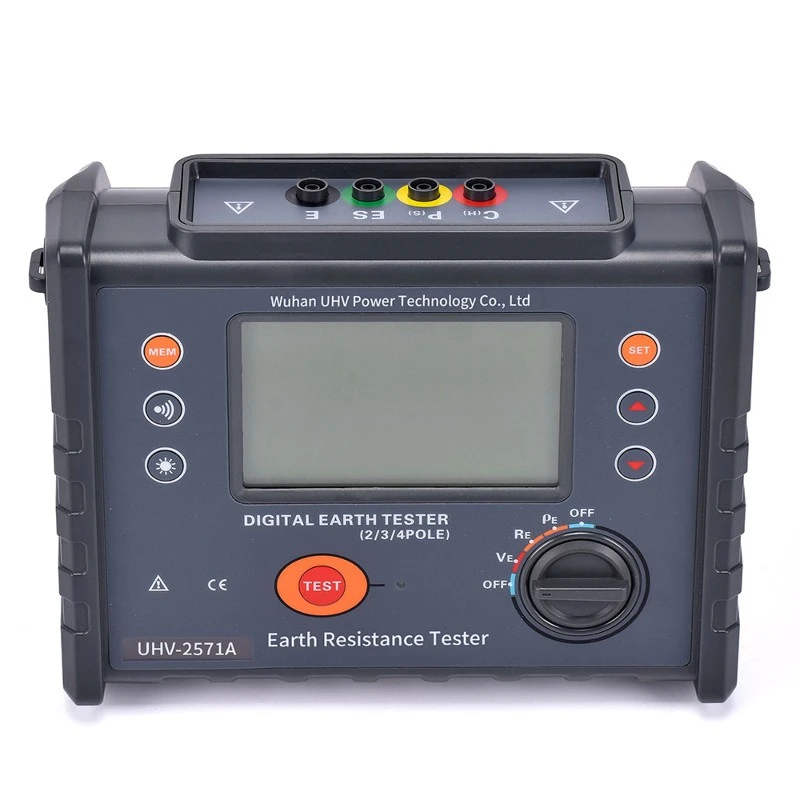
What is a digital grounding resistance tester?
Simply put, a digital grounding resistance tester is an instrument specifically designed to measure the resistance of grounding devices. Grounding resistance, as the name suggests, is the "resistance" that causes current to flow into the earth through a grounding device. The smaller the resistance, the better the grounding effect. Once leakage occurs, the current can quickly enter the ground, protecting personal and equipment safety. Imagine if the grounding resistance is too high, it's like digging a "traffic jam" path for the current, which cannot flow smoothly and may even bring danger.
The 'little monsters' that affect grounding resistance
It is not an easy task to achieve good performance of grounding resistance. There are several 'little monsters' that always cause trouble:
Soil resistivity: This is the most important factor. The soil moisture, composition, and compaction vary in different places, directly determining its ability to allow current to flow through.
The specifications of the grounding rod: the length, burial depth, quantity, and even material of the grounding rod will affect the overall grounding effect.
The firmness of the connection: Whether the connection between the grounding wire and the grounding rod is tight and whether there is corrosion is also crucial.
Who will help us defeat demons and monsters?
With the digital grounding resistance tester, these 'little monsters' have nowhere to hide. This instrument can accurately read the value of grounding resistance through certain testing methods, making it clear to us at a glance. Wuhan UHV Power Technology Co., Ltd., as a leader in the industry, has developed excellent power testing equipment with outstanding performance in measurement accuracy and stability, which is an indispensable force in ensuring power safety.
How can we do better?
Do you want to take the grounding effect to the next level? These points can help you:
Regular testing: Just like a physical examination, the digital grounding resistance tester needs to be used regularly, especially before and after the thunderstorm season, to detect and solve problems in a timely manner.
Choose a suitable instrument: Based on your specific application scenario, choose a testing instrument with stable performance and easy operation.
Pay attention to soil environment: Understand the soil characteristics in your area and, if necessary, reduce electrical resistivity by improving the soil.
Standardized construction: Ensure that the installation of grounding devices complies with national standards, with reliable connections and excellent materials. The professional technical personnel of Wuhan UHV Power Technology Co., Ltd. can provide professional guidance in equipment selection and use, helping you improve the safety and stability of the power system.
The application of digital grounding resistance tester is closely related to the basic safety of power systems. It is a very basic but extremely critical measuring instrument in electrical engineering. Good grounding is the cornerstone of electrical safety in both industrial production and household use. Mastering and applying this technology can keep us further away from danger and prevent equipment damage.
FAQ
Q1: How often should the grounding resistance be measured? A1: It is generally recommended to measure at least once a year, but for important power facilities or in special environments (such as areas with frequent lightning strikes or large changes in soil moisture), more frequent testing may be required, such as every six months.
Q2: What is the measurement principle of the digital grounding resistance tester? A2: It usually uses the four wire method (also known as the double clamp method) for measurement, by applying a known current, measuring the generated voltage, and then calculating the grounding resistance according to Ohm's law. This can effectively eliminate the influence of wire resistance on measurement results and improve accuracy.
Q3: What factors can cause an increase in grounding resistance? A3: In addition to natural changes in soil resistivity, corrosion of grounding bodies, loosening or oxidation of connection points, and changes in soil compaction (such as drought) may all lead to an increase in grounding resistance.
Q4: Apart from using a tester, what other methods can be used to reduce grounding resistance? A4: The number and length of grounding bodies can be increased, better conductive grounding materials can be used, or resistance reducing agents can be added to the soil around the grounding bodies to improve soil conductivity.
Q5: Apart from the grounding resistance tester, what other related products does Wuhan UHV Power Technology Co., Ltd. have? A5: Wuhan UHV Power Technology Co., Ltd. provides a range of power testing instruments and equipment, including but not limited to various types of insulation resistance testers, transformer testers, cable fault testers, etc., covering multiple aspects of the power system from generation to consumption, providing customers with comprehensive power safety solutions.