

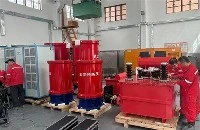
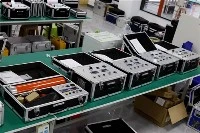
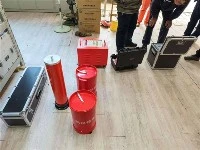

The Insulated Gas Chromatographic Analyser under Wuhan UHV can help many power workers conduct various power tests more conveniently.

Gas chromatography analysis is a physical and chemical analysis method that can separate and accurately determine the content of various components in mixed gases.
1. Sampling: Take a small amount of oil sample from the equipment.
2. Degassing: The gas dissolved in the oil is completely extracted through a special device (such as an oscillating deaerator).
3. Injection analysis: Inject the extracted mixed gas into the chromatograph. Carrier gases (such as nitrogen and hydrogen) carry sample gases through the chromatographic column. Due to the different adsorption or dissolution abilities of different gases in the chromatographic column, they are separated and flow out of the column at different retention times.
4. Detection and quantification: Detectors (such as FID, TCD) measure the concentration of each gas and ultimately generate a chromatogram containing various gas components and contents.
Its huge advantage lies in:
High sensitivity: capable of detecting extremely trace amounts (parts per million, ppm level, or even parts per billion, ppb level) of gases.
High accuracy: able to accurately distinguish and quantify multiple gases.
No need for power outage and disassembly: Only a small amount of oil sample needs to be taken, and the equipment can continue to operate. It is a key technology for online monitoring and preventive maintenance, avoiding unnecessary power outages and disassembly inspections, saving a lot of time and money.